Lower Merion Elite Roofing has handled chimney flashing repair in Lower Merion, PA for more than 20 years, serving surrounding cities including Plymouth Township, Milford Township, Yeadon, Richland Township and West Norriton. Chimneys are one of the most common sources of roof leaks we trace, especially on older houses with large masonry chimneys.
We confirm the leak is really coming from the flashing before quoting anything. That means checking the attic beside the chimney, looking at the crown and cap, and ruling out condensation or a failed chimney liner, so you are not paying for the wrong repair.
When flashing is the cause, we replace it with properly woven step flashing and counter flashing cut into the masonry, not another layer of tar or caulk. The repair is priced in writing before we start.
How Chimney Flashing Works
Step Flashing
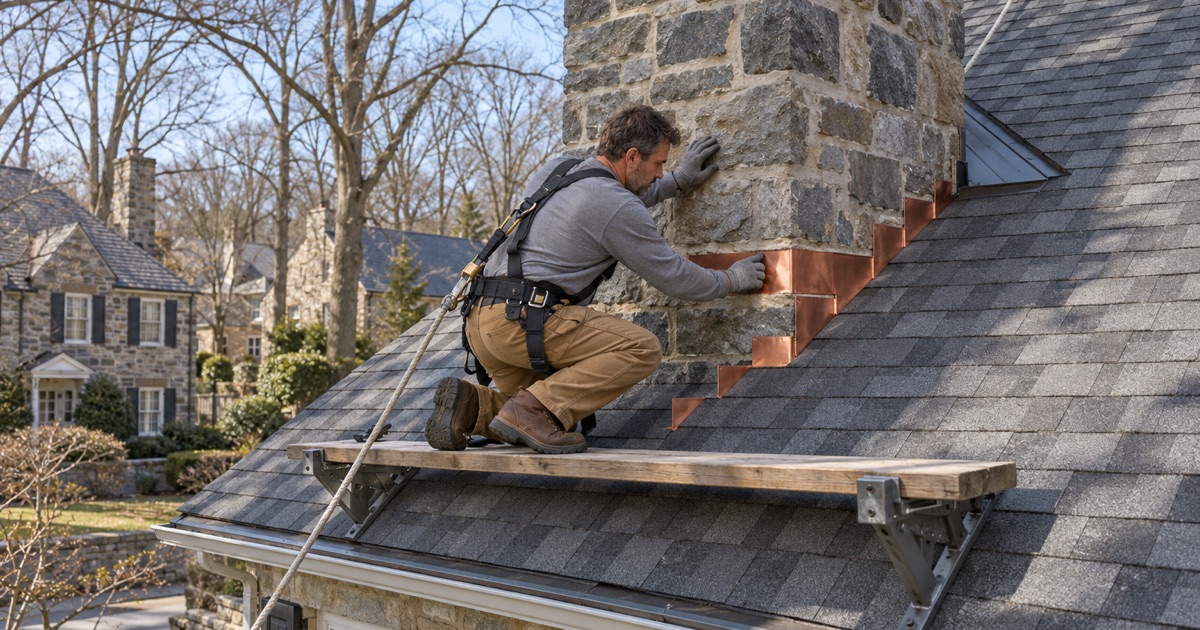
Step flashing consists of individual L-shaped pieces of metal woven between each course of shingles along the sides of the chimney. Each piece overlaps the one below, so water running down the roof is directed back onto the shingles. A single long piece of metal along the side cannot do this.
Counter Flashing and the Reglet
Counter flashing covers the top of the step flashing and keeps water from running behind it. It is set into a reglet, a groove cut into a mortar joint, and sealed there. Counter flashing that is just glued to the face of the brick eventually lets water in behind it.
Apron and Back Flashing
The front of the chimney gets an apron flashing that laps over the shingles below. The back gets a pan or cricket flashing that turns water to either side. Each piece has to overlap the next correctly for the whole system to work.
Signs of Failed Chimney Flashing
Stains Beside the Chimney
Water stains on the ceiling or wall next to a chimney, or dark, wet rafters beside it in the attic, are classic signs of flashing failure. Leaks may appear only during wind-driven rain from one direction.
Tar, Caulk and Patchwork
If the flashing is covered in roofing tar or layers of caulk, someone has already tried to stop a leak there. These patches dry out and crack, and they hide the flashing’s real condition.
Loose or Missing Counter Flashing
Counter flashing that has pulled out of the mortar joint, or mortar that has cracked and fallen out of the reglet, leaves a gap for water to run behind the step flashing.
Our Chimney Flashing Repairs
Replacing Step and Counter Flashing
We remove the old flashing and the shingles around it, install new step flashing woven into each course, and cut a fresh reglet into the mortar for new counter flashing. Then we reinstall the shingles and seal the reglet joint.
Building a Cricket
On chimneys wider than a standard flue, we frame and flash a cricket on the uphill side to split water around the chimney. Without it, water and leaves collect against the back and eventually find a way in.
Copper Flashing on Slate Roofs
On slate roofs we use copper step and counter flashing, which lasts as long as the slate. Slates removed to reach the flashing are reinstalled or replaced with matching slate, fastened with copper nails or slate hooks.
Chimneys on Older and Larger Houses
Wide and Multi-Flue Chimneys
Many prewar houses have broad chimneys carrying several flues, sometimes built of stone rather than brick. The wider the chimney, the more water collects behind it and the more flashing joints there are along each side. These chimneys almost always need a cricket, and stone chimneys need the reglet cut carefully into joints that may not run in straight lines.
Chimneys on Steep Roofs
On a steep Tudor or colonial roof, the chimney may sit high on a slope that cannot be walked. We set roof jacks and harnesses and stage materials so the flashing can be installed piece by piece, the same way it would be on a low roof, rather than skipping steps because access is difficult.
Flashing With a New Roof
When a roof is replaced, the chimney flashing is replaced with it. Leaving old step flashing in place and bending new shingles around it saves an hour and creates the most likely leak on the new roof. Our replacement scopes list chimney flashing as its own line so you can see it is included.
Dormer and Sidewall Flashing
The same step and counter flashing principles apply where a roof meets a dormer cheek or a second-story wall. We check those joints whenever we work on a chimney, because a leak blamed on the chimney sometimes comes from a nearby wall instead.
Chimneys That Lost Their Flue
Some houses have a chimney that no longer serves a fireplace or furnace, often after a heating system was replaced. An unused chimney still needs sound flashing and a cap, or it becomes a large, open path for water into the house. We flash it like any other chimney and point out the cap or crown work it needs, and if you plan to remove it below the roofline, we can patch and shingle the opening so the roof is continuous.
Related Chimney and Roof Issues
Chimney Crowns and Caps
A cracked crown or missing cap lets water into the chimney from above, and that water can show up looking like a flashing leak. We point out crown and cap problems when we see them so they can be repaired by the right trade.
Mortar and Masonry
Counter flashing needs sound mortar to hold. Where mortar joints are badly eroded, the masonry may need repointing before new flashing can be set properly. We explain what is needed and coordinate with a mason where necessary.
Flashing on Twins and Shared Chimneys
On twins and rowhouses, a chimney often sits on the party wall and serves both houses. The flashing on each side has to work together, so we look at the neighbor’s side as well and explain who owns which part of the repair.
Lead-Safe Work Around Painted Trim
When a chimney flashing repair reaches into painted trim on a house built before 1978, we follow the EPA’s lead-safe work practices for disturbing old paint, keeping dust contained and cleaned up.
- 20+ Years Roofing
- Itemized Written Scopes
- Slate Repair Specialists