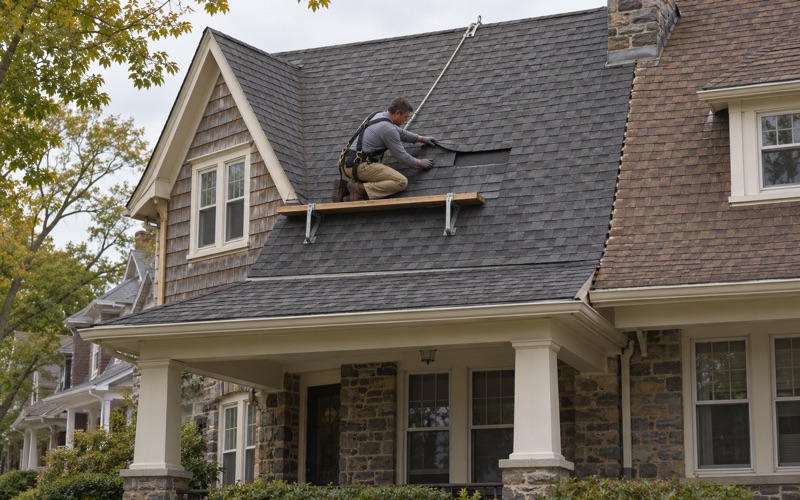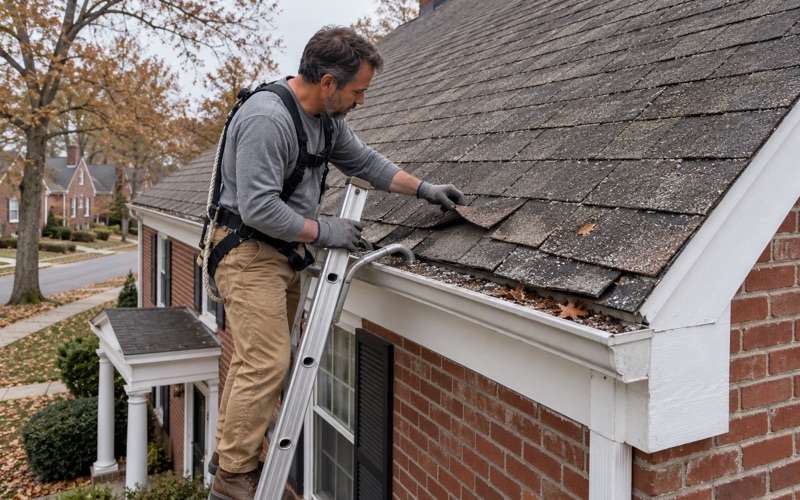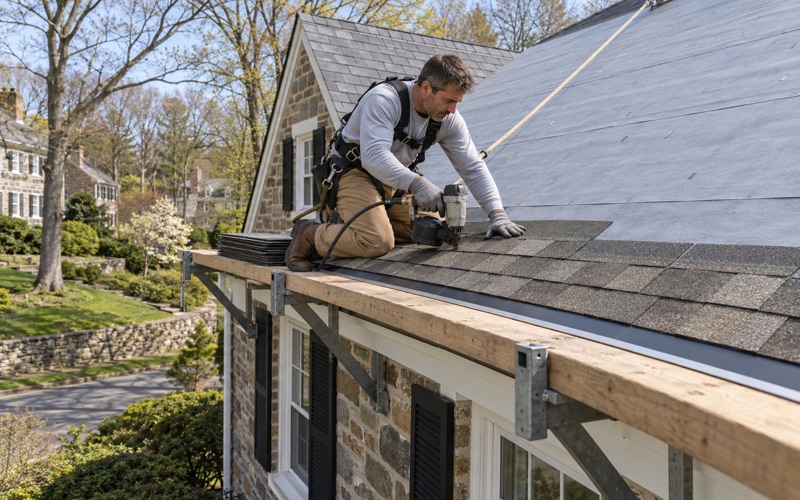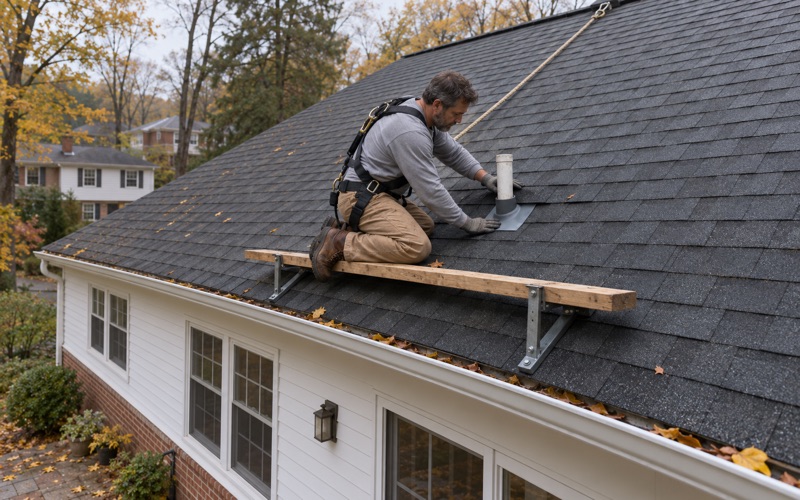
Lower Merion Elite Roofing has spent more than 20 years on roofing in Cinnaminson and the towns around it, and most of that work starts with one question from an owner: can this roof be fixed, or has it run its course? We answer that before anyone talks about a new roof. A repair that buys real years is worth knowing about, and a replacement pushed too early is money spent ahead of need.
Our visits begin wherever the water shows up. When an owner calls about a stain or a drip, we go into the attic as well as onto the roof, because the spot where water appears on a ceiling is rarely the spot where it gets through. Tracing it back to the actual entry point comes before any price is written.
When a roof does need replacing, the scope we hand over is itemized. Tear-off, decking, underlayment, flashing, ventilation and gutters each get their own line, so an owner holding two estimates can compare them item by item rather than guessing at a lump sum.
Cinnaminson’s 2026 School Bond and Its Roofs
On September 15, 2026, Cinnaminson voters went to the polls on a school bond referendum, and roofs were near the top of the list. The district’s case for the money was plain: roofing and HVAC systems at several schools had reached the end of their useful lifespan, and leaking roofs were among the problems it described.
What Question 1 Covers
The first question asked for $57.7 million for improvements at all five schools in the district, including roof upgrades and new HVAC systems. It also carried added classroom space at Eleanor Rush and New Albany, security cameras, and esports and robotics labs.
The district put state debt-service aid at up to 40% of approved costs, which works out to state aid of $16.8 million for this question. The roof upgrades, in other words, were packaged with heating and cooling work, and the district’s own wording put worn-out roofs and outdated heating and cooling side by side.
Nine Votes Apart
According to the district, Question 1 passed 1,744 to 1,735, a margin of nine votes. The election was too close to call in the preliminary results, and the count reported afterward was still unofficial, with county certification pending.
For a household, the reported cost of the approved question is about $399 a year on the township-average assessment of $236,538. That figure applies to a home assessed at the average, and a house assessed higher or lower would see a different number.
The Second Question Failed
A separate $18.3 million second question asked for new classrooms at Memorial School, a new gym at Eleanor Rush and high school stadium upgrades. Voters rejected it 1,927 to 1,536. The roof work sits entirely in the question that passed, which says something about where the township drew its line between needs and additions.
Looking for roofing closer to Upper Chichester? See Upper Chichester Roofing.
What End of Useful Life Means for a Roof
“End of useful life” is the phrase the district used, and it is the right phrase for a roof. A roof is not replaced because it reached a birthday. It is replaced when its materials stop keeping water out and repairs no longer hold long enough to be worth paying for.
That definition cuts both ways. An older roof that still sheds water and takes a clean repair has not reached the end of its useful life, whatever its age, while a newer roof with failing flashing and repeated leaks may be closer than its age suggests.
Leaks as the Warning Sign
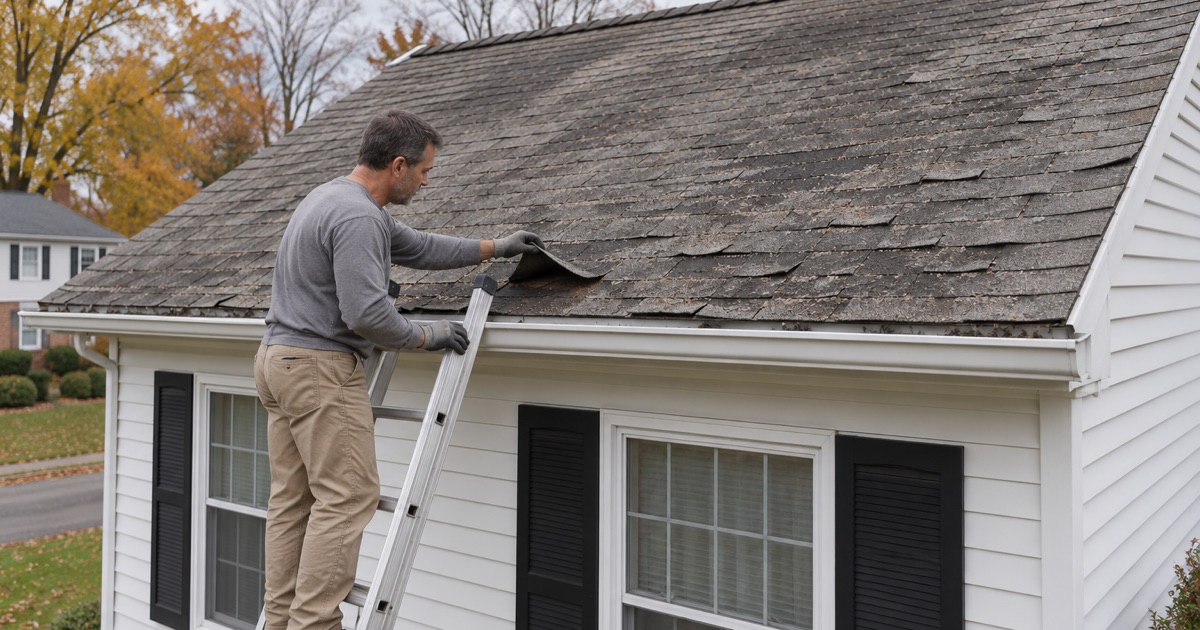
A leak is the roof telling an owner that something in the system has given up. On a single leak, the cause is often local: a lifted shingle, a cracked pipe boot, a failed seal at a chimney or a gap in step flashing along a wall. Those are repairable, and fixing them is usually the right first move.
The pattern changes when leaks multiply. Water showing up in several rooms, a repaired spot that starts dripping again a season later, or stains appearing far from any chimney or vent all point to a covering that is wearing out across the whole field. That is the moment the conversation shifts from repair to replacement.
Signs That Show Before the Water Does
Plenty of roofs announce their age before a ceiling ever stains. Shingles that curl at the edges or cup in the middle, bare patches where the granules have washed off, and heavy granule grit collecting in the gutters all suggest a covering near the end of its run.
In the attic, daylight around a vent or chimney, dark streaks on the underside of the decking and sheathing that feels soft underfoot are the earlier warnings. We look for all of these on a single visit, and we tell the owner which ones we found and which ones we did not.
Why We Look From Inside
Water travels along rafters and the top of insulation before it drops, so a leak over a hallway can start at a valley several feet away. Checking the attic side lets us follow that path back to its source. It is also how we tell a roof with one bad spot from a roof that is wet in several places at once.
Pipe boots, chimney crickets and the flashing around skylights are the usual suspects on a post-war house, and each one can be checked from both sides. When the attic shows dry framing and the stain came from a single failed boot, the fix is small and the estimate says so.
Roof Work Through the Summers of 2027 and 2028
The district’s timeline puts first construction in the spring and summer of 2027, with critical infrastructure targeted for the start of the 2028-29 school year. Classroom additions are projected later, by the 2029-30 school year. The plan leans on the warmer months, and season matters for a house roof as well.
Why Timing Matters for a House
A roof can be replaced in most months, but a replacement planned ahead lands in a better window than one forced by a ceiling that is already dripping. Owners who see the early signs this year have time to get scopes, compare them and pick a date, rather than accepting whatever opening exists after an emergency.
If an owner suspects the roof is close, we would rather inspect it now and say so plainly. Sometimes the answer is a repair and another few seasons of watching, and sometimes it is a replacement scheduled for a dry stretch the following year.
Solar, Gutters and the Rest of the Schedule
Panels have to come off for any re-roof, so a house with rooftop solar needs the removal and reinstall built into the schedule from the start. We plan that before the job begins rather than discovering it on the morning the crew arrives.
Gutters and downspouts get the same treatment. We size and pitch them along with the roof, since a new roof draining into an undersized or sagging gutter just moves the water problem to the fascia and the foundation. At the end of each work day, the driveway, yard and gutters are cleaned, and a magnet sweep picks up stray roofing nails.
When Storm Damage Speeds Things Up
A storm can turn a roof that was wearing out slowly into one that needs work this month. When that happens, we photograph the damage and write it up for the owner’s own insurance claim. If asked, our crew will meet the adjuster on site, though we do not negotiate the claim on the owner’s behalf.
Reading the Same Signs on a Cinnaminson House
The signs that put school roofs on a Cinnaminson ballot are the ones to watch on a house: leaks, worn materials and repairs that stop holding. In Cinnaminson, the age of the housing makes that worth doing now rather than later.
Half the Homes Built From 1950 to 1969
Census estimates count 3,150 of the township’s 6,320 housing units, or 49.8%, as built between 1950 and 1969, and 4,728 of them, or 74.8%, as detached houses. Across the township, 84.6% of occupied homes are lived in by their owners.
A house from that era has very likely been through more than one roof already, and some still carry layers from earlier jobs. Whether the next roof goes on after a full tear-off is something we settle in the scope, not on the day of the work.
Attached Homes and Shared Roofs
The same census figures count 575 attached single-family homes in Cinnaminson. On a twin or attached house, one owner’s roof meets a neighbor’s at the shared wall, so we plan the tie-in, flashing and drainage with the adjoining roof in mind. Leaving that seam to chance is how a new roof ends up leaking at the one place it touches an old one.
Timing matters on a shared roof as well. When only one side is being replaced, the new material has to meet the old cleanly, and we explain to the owner how that joint will be flashed before the work starts.
What Happens Once the Old Roof Is Off
Decking is the part of a roof no one sees until the shingles come off. When we find damaged sheathing during a tear-off, we photograph it and show the owner before any of it is replaced, at a per-sheet price already set in the contract.
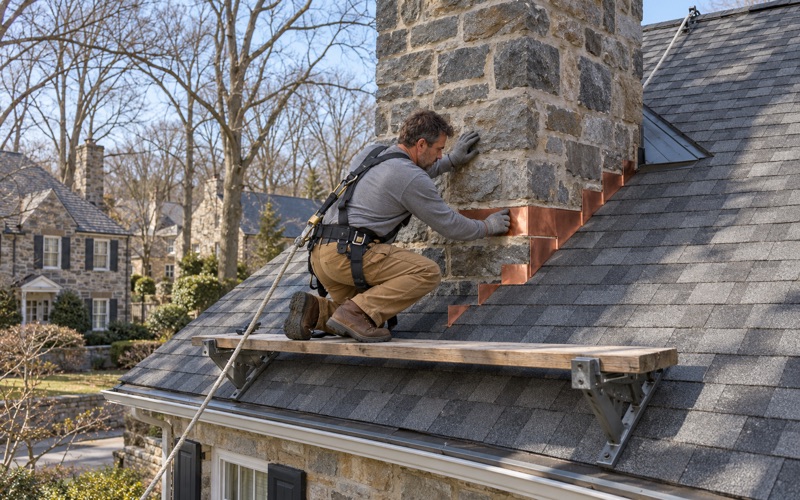
Step, counter and chimney flashing is replaced with the new roof rather than reused under fresh material. Old flashing tucked under new shingles is one of the most common reasons a roof leaks at a wall or chimney within a few years, and it is the kind of shortcut a straight scope rules out.
Starting With an Honest Inspection
Every Cinnaminson owner deserves the same straight answer the district gave its voters about the school roofs. We inspect from the attic and the roof, explain what is worn and what is sound, and tell the owner whether repair will hold. Replacement comes up only when the roof itself has made the case.
- 20+ Years Roofing
- Itemized Written Scopes
- Slate Repair Specialists