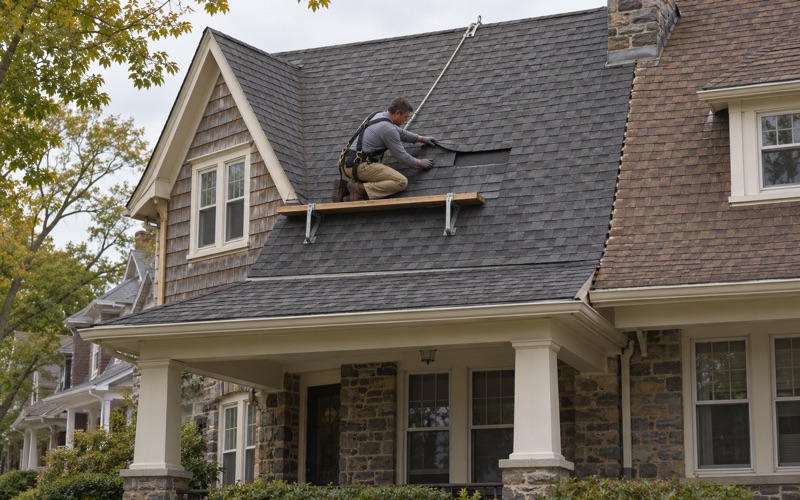
Lower Merion Elite Roofing approaches roofing in East Greenwich with more than 20 years in the trade and a simple order of work: find out what the roof actually needs, then find out who answers for it. That second question matters more here than in many towns, because part of the township’s housing sits inside age-restricted associations whose paperwork can shape a re-roof before a single shingle comes off.
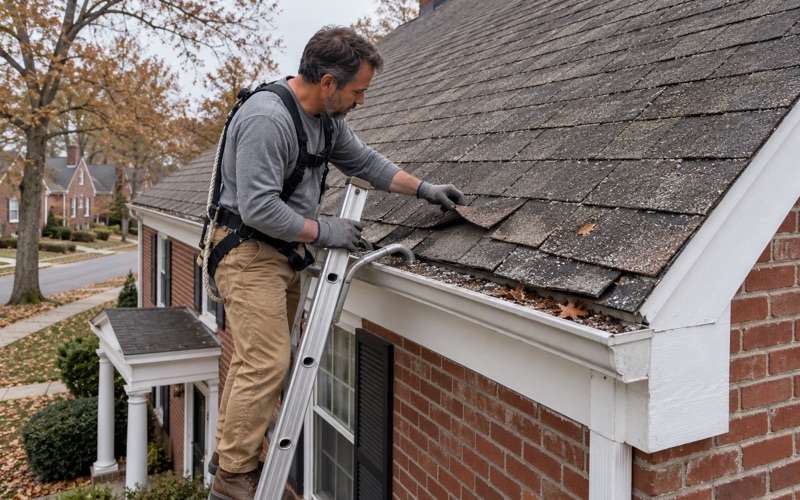
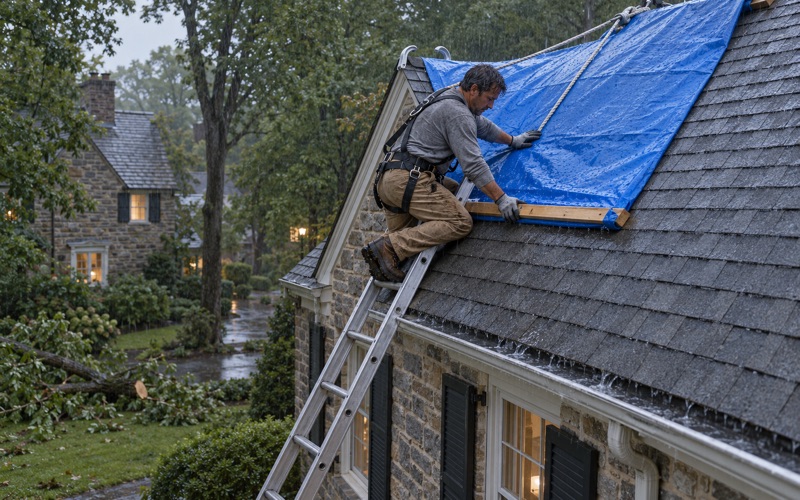
Every visit starts with a straight answer on whether the existing roof can be repaired, and replacement only comes up when repair is not the honest option. If a leak brought us out, we look in the attic as well as on the roof, so we price the spot where water actually gets in rather than the stain on the ceiling below it.
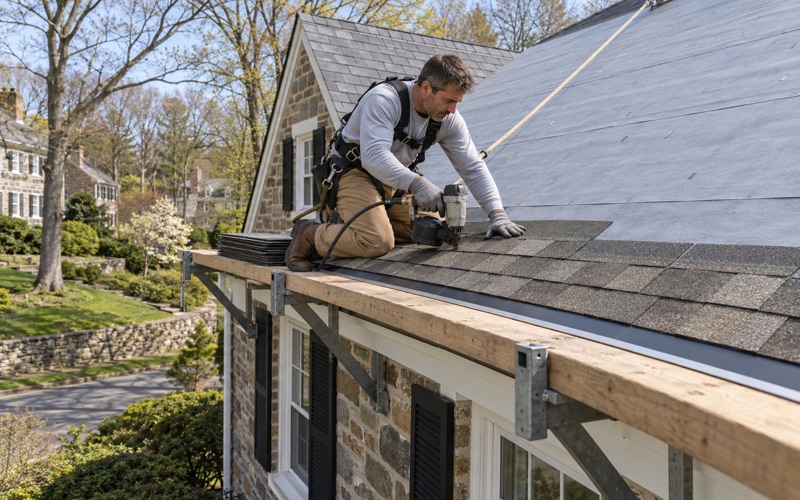
When replacement is the right call, the written scope separates tear-off, decking, underlayment, flashing, ventilation and gutters into their own lines. That lets an owner, or an adult child helping with the decision, compare two estimates item by item, and it gives the owner a clear document to set beside the association’s own paperwork.
East Greenwich’s Two 55-and-Over Communities
East Greenwich holds two age-restricted neighborhoods built roughly a generation apart, and their roofs sit at very different points in their lives. Country Walk in Mickleton is the older of the two, while Legacy at East Greenwich in Clarksboro is still being built. An owner in one faces a different roofing question than a neighbor in the other.
Country Walk’s 1996 Ranch Homes
Listings describe Country Walk as a 55-and-over community of one-story ranch homes, and the build year they give is 1996. One listing at 424 Country Way describes a single-family residence with two bedrooms and two full baths at about 1,408 square feet, and a Bright MLS listing for another Country Way house marks the age requirement as 55.
These are detached single-family houses rather than attached units, so each roof stands on its own. A roof on one house can be replaced without coordinating a shared ridge or party wall with the house next door, which keeps the job simpler than it would be on a townhouse row.
Legacy at East Greenwich, Building Since 2019
Legacy at East Greenwich in Clarksboro is also restricted to buyers 55 and over, and Ryan Homes has been building it since 2019, with the community listed at 140 homes. Those roofs are young by any measure.
For a Legacy owner today, the realistic roofing questions are smaller ones: a storm repair, a flashing detail, or gutters that need adjusting. We keep the same repair-first approach there and do not suggest a new roof on a house that does not need one.
Why the Age Gap Matters
A community built in 1996 is about 30 years old now, which puts its original asphalt roofs at the age when many reach the end of their service life. Country Walk is in its first wave of roof replacements, and one 1996 house was advertised with “a roof that is just 9 years young,” so at least some homes there are already on a second roof.
That means neighbors on the same street can be at very different stages. One owner may have a fairly new roof while the house beside it still carries its original shingles, and the right answer for each starts with an inspection rather than with the age of the community.
Looking for roofing closer to Plymouth Township? See Roofing in Plymouth Township.
What the Country Walk Fee Lists, and What It Leaves Out
The association fee is the first place most owners look when a roof starts to fail. The listings give a useful outline of it, but an outline is not the whole picture.
The $299 Quarterly Fee
Country Walk’s association fee is listed at $299 a quarter, or about $99.67 a month, with Country Walk Realty Solutions named as the manager on one listing. A Bright MLS listing for 415 Country Way says the quarterly fee covers common area maintenance, lawn care and snow removal.
That is a helpful list, but it is a summary written to sell a house. It tells a buyer what the fee pays for in plain terms, and it is not the same thing as the association’s governing documents.
The Roof Is Not on That List
No listing we read names the roof among the fee’s inclusions. That absence is worth noticing, but it does not settle anything by itself, because a listing summary is not a declaration and a missing item is not a ruling.
We do not tell a Country Walk owner who pays for a roof, because we have not read the community’s declaration or rules. What we can say is that the question has to be answered before a replacement is priced, since the answer decides who signs the contract and who receives the estimate.
Other Items the Listings Mention
The 424 Country Way listing says the association allows fencing with its approval and offers a storage lot for RVs and hobby vehicles. Fencing is the only approval the listings describe, and they say nothing either way about roofs, colors or materials.
That silence is another reason to read the documents themselves. If the rules do address exterior changes, the time to find out is before shingles are ordered, not after a color has been chosen and delivered.
Reading the Association’s Documents Before a Re-Roof
A half hour with the paperwork can save weeks of back and forth later. We ask for it early, before measurements turn into a price.
What to Look For
Before we price a Country Walk replacement, we ask the owner to pull the association’s declaration, bylaws and any exterior rules, plus recent meeting minutes if the manager provides them. The sections that matter describe who maintains the roof, whether exterior changes go through any review, and whether a shingle color or style is specified.
If the documents put the roof on the association, the conversation belongs with the association and its manager. If they put it on the owner, the owner hires the contractor, and the documents tell us what limits, if any, the new roof has to respect.
Questions for the Manager
Where the documents are unclear, a short written question to the association’s manager settles it faster than guessing. We suggest asking whether there is a preferred shingle line or color, whether a roof replacement needs notice, and whether a dumpster or material delivery has placement rules on shared roads.
We do not contact an association on an owner’s behalf unless the owner asks us to, and we never present ourselves as speaking for it. Our job is to hand the owner a written scope clear enough to share with anyone who needs to see it.
Matching a Street That Re-Roofs House by House
Where roofs are being replaced one at a time, owners often want the new roof to sit comfortably beside the neighbors’. Architectural shingle lines such as GAF Timberline HDZ, Owens Corning Duration and CertainTeed Landmark each come in a range of colors, so a close match to what is already on the street is usually within reach.
We bring physical samples rather than relying on a screen, because a shingle color reads differently on a low ranch roof in full sun. If the association’s documents name a color or product, that choice comes first and the samples narrow from there.
One-Story Roofs for Owners Planning to Stay
A single-story ranch is one of the easier roofs to inspect and replace well. The details that make it last are the same ones that matter on any house, and they deserve their own lines on the scope.
Inspection Before Pricing
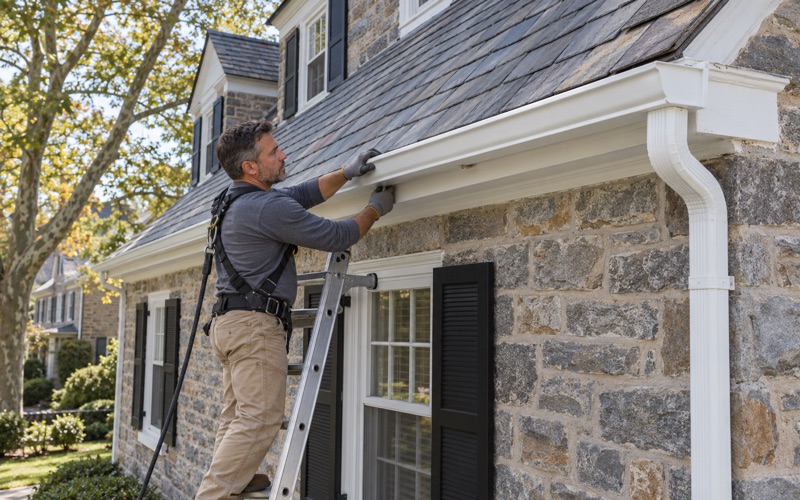
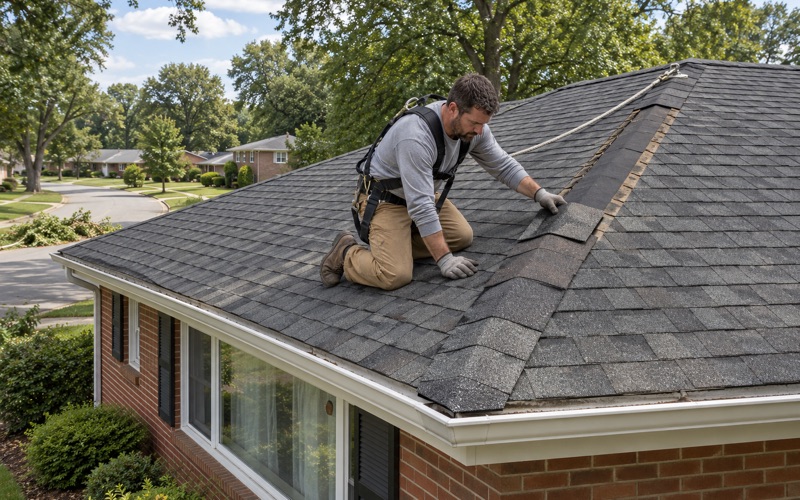
A one-story ranch puts the whole roof within reach of a ladder, which makes a thorough inspection straightforward. We walk the roof, check the flashing around vents and any chimney, and go into the attic to look at the underside of the decking for stains, soft spots and daylight.
On a house of this age, the attic often tells more than the shingles do. It shows whether earlier leaks have already damaged the decking and whether the ventilation is moving air the way it should, and both of those change the scope.
Decking, Flashing and Underlayment
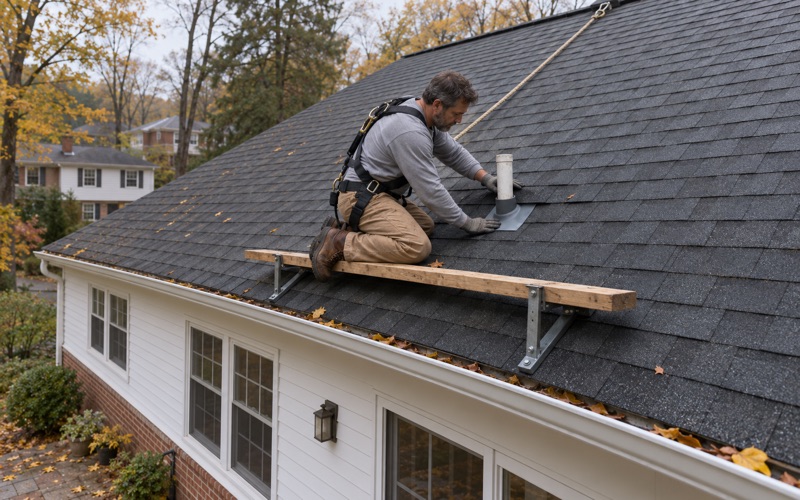
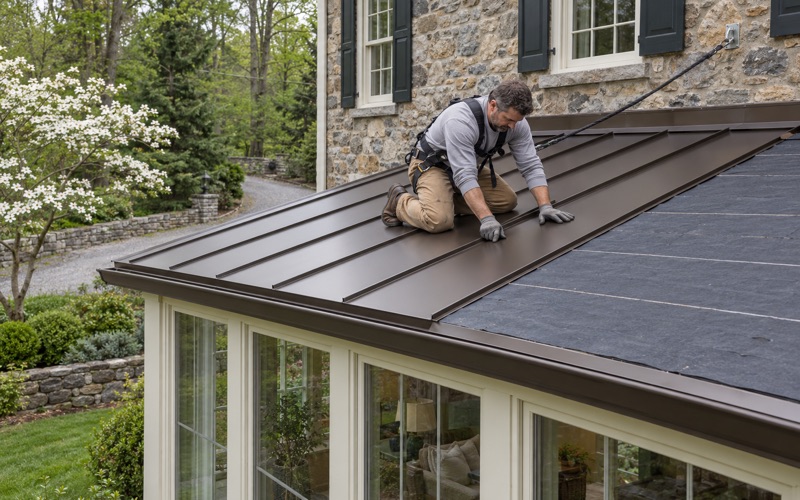
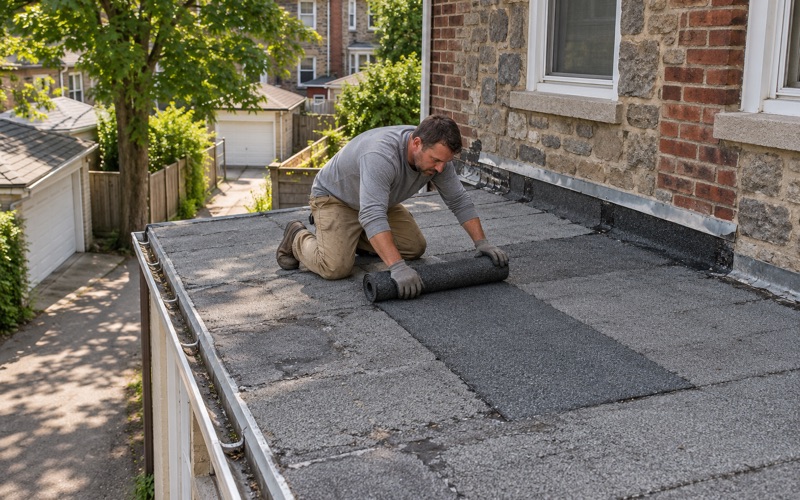
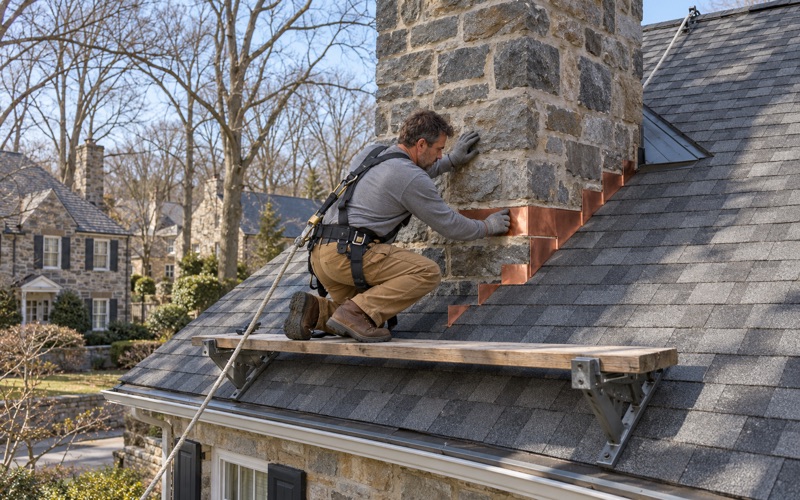
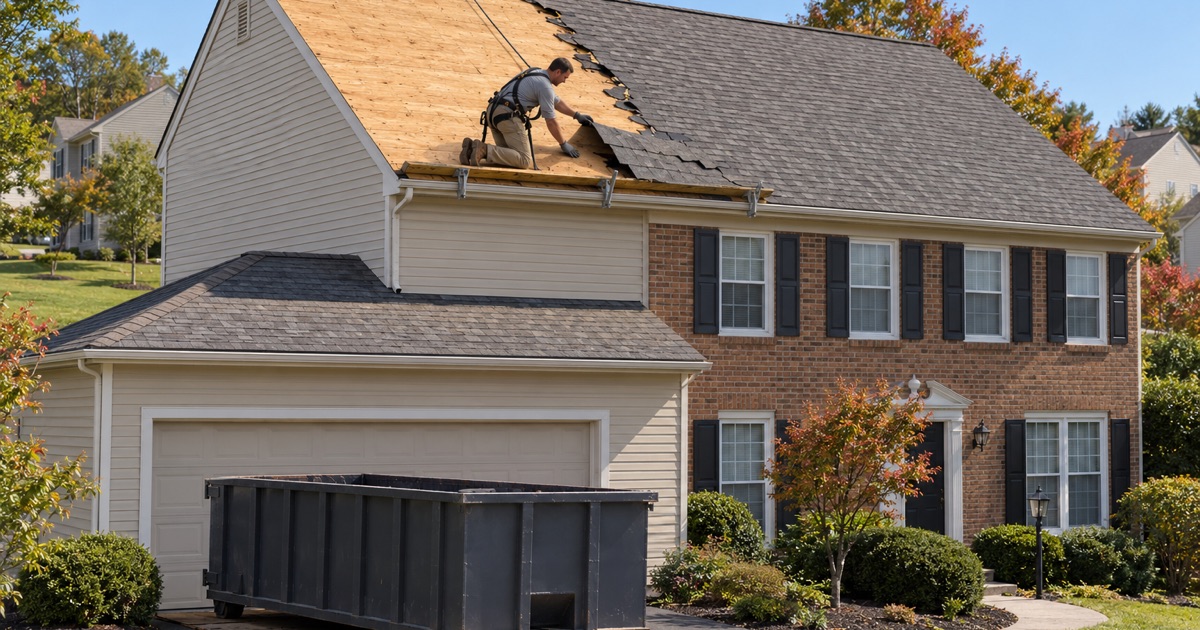
Once the old roof is off, any damaged decking is photographed and shown to the owner before it is replaced, at a per-sheet price already written into the contract. Step flashing, pipe boots and any chimney flashing are replaced with the roof rather than reused under new shingles.
Underneath the shingles, we lay a self-adhering ice and water barrier along the eaves and a synthetic underlayment across the rest of the deck. Ventilation gets its own line too: a ridge vent paired with soffit intake is the usual approach on a ranch roof, balanced so the attic stays drier in winter and cooler in summer.
Gutters and a Clean Site
Gutters and downspouts are sized and pitched with the new roof rather than left as they were. On a one-story house the gutters sit close to walkways and garden beds, so where a downspout empties matters for an owner who wants steady footing in winter.
At the end of each work day the driveway, yard and gutters are cleaned, and the lawn gets a magnet sweep for roofing nails. Where the association fee covers lawn care, that sweep protects the mowing crew’s equipment as well as the owner’s feet.
A Roof for the Years Ahead
An owner who plans to stay in an East Greenwich ranch for the long run is choosing a roof meant to outlast that stay. That makes the long-term pieces worth weighing, such as shingle wind ratings like ASTM D3161 Class F or ASTM D7158 Class H, and the quality of the underlayment beneath them.
We lay out those options plainly, with each one priced on its own line, and leave the choice to the owner. A roof that is repaired well and replaced only when it truly needs to be is the outcome we aim for on every house in Mickleton, Clarksboro and the rest of the township.
- 20+ Years Roofing
- Itemized Written Scopes
- Slate Repair Specialists