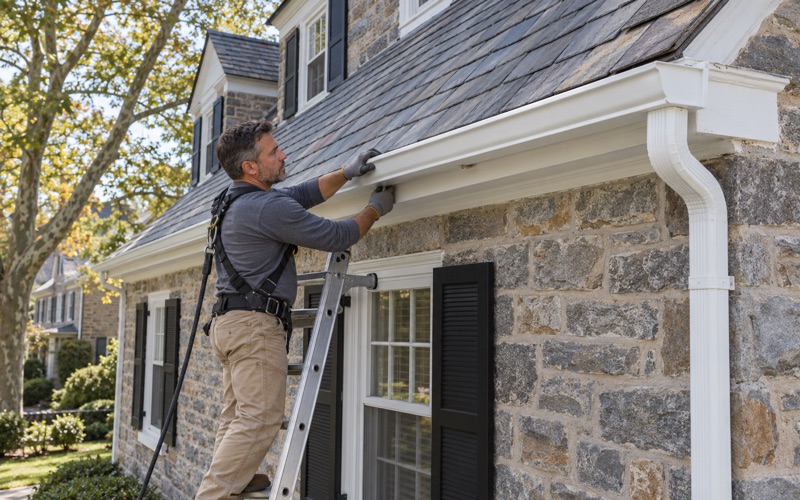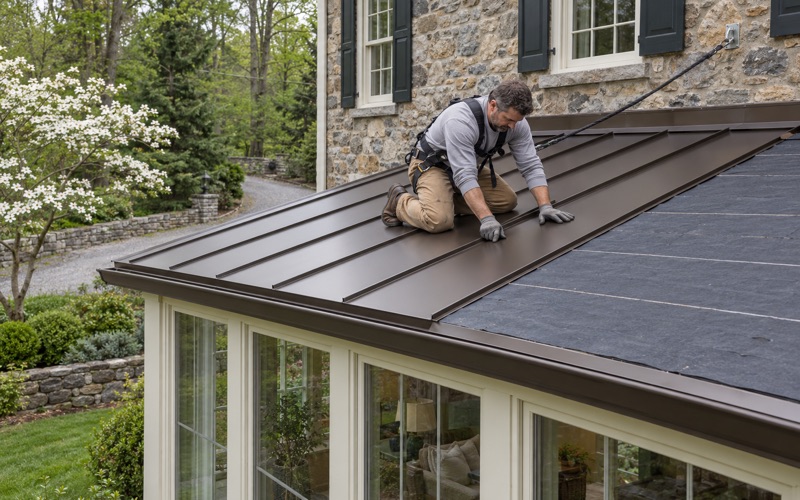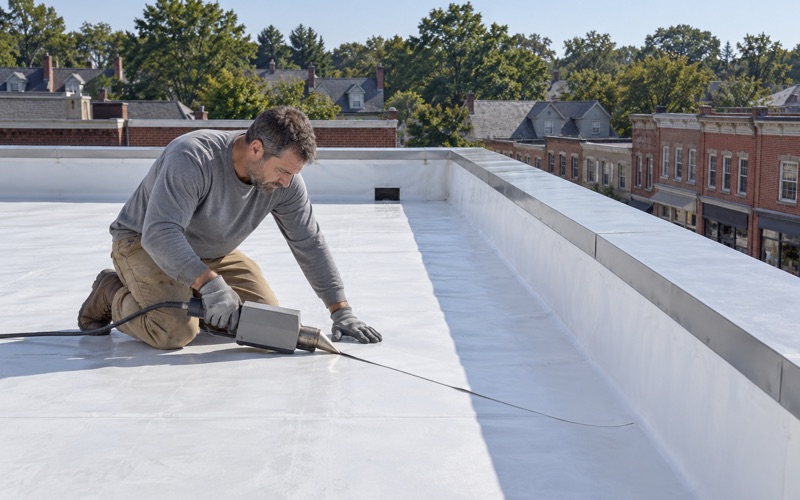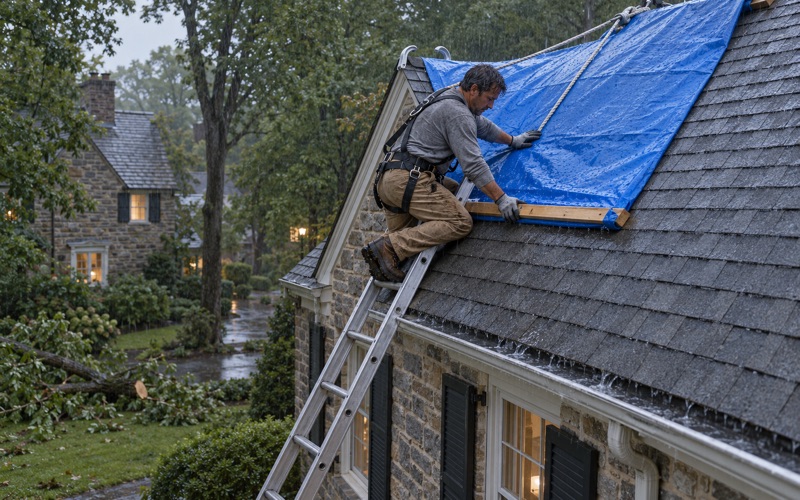
Lower Merion Elite Roofing has spent more than 20 years on roofing in East Norriton and the towns around it, and the work here sits on two very different kinds of roof. Houses carry pitched shingle roofs, chimneys and the trees that lean over them. The commercial frontage carries wide low-slope roofs, where a membrane, its seams and its edge metal decide how a building rides out a hard wind.
We start every call the same way, whichever roof it is. When water shows up indoors, we look from the inside as well as from the top, tracing the leak to the place it actually gets in before a single repair is priced. Then you hear plainly whether the roof can be fixed, and only after that do we talk about replacing it.
Our written scopes break the job into separate lines for tear-off, decking, underlayment, flashing, ventilation and gutters, so a second estimate can be laid next to ours and compared line by line. Wind is the lens for most of what follows, because one summer afternoon showed how a big roof comes apart.
The July 21, 2021 Storm on Germantown Pike
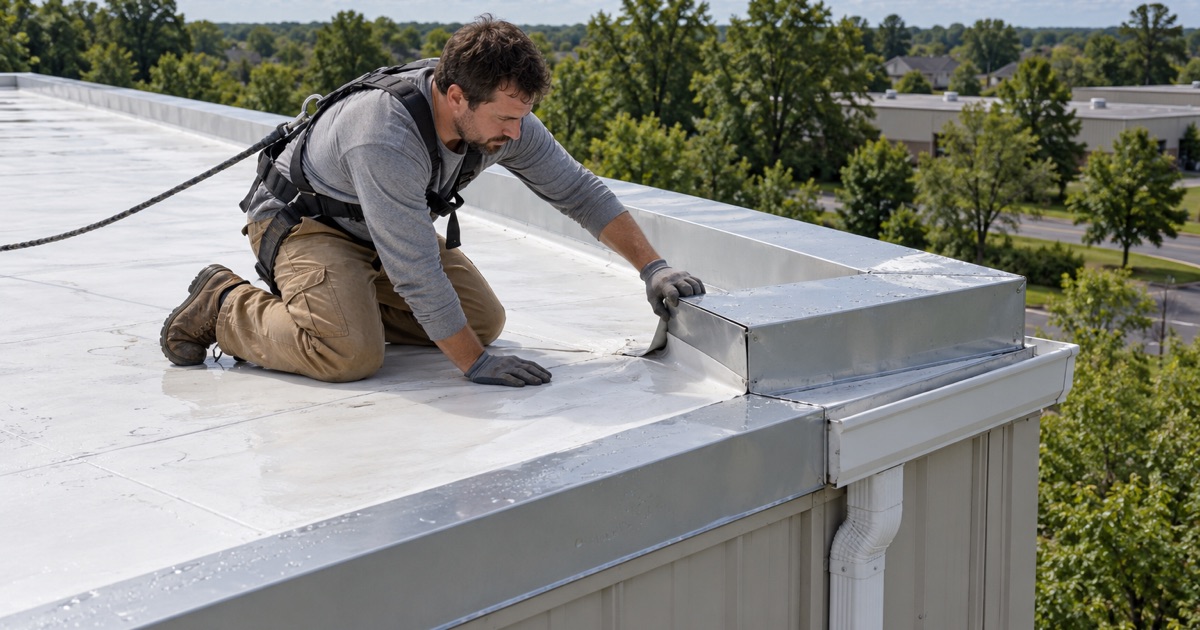
What the coverage reported
On the afternoon of Wednesday, July 21, 2021, storms carrying hail and damaging winds crossed the area, and East Norriton was hit hard along Germantown Pike. FOX 29 flew over a warehouse in the township and reported, “Winds ripped off the roof of a warehouse in East Norriton. Half of the roof appears to be gone.” The same coverage showed large hail photographed in Flourtown.
WFMZ reported separately that an Amazon fulfillment center under construction on West Germantown Pike was ripped apart, and that pieces of its roof flew across to the parking lot of the Weis supermarket next door. Amazon had announced a delivery station at 53 West Germantown Pike that April. Around 6,800 homes lost power at the height of the storm.
What the coverage leaves out
We keep those two accounts apart because the reporting never joins them. Nothing we found settles whether the FOX 29 warehouse and the building WFMZ described are one structure or two. We also found no National Weather Service damage survey for the afternoon, no measured wind figure, and no description of either roof system.
So the record holds the failure and nothing about its cause. It would be easy to guess at a fastening pattern or a membrane type, and we will not, because a guess about someone else’s building helps no one. What the afternoon does show clearly is the general way a large flat roof behaves in high wind, and that pattern shapes how we look at every low-slope roof along the corridor.
Looking for roofing closer to Upper Providence Township? See Roofing Services in Upper Providence Township.
How Wind Takes Hold of a Low-Slope Roof
Before the roof is finished
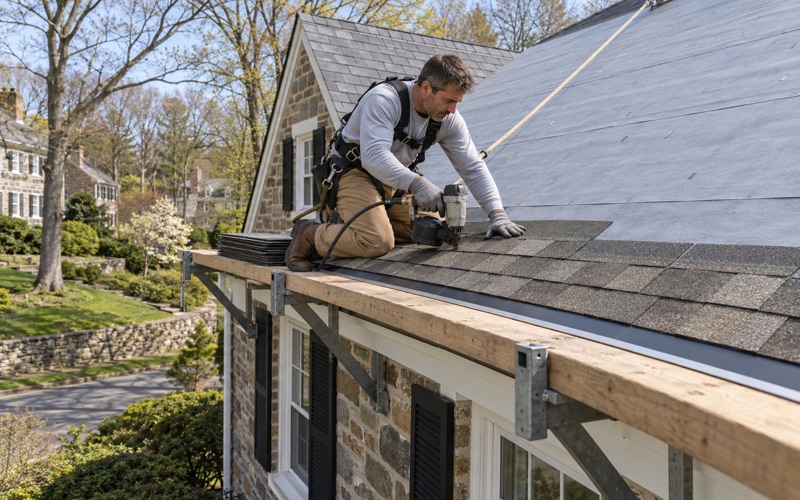
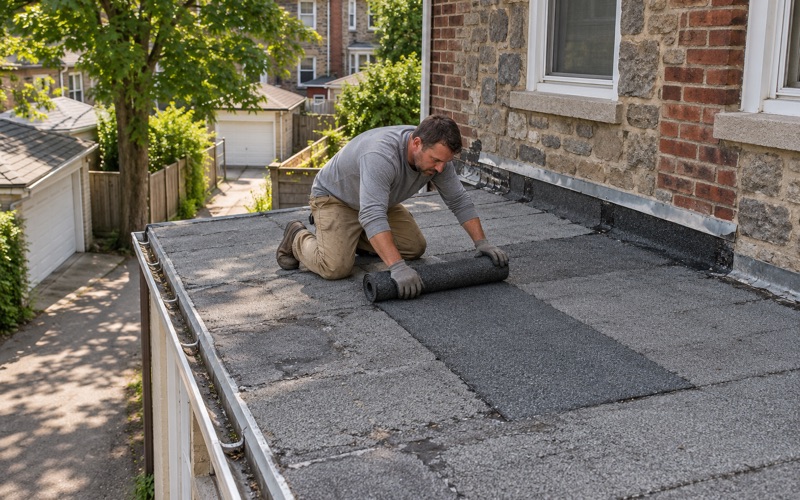
A large low-slope roof goes on in stages: the deck, then insulation, then the membrane, and finally the metal that locks down the perimeter. Between those stages, sections of material can be in place but not yet fully attached, and edges can sit open where flashing has still to be installed. Wind that a finished roof would shrug off can get under a loose sheet and peel it back across the deck.
That is general wind-load knowledge, not a finding about either building on Germantown Pike. It still matters to anyone with a commercial project under way, because the stretch between material delivery and final securement is when a roof is most exposed. A forecast with damaging winds in it deserves a hard look during that window, and loose material deserves to be tied down before the crew leaves.
Edges and corners carry the most uplift
On a finished low-slope roof, air moving over the roof edge creates suction that is strongest along the perimeter and strongest of all at the corners. That is why edge metal, the first rows of fasteners and the corner zones are built with more holding power than the open field of the roof. When a membrane begins to lift, it nearly always begins at an edge.
The practical result is an order of inspection. A lifted corner caught early is usually a contained repair. Left alone through the next storm, the same corner gives wind a handle to pull on, and a small opening can grow into a torn section.
The membranes these roofs use
Low-slope roofs in general fall into a few families: EPDM rubber membrane, TPO and PVC single-ply membranes, and SBS or APP modified bitumen. Each is held down differently, whether by adhesive, mechanical fasteners, ballast or welded seams, and each shows wind damage in its own way.
An EPDM sheet tends to balloon and flutter where the adhesive has let go. A single-ply roof shows its trouble at seams and fastener rows, and modified bitumen tends to crack or lift at laps. Knowing which family is overhead tells us where to put our hands first.
Checking a Commercial Roof After a Summer Storm
The perimeter, then the field
We walk the edges before the middle. That means the coping and edge metal, the seams nearest each corner, and the termination bars where the membrane turns up a parapet wall. From there we move inward to the curbs around rooftop units, the pipe penetrations and the drains, which collect leaves and debris after a storm and can hold water against the membrane.
Hail leaves its own marks, from bruised or punctured membrane to dented metal on units and vents. Wind-thrown debris matters too. When pieces of one roof can land in a neighboring parking lot, as WFMZ described on West Germantown Pike, the roofs downwind of a failure are worth a careful walk as well.
Germantown Pike carries more than warehouses. Office properties such as Bentwood Executive Campus on East Germantown Pike, along with the Norriton Business Campus on Campus Lane, are part of the township’s commercial picture. Whatever their roofs are made of, any low-slope section gets the same perimeter-first walk after a damaging storm.
The underside of the deck
A roof can look intact from above and still be taking water. From inside, we check the underside of the deck for fresh staining, look at ceiling tiles beneath roof drains and seams, and look for insulation that has gone heavy and wet. Water travels along a deck before it drips, so the stain and the opening are often some distance apart.
Matching the inside evidence to the outside one is what turns a vague leak into a specific repair. It also keeps an owner from paying to patch a seam that was never the problem.
Records for the owner’s claim
Storm damage gets photographed and written up for the owner’s own insurance claim, with each finding tied to its place on the roof. If the owner asks, we meet the adjuster on site and walk the roof with them. We do not negotiate the claim; the record is there so the owner can.
Good records start early. Photos taken before anything is tarped or patched show the damage as the storm left it, and a dated write-up made while the roof is still open is harder to dispute than a description pieced together weeks later. Any emergency cover we install goes into the same record, so the adjuster sees what was done and why.
East Norriton’s Houses in the Same Storm
A tree, a chimney and a shed
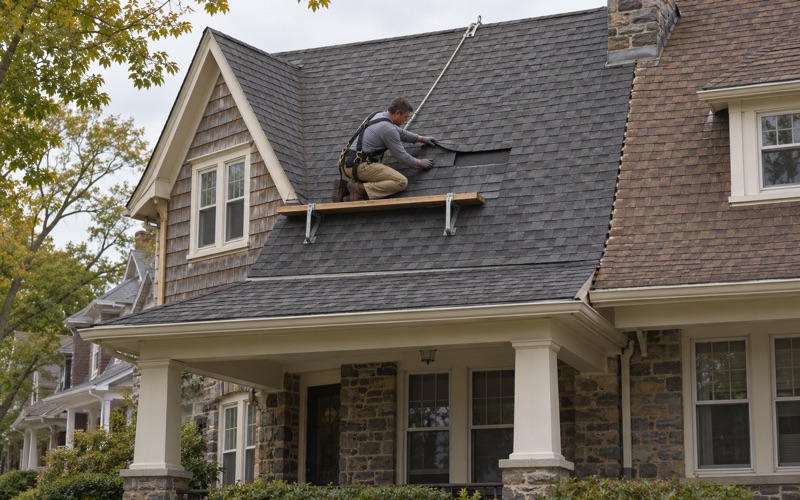
The commercial roofs drew the cameras, but houses took damage that afternoon too. FOX 29 reported a tree crashing into the roof of an East Norriton home, and a resident described how it took the chimney and the shed and landed on a car. A fallen limb rarely stops at the shingles: it can crack decking, bend rafters and tear the flashing around a chimney.
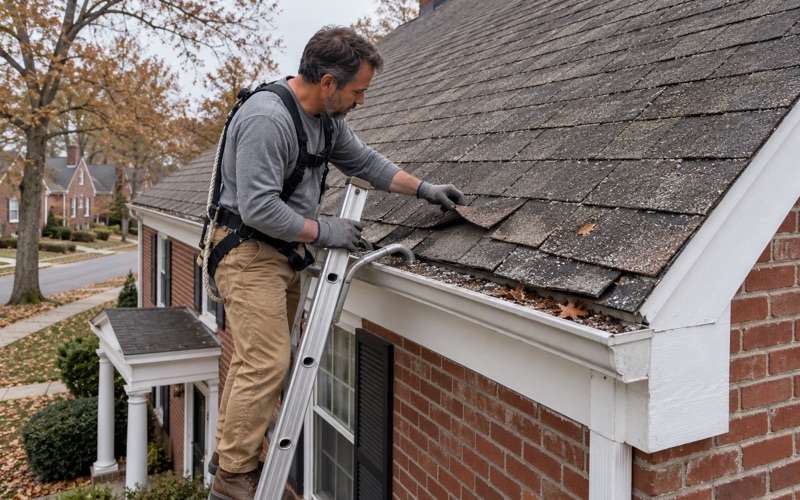
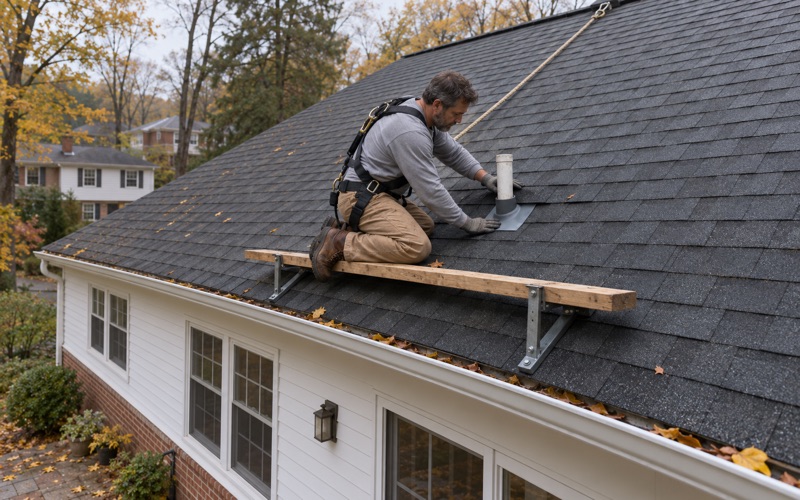
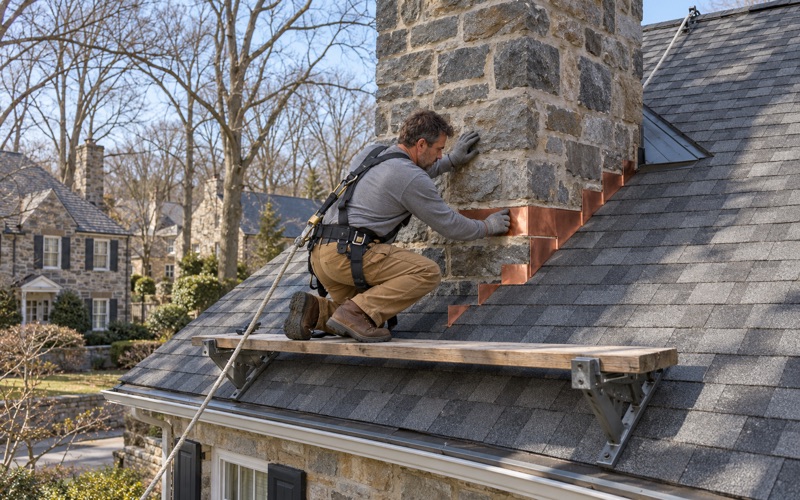
Once the old roof is off, any damaged decking we find is photographed and shown to the owner before it is replaced, at a per-sheet price already set in the contract. Step, counter and chimney flashing is replaced along with the roof rather than reused under new shingles, because old flashing is where a repaired roof starts leaking again.
A chimney that takes a hit needs more than new flashing. We look at the crown, the mortar joints near the roof line and the cricket on the uphill side, if the chimney has one, because a cracked joint above the flashing lets water run down inside the masonry and show up in the attic as if the roof were leaking.
Repair first, replacement second
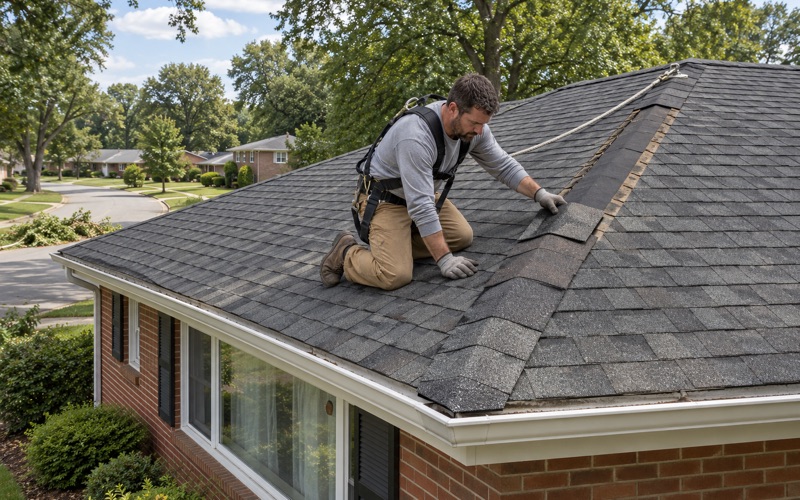
A storm-damaged house roof is not automatically a replacement. Where a tree has torn one slope and left the rest sound, a section can often be rebuilt and tied into the existing shingles, with new flashing at the chimney and fresh underlayment beneath. We tell you plainly when that will hold and when it will not.
Replacement makes sense when the damage reaches across most of the roof, when the shingles were already near the end of their life, or when the decking underneath has softened over a wide area. In those cases the scope says so in writing, with each part of the job on its own line.
A mostly mid-century housing stock
Census figures show 1,270 of the township’s housing units were built in the 1950s and another 1,118 during the 1960s. Of 6,542 units, 3,764 are detached houses and 858 are attached. On houses of that age, chimneys, gutters and ventilation from the original build are often still in service under a newer roof.
Attached homes need planning with the neighbor’s roof and the shared wall in mind, so the seam between two roofs stays tight. Gutters and downspouts are sized and pitched with the new roof rather than left as an afterthought, since a gutter that cannot keep up sends storm water back toward the fascia.
Before and after the work
Before any job is priced, we check the rules set by the house’s own municipality, since each township and borough sets its own. Contracts follow Pennsylvania’s home improvement law, including the three-business-day cancellation notice and deposits held within the legal limit. At the end of every work day, the driveway, yard and gutters are cleaned, with a magnet sweep for stray roofing nails.
Solar panels change the schedule too. If a house carries panels, their removal and reinstallation are planned into the job from the start, so the crew is not waiting on an electrician once the old shingles are already coming off.
- 20+ Years Roofing
- Itemized Written Scopes
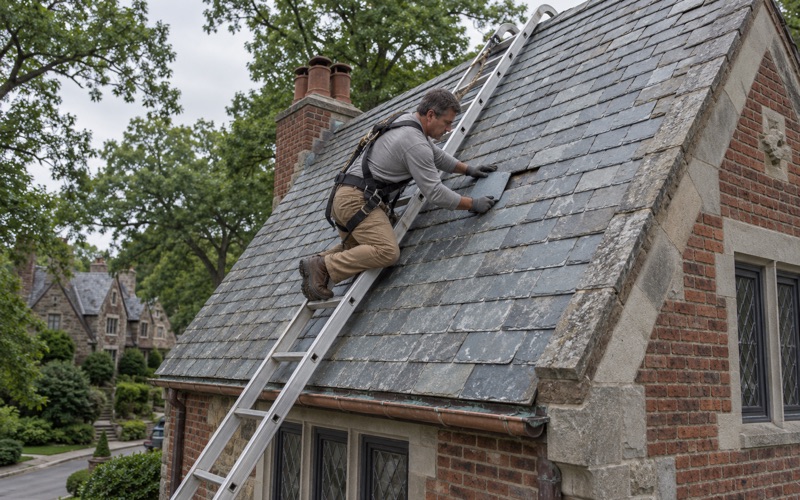
- Slate Repair Specialists