Lower Merion Elite Roofing brings more than 20 years of work to roofing in Manayunk, and on some blocks here the first question is not about shingles at all. It is about where the roof sits in a building’s whole repair bill. For most addresses that question never comes up, but for a building inside the mapped flood hazard area it can decide what paperwork a permit needs before any material comes off.
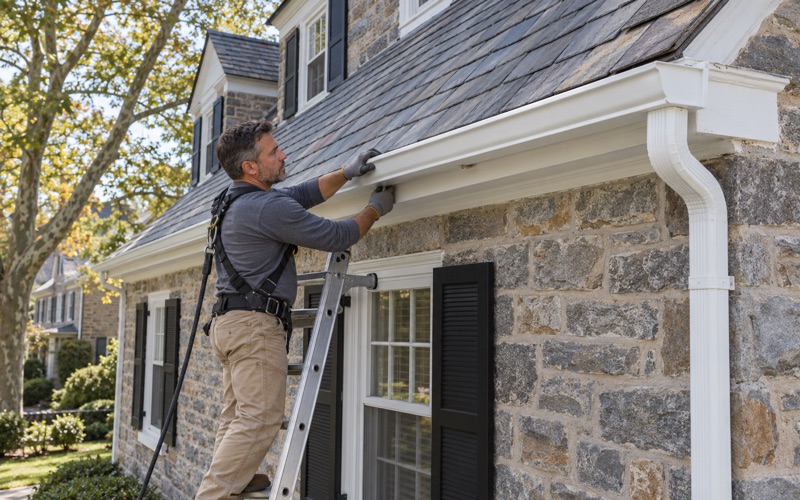
Every leak call we take starts in two places, the attic and the roof surface, because water rarely drips through the ceiling directly under the spot where it got in. Once we have traced the actual entry point, you get a plain answer on whether the roof can be repaired. Replacement only comes up after that answer, and only when the roof itself gives us a reason.
Because Manayunk is part of the City of Philadelphia, roof permits here run through the Department of Licenses and Inspections, not a township office. We confirm the city’s rules for your address, including whether the EZ re-roofing permit applies, before we price the job, so the estimate already reflects what the city will ask for.
Ida, the Schuylkill River and Main Street

Manayunk sits on the north bank of the Schuylkill River, and that location shapes how some roof jobs here have to be planned. The river is the reason some buildings here carry rules that other houses never meet.
The day the river came up Main Street
On September 2, 2021, after Ida, the Schuylkill River crested at 16.35 feet in Philadelphia. The river’s flood stage there is 11 feet, and the record still belongs to October 4, 1869, when it reached 17 feet.
In Manayunk the overflowing river swallowed Main Street and a number of vehicles. Some residents in apartments along Main Street were trapped by the water and had to be rescued. For owners of those riverfront buildings, the cleanup that followed was only the start of a longer run of permits and repairs.
Why a flood reaches the roof plan
High water does its damage low in a building, but the rebuilding that follows can pull in work at every level. An owner already facing new wiring, mechanicals and finishes may decide to deal with a worn roof at the same time rather than open the building up twice.
That choice is reasonable, and we will price it honestly. The point to understand early is that once the roof is part of the same rebuild, the city counts it alongside everything else when it decides how the permit is handled.
Which buildings the flood rules touch
These rules apply to structures inside the Special Flood Hazard Area, which is drawn on the federal flood insurance rate map. Not every Manayunk address falls inside it, and whether yours does is a question of the map and L&I’s review, not of how close the house looks to the water.
Citywide, about 1% of Philadelphia’s parcels and 8% of its acreage lie in flood hazard areas. Philadelphia’s initial flood map took effect December 31, 1978, and buildings built before that date are known as pre-FIRM structures.
Looking for roofing closer to Lansdale? See Roofing in Lansdale.
How L&I adds up a repair in the flood zone
The Commissioner of Licenses and Inspections serves as the city’s Floodplain Administrator. L&I Code Bulletin B-1701, issued March 1, 2017, lays out how the department assesses permit applications for alterations, additions and repairs to buildings in the flood hazard area.
Market value comes from the Office of Property Assessment
The test compares the cost of the work to the building’s market value. Under the bulletin, that value is the Office of Property Assessment market value of the property minus the taxable land. The land does not count, so the figure that matters is the structure alone.
This is an address-by-address calculation. The same roof scope can land very differently on two buildings with different assessed values, which is why we never tell a riverfront owner where their project will fall before the numbers are in front of L&I.
The whole project counts, roof included
L&I does not look at the roof permit in isolation. The entire project cost counts, including the costs of other required permits such as plumbing, electrical and mechanical work. A roof replacement folded into a post-flood rebuild becomes one line in that combined total.
Some costs stay out of the total. Clean-up and trash removal, temporary stabilization, plans, surveys, permit fees and the minimum work needed to correct existing code violations are excluded, among others. Knowing which costs count keeps an owner from overestimating or underestimating where the project stands.
The 30% paperwork line and the 50% rule
When the estimated cost is below 30% of the structure’s market value, L&I asks for a copy of the contract or a detailed contractor estimate matching the permit value, plus assurance that the work does not lessen the building’s ability to resist flood damage. At 30% or more, it asks for a Flood Protection Information form signed by the responsible design professional, along with the contracts for all work.
The larger threshold is substantial improvement. Work costing 50 percent or more of the market value brings the whole building under the floodplain standards for new construction, which may require elevating it. Since the August 2012 zoning revision, Philadelphia’s flood protection level has been 18 inches above the base flood elevation.
Substantial damage and appeals
After a flood, L&I can declare a building substantially damaged when restoring it would cost 50 percent or more of its pre-damage market value. Restoring that building is then regulated as a substantial improvement. Owners who disagree with a decision can appeal to the Board of Building Standards.
For a roof, that makes timing matter. A roof replaced while a substantially damaged building is being restored is part of that restoration, and it is best scheduled once the owner knows where the whole project stands.
Roof work after a flood: one line in the total
None of this predicts what any one Manayunk building will face. What it means is that the roof is counted with everything else, and the way the roof work is written up matters to everyone who reads the permit file.
A scope L&I can read line by line
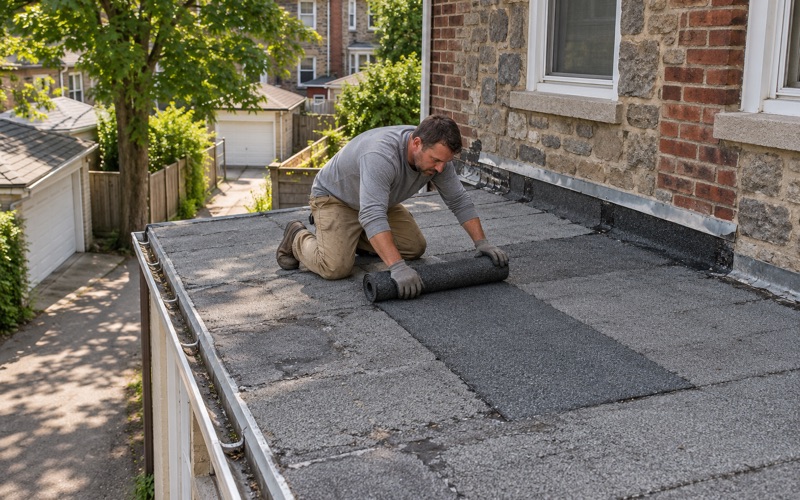
Our written scopes break out tear-off, decking, underlayment, flashing, ventilation and gutters as separate lines. That layout lets you compare two estimates item by item, and it gives your design professional or L&I a contract that matches the permit value without guesswork.
If damaged decking turns up once the old roof is off, we photograph it and show you before replacing it, at the per-sheet price already set in the contract. Surprises like that are exactly what can throw off a carefully assembled project total.
Repair before replacement
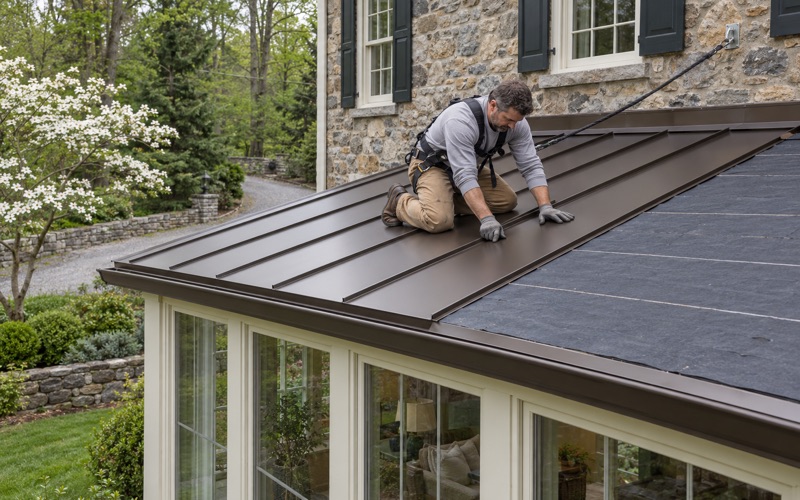
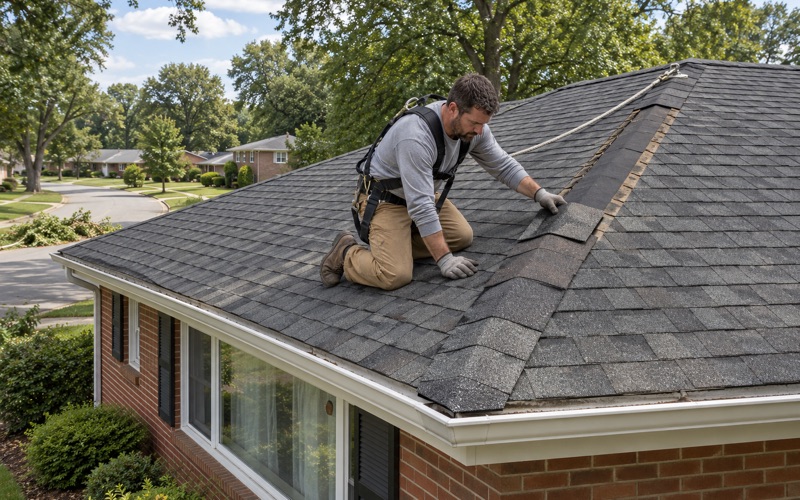
A roof that only needs repair should be priced as a repair, and we say so before any replacement talk begins. On a building already carrying a large rebuild, an honest repair scope keeps the roof line the size the roof actually requires.
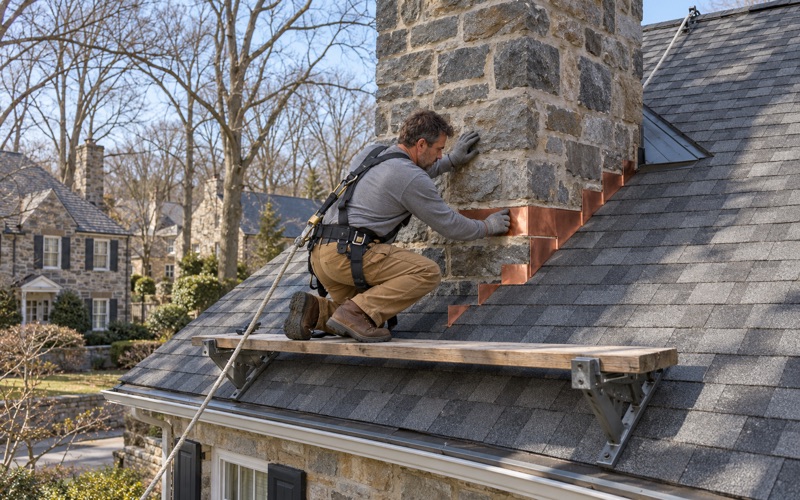
When replacement is the right call, step, counter and chimney flashing are replaced with the roof rather than reused under new material. Gutters and downspouts are sized and pitched along with it, because a roof that sheds water well depends on what carries that water away.
Photos and notes for your own claim
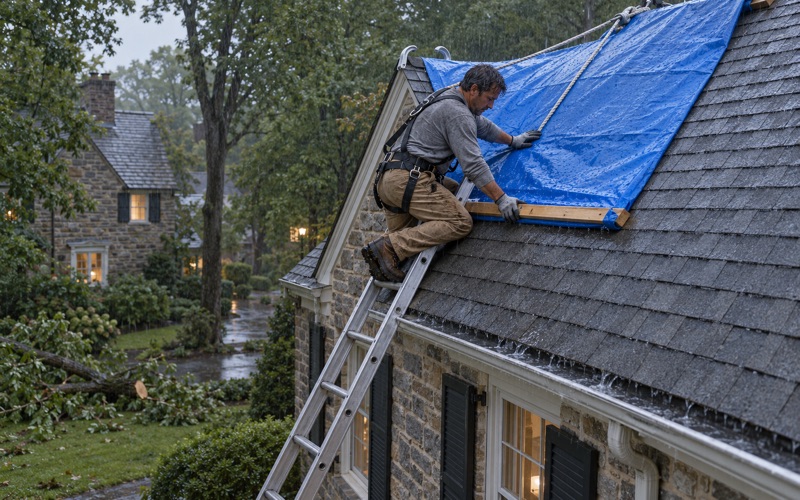
When a storm damages a roof, we photograph the damage and write it up so you have a record for your own insurance claim. If you ask, a member of our crew will meet the adjuster on site to walk the roof. We do not negotiate the claim; negotiating on an owner’s behalf is work for public adjusters, who are licensed separately under Pennsylvania law.
Those photos and notes also help on the permit side. After a flood, a dated record of what the roof looked like before work began gives your design professional something concrete to work from when the project total is assembled.
Row homes and shared walls
A row home shares a roof line and a party wall with the house next door. We plan those jobs with the neighbor’s roof and the shared wall in mind, so the seam between two houses is sealed rather than left as the weak point. At the end of each work day the crew cleans the sidewalk, yard and gutters, including a magnet sweep for roofing nails.
Historic Main Street buildings and the flood exemption
Main Street’s older buildings add one more layer to the picture, because the flood rules treat historic structures differently. That difference is real, but it applies building by building.
What B-1701 counts as a historic structure
A historic structure is exempt from the substantial-improvement requirements when the project keeps its historic status. The bulletin’s definition includes a structure certified as contributing to a registered historic district and one individually listed on the Philadelphia Historical Commission’s inventory.
Whether a particular building qualifies is a determination L&I makes. We do not assume an exemption for any address, and we plan the job so it works either way until the city has answered.
The Main Street Manayunk National Register Historic District
The Main Street Manayunk National Register Historic District lies on the north bank of the Schuylkill, about 5 miles northwest of Center City, and was listed on the National Register on March 18, 1983. Chapter 7 of the Philadelphia Property Maintenance Code places properties in the district under the Philadelphia Historical Commission’s jurisdiction.
That means a roof on a Main Street building can face two separate reviews: L&I’s flood assessment and the Commission’s review of the work itself. We check both before any roof work goes on the schedule, so neither one stalls a job already underway.
Contracts that hold up
Every contract we write follows Pennsylvania’s Home Improvement Consumer Protection Act, including the three-business-day cancellation notice and a deposit kept within the legal limit. On a project already moving through flood paperwork and historic review, a clear contract is one less thing for the owner to sort out.
The contract also states the per-sheet decking price, the separate scope lines and the work days, so what you signed is what the crew builds. If a historic review or the flood paperwork changes the plan, the change is written down before the work changes with it.
- 20+ Years Roofing
- Itemized Written Scopes
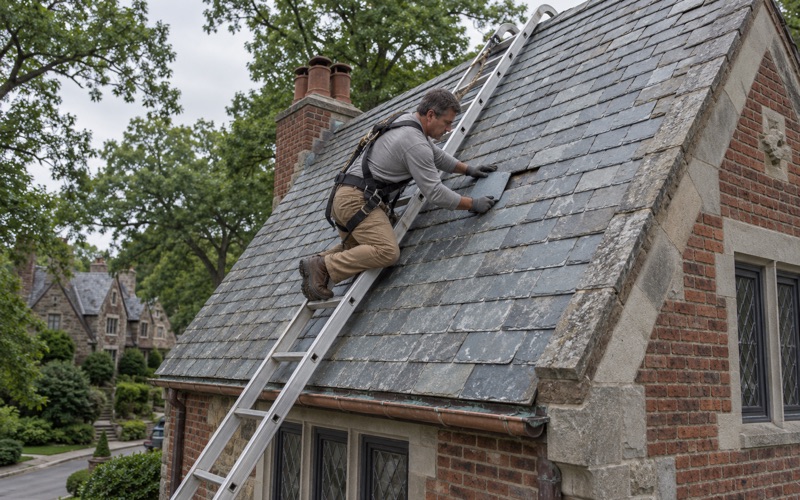
- Slate Repair Specialists