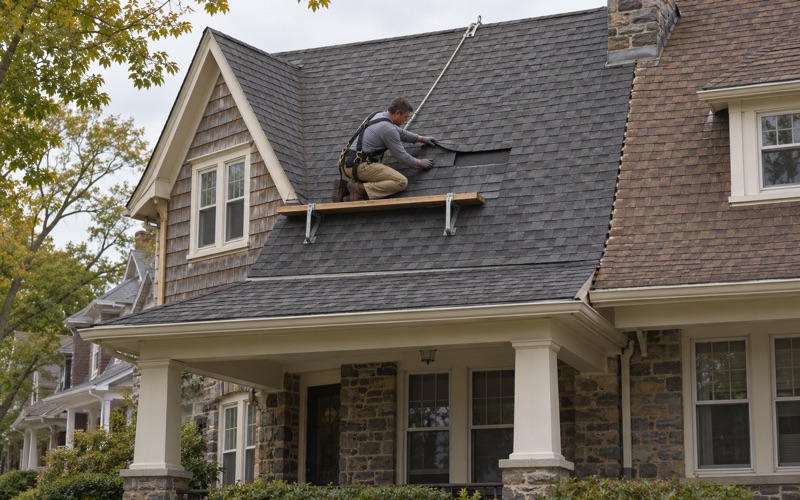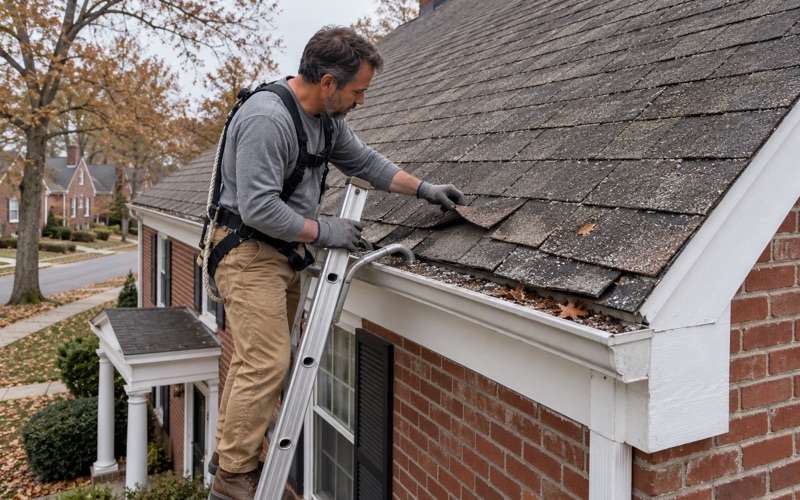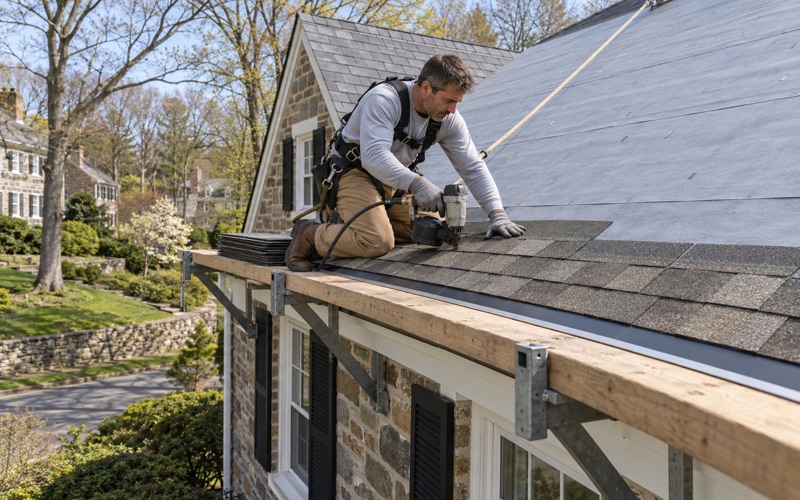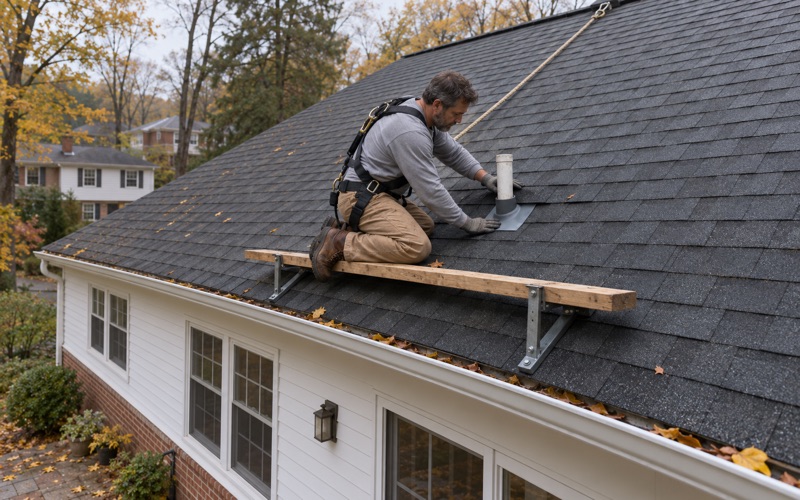
Lower Merion Elite Roofing has spent more than 20 years on roofing in Merion Station, and the first thing we settle on any job here is which rules apply to the house before a price is written. Some addresses sit inside a local historic district where a new roof goes through township review, and many do not. Knowing which side of that line a house falls on shapes the schedule, the material and the scope.
Every leak call starts in the attic as well as on the roof, because water rarely enters where the stain shows on a ceiling. We trace it to the actual entry point, then tell you plainly whether the roof can be repaired. Replacement only comes up after that answer, and only when the roof has genuinely reached the end of its useful life.
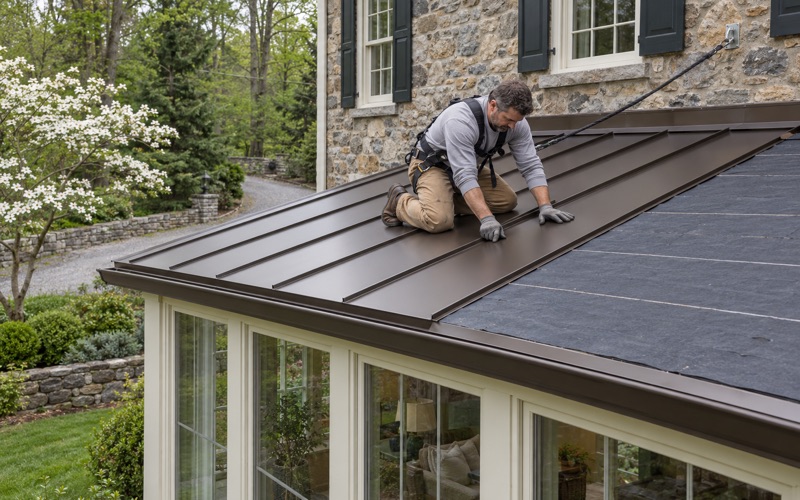
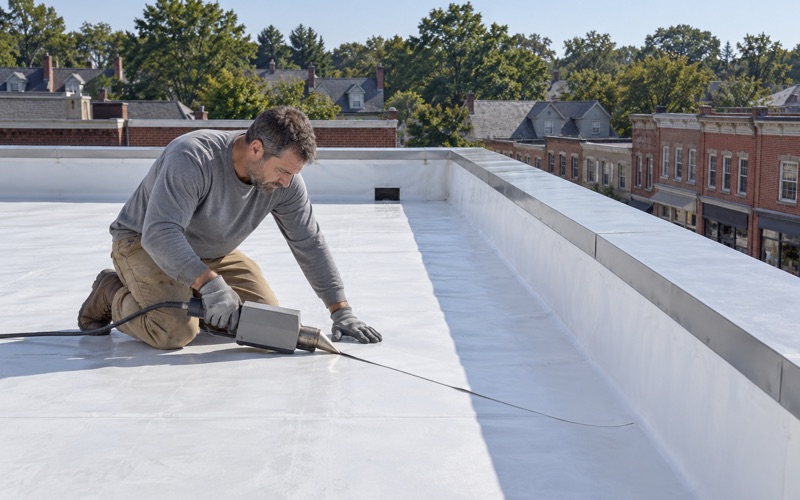
When replacement is the right call, our written scope breaks the job into separate lines for tear-off, decking, underlayment, flashing, ventilation and gutters. That lets you set our estimate beside another one and compare item by item, rather than weighing two totals that describe different jobs. The sections below explain what changes about that work in this part of the township.
The Historic District Along Montgomery Avenue
The Merion Friends Meeting and the General Wayne Inn
Merion Station is an unincorporated community within Lower Merion Township, part of the Philadelphia Main Line, and its stretch of Montgomery Avenue holds one of the township’s local historic districts. The Merion Friends Meeting/General Wayne Inn Historic District takes its name from two landmarks. The original Merion Meeting House was built by Welsh settlers in 1695, and the meeting house is called the oldest in Pennsylvania, listed on the National Register of Historic Places and named a National Historic Landmark.
The General Wayne Inn is also on the National Register, and today it houses the Chabad Center of the Main Line on Montgomery Avenue. We name these buildings because they define the district, not because we have worked on them. Their presence is the reason a house nearby can fall under a review process that a home elsewhere in the community may never meet.
When the District Became Official
A Lower Merion Historical Architectural Review Board publication says the district “became a reality on September 23, 1998.” A 1998 Main Line Times article reports its approval by the Pennsylvania Historical and Museum Commission. The township’s list of seven HARB-reviewed districts includes Merion Friends Meeting/General Wayne Inn.
So the review described below is neither new nor informal. It has been part of owning property within the district for more than a quarter century, and it is a step a roofing estimate for a district house has to account for from the first visit.
Checking an Address Before Anything Is Scheduled
Plenty of homes in the community sit outside the district, and we never assume either way. Before any roof work goes on the calendar, we check whether the property is inside one of Lower Merion’s local historic districts. If it is, township review is written into the plan from the start; if it is not, the ordinary permit path applies.
Getting this wrong in either direction is costly. Skipping review on a district property can stall a project halfway through, while assuming review applies to a house outside the district adds a wait the owner never needed.
Looking for roofing closer to Rosemont? See Rosemont Roofing.
When a New Roof Counts as an Alteration
How Chapter 88 Reads a Roof Replacement
Lower Merion’s historic districts chapter, Chapter 88 of the township code, defines an alteration to include exterior surface treatment to existing structures, naming siding and a roof replacement among its examples. That definition moves a re-roof out of the category of routine upkeep for a district property. A full replacement there is treated as a change to the building’s exterior, and exterior changes are what the township reviews.
This is why our estimates for houses inside a local district carry a step that other estimates do not. The paperwork and lead time for review are built into the schedule before a start date is offered, so nobody is surprised by a hold once materials are on order.
Matching the Roof That Is There Now
Chapter 88 also asks that, when architectural features must be replaced, the new material attempt to match the material being replaced in composition, design, color, texture and other visual qualities. For a roof, that means looking closely at what is up there before choosing what goes on next. We record the existing material, its color and its profile, and we photograph the roof so the comparison can be made on paper.
We do not predict what the review board will accept for a particular material, because that judgment belongs to the township. What we can do is document the existing roof thoroughly and build a proposal around matching it, which gives the application a clear starting point.
Repair Before Replacement, Even in the District
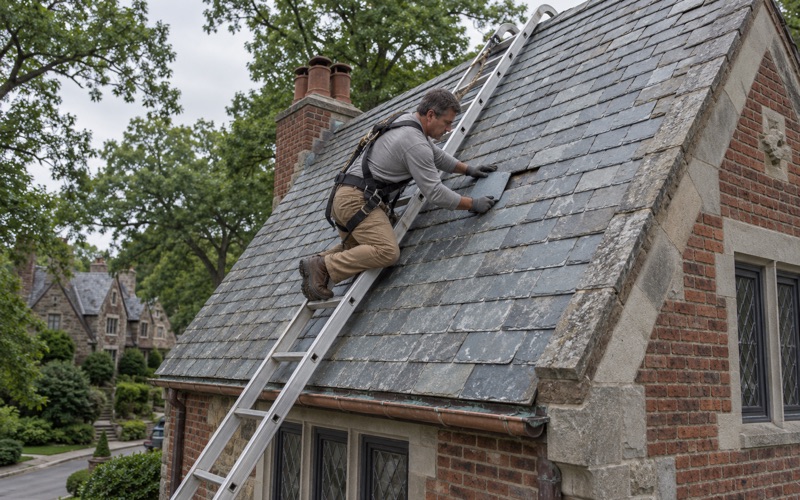
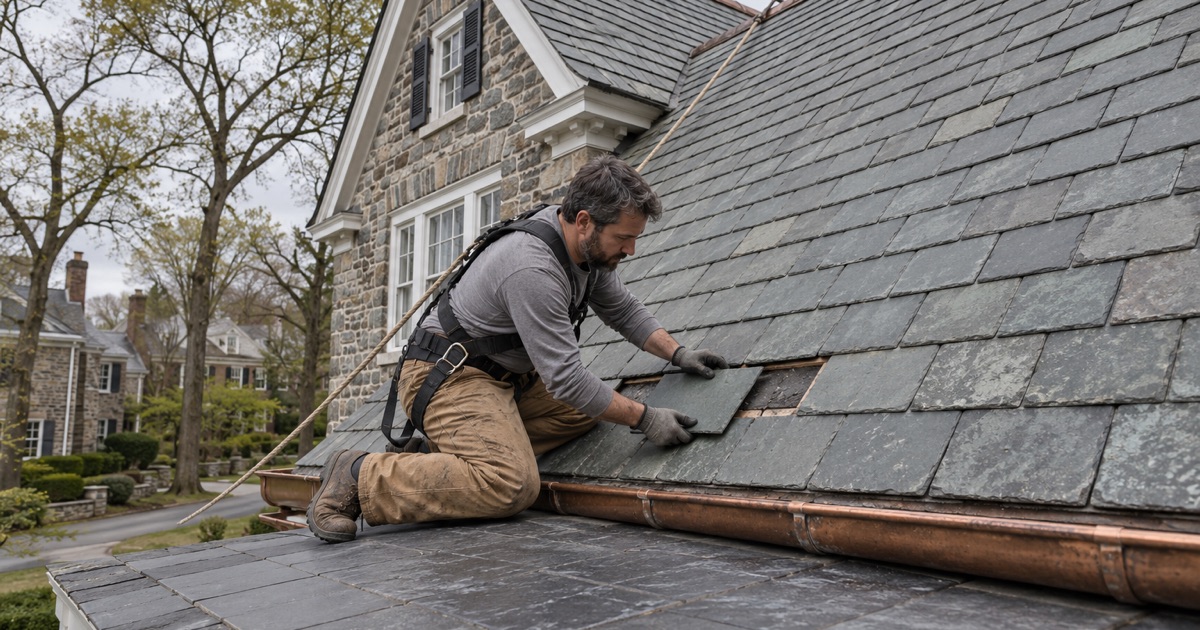
Our straight answer on repair comes first here as it does everywhere else. If a slate roof is sound apart from broken or slipped pieces, we repair it slate by slate with copper nails and slate hooks rather than proposing a tear-off. Whether a particular repair needs township review is a question we put to Lower Merion rather than answer on our own.
Storm damage follows the same order. We photograph it and write it up for your own insurance claim, and when you ask, we meet the adjuster on site. We do not negotiate the claim on your behalf; the documentation is there so the conversation with your insurer starts from the facts.
HARB Review and the Certificate of Appropriateness
Who Reviews and Who Decides
Lower Merion’s Historical Architectural Review Board is made up of nine citizens appointed by the Board of Commissioners. It reviews visible exterior alterations, new construction, demolition and signage on properties within the local historic districts. HARB does not issue the final decision itself; it sends a recommendation to the Building & Planning Committee.
The committee then approves, amends or denies the Certificate of Appropriateness. That certificate is what clears a visible exterior change in a district to move ahead, so a roof replacement on a district property waits on the committee’s answer.
The 10-Day Submission Window
Applications are due 10 days before the HARB meeting, and the meeting calendar sets the pace from there. A submission that misses the deadline waits for the next meeting, which pushes the whole project back.
We build that lead time into the timeline we give you. The roof documentation an application needs, including photographs of the existing roof and details of the proposed material, is prepared well ahead of the deadline so the review is not held up by missing information.
Planning Around the Decision
Because the committee can amend a proposal, we hold off on ordering materials for a district roof until the certificate is in hand. That protects you from paying for shingles or underlayment that the final approval does not match. Once the certificate is issued, the township permit and the work schedule follow.
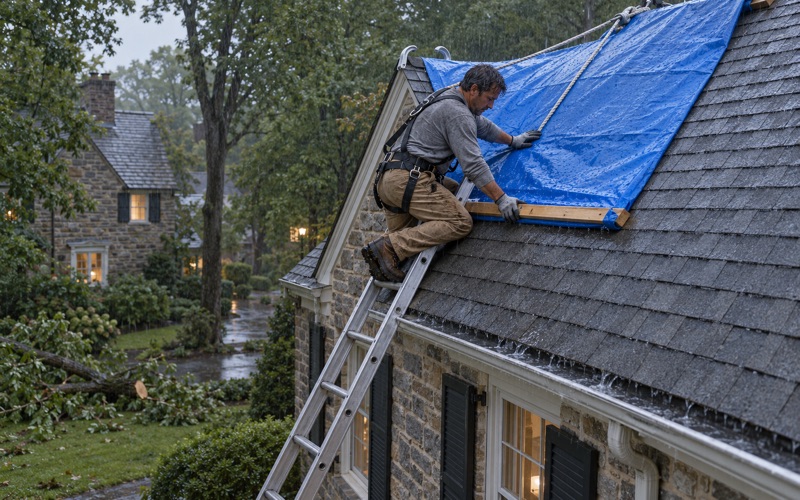
If a leak needs attention while review is pending, we talk through temporary protection that keeps water out without committing the house to a finished material. The aim is to keep the interior dry and the application clean at the same time.
Prewar Houses Across the Rest of Merion Station
An Older, Mostly Detached Housing Stock
Much of Merion Station lies outside the historic district, but the housing there is old as well. Census figures for 2024 count 1,081 of the community’s 1,939 housing units (55.7%) as built in 1939 or earlier, and 1,651 of them (85.1%) are detached houses. Owners occupy 1,731 of those homes.
A house of that age may carry several generations of repairs, and the attic often tells a different story than the shingles. That is why our leak inspection looks at rafters, sheathing and old patches from inside before we price anything on top.
What the Township Permit Addendum Means for Scope
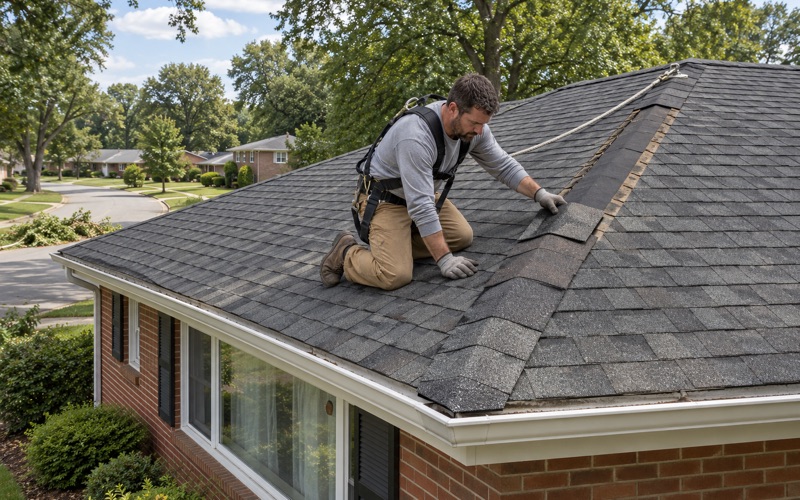
Lower Merion’s roof permit addendum must be filled out for all roofing permit applications, and it shapes what an estimate can promise. It sets a maximum of two layers of shingles and bars a new roof over wood shake, slate, clay, cement or asbestos-cement tile. An existing wood shingle roof with one or more roofs above it must be stripped of all layers and re-sheathed.
We read the current roof against those rules before quoting, so the scope states plainly whether a full tear-off is required. On older houses with layered roofs, that answer moves the price more than any choice of shingle, so it belongs at the top of the estimate rather than in a change order later.
Attached Homes and Solar Arrays
Detached houses dominate, but the community also counts 128 attached homes. On a twin or attached house we plan the roof with the neighbor’s roof and the shared wall in mind, so the seam between the two stays watertight after only one side is redone.
Roofs carrying solar panels get the same advance planning. Removal and reinstallation of the panels is written into the schedule from the start, rather than discovered on the morning the crew arrives.
Decking, Flashing and the End of Each Day
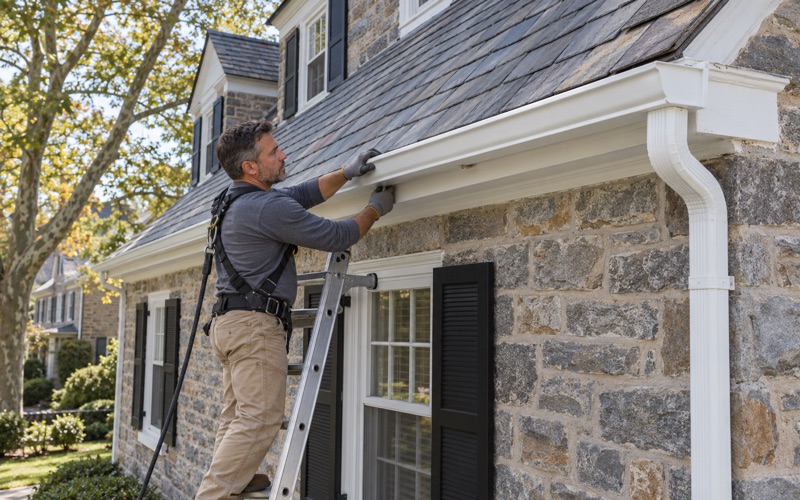
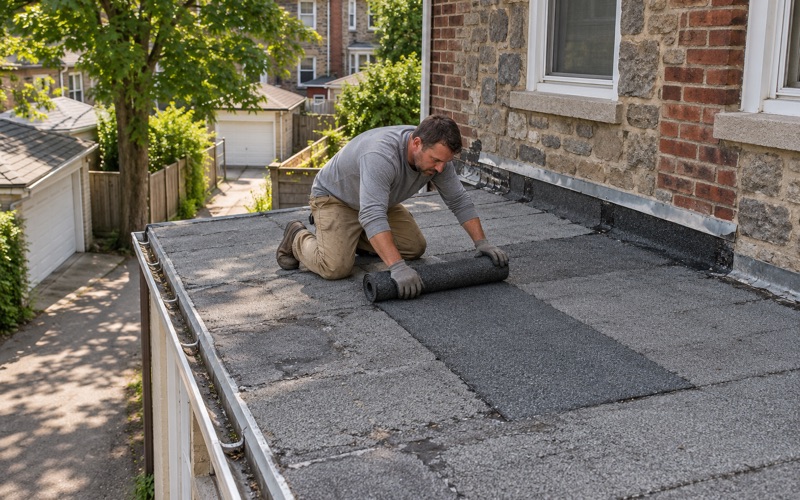
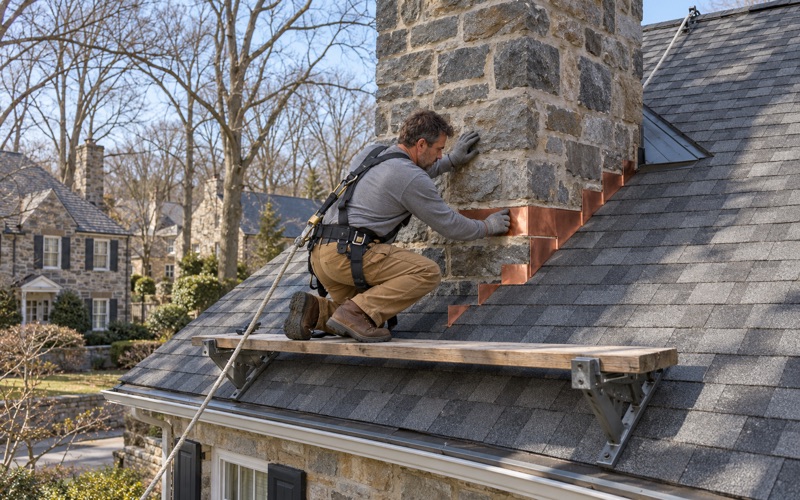
When the old roof comes off, any damaged decking is photographed and shown to you before it is replaced, at a per-sheet price already set in the contract. Step, counter and chimney flashing are replaced along with the roof instead of being reused under new material. Gutters and downspouts are sized and pitched as part of the same job.
The township permit is posted where it is visible from the street before work starts. Each work day ends with the driveway, yard and gutters cleaned and a magnet sweep for roofing nails. Our contracts follow Pennsylvania’s home improvement law, including the three-business-day cancellation notice and deposits kept within the legal limit.
- 20+ Years Roofing
- Itemized Written Scopes
- Slate Repair Specialists