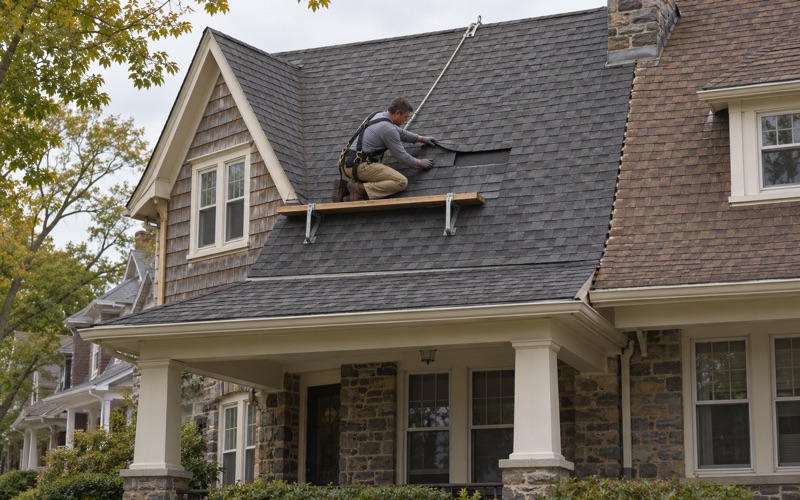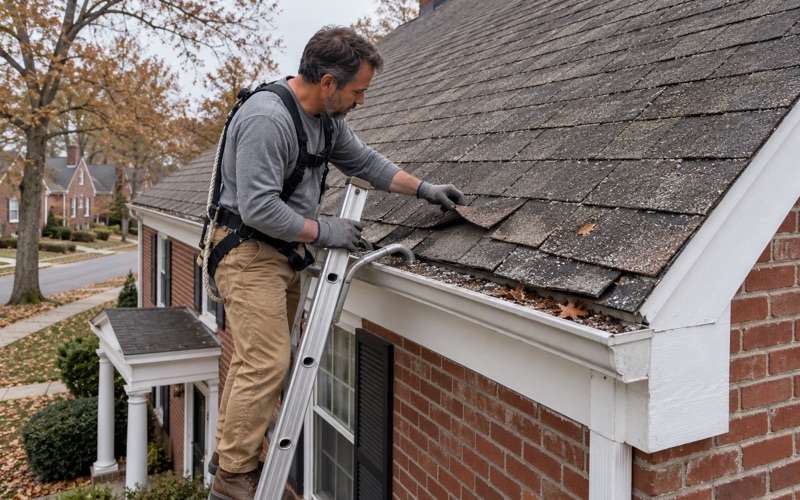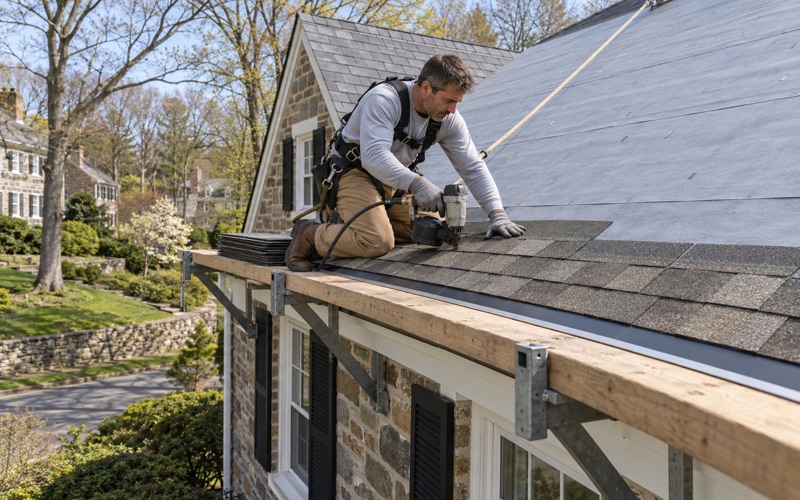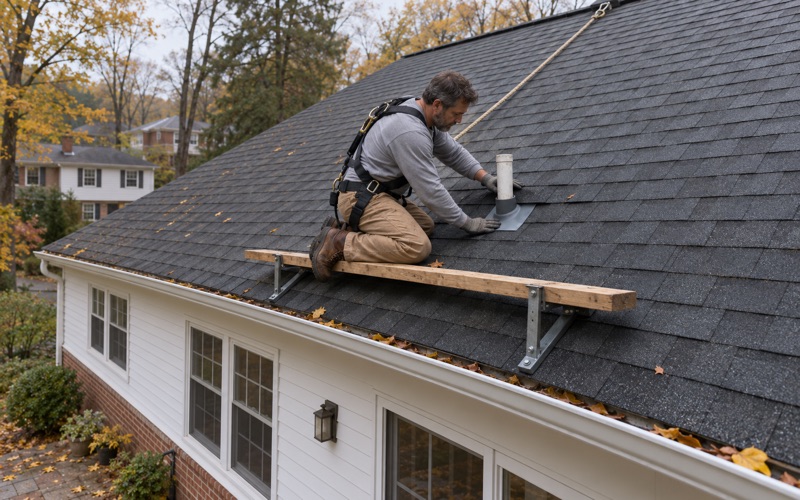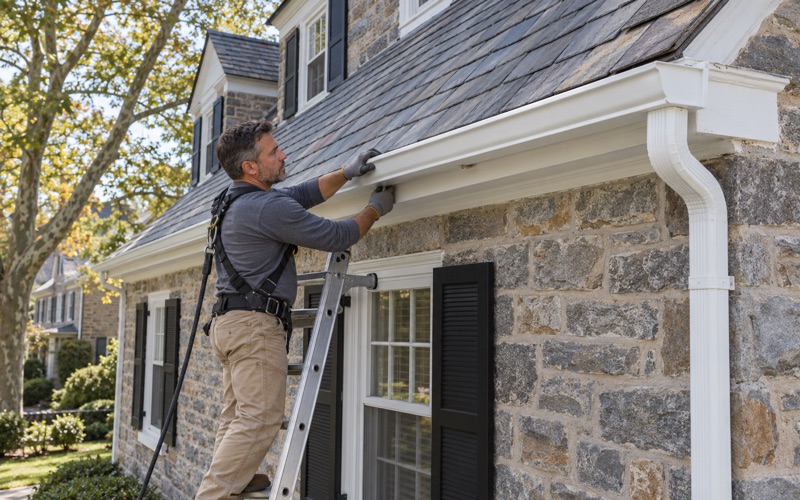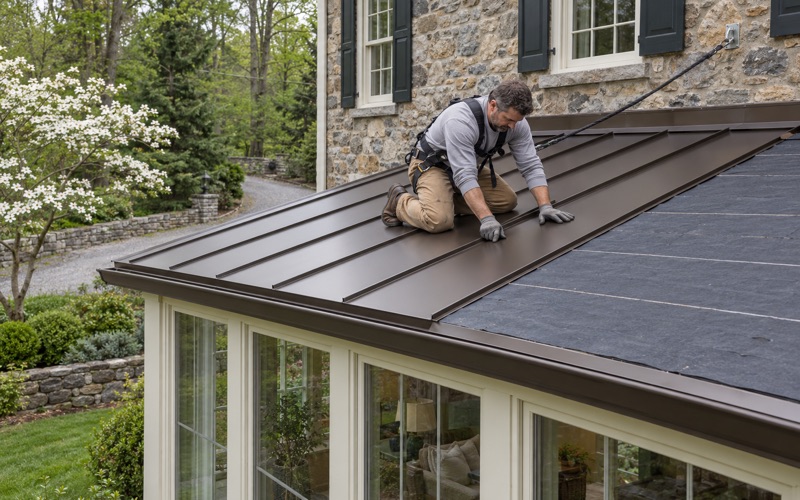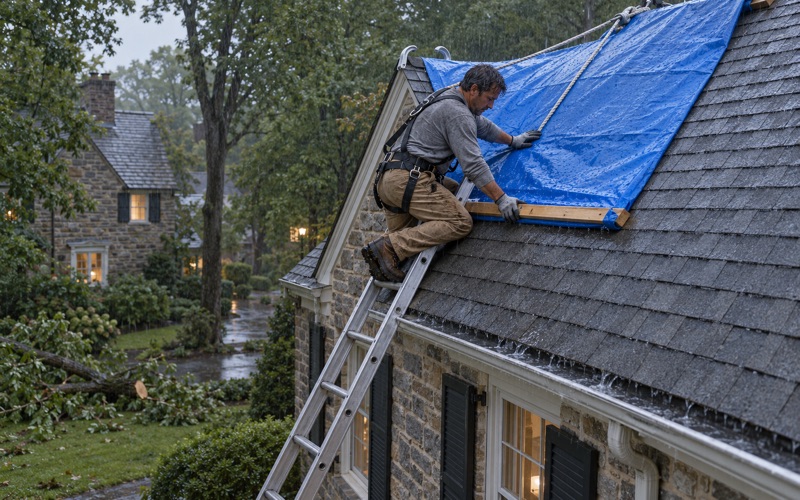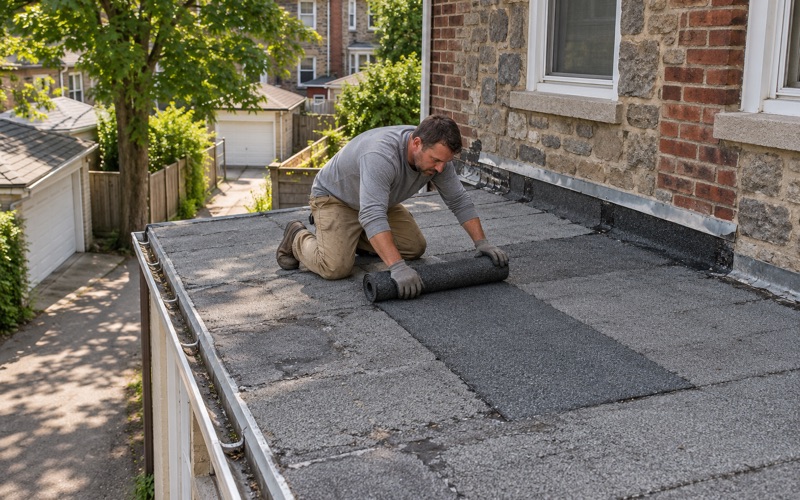
Lower Merion Elite Roofing has spent more than 20 years on roofing in Nether Providence and the surrounding Delaware County townships, and the question we hear most often here is not about shingles. It is about sequence: what to do first, what to bundle together, and what the paperwork will ask once a bigger project is on the table. A roof is rarely the only thing an owner wants to change.
That matters because a re-roof is a line item, not a standalone event, when a house is also getting a kitchen, an addition or new siding. The way those costs add up can change which rules apply to the whole building. We would rather sort that out at the kitchen table than halfway through a tear-off.
So every estimate we write starts with two checks: whether the existing roof can be repaired rather than replaced, and which rules the house’s own municipality and location bring with them. Only then do we put a price on paper.
Two Creeks and Two Recent Flood Maps
Where the township sits
Nether Providence is bounded by water on three sides. Crum Creek forms its eastern boundary, and Ridley Creek runs along its western and southern borders. Between them lie Wallingford, the largest community and the name most residents use because of the shared postal code, along with Garden City, South Media and Moylan.
That geography is why flood mapping deserves a place in a roofing conversation here. Some properties sit on creek frontage or low ground near it, and many others stand well back from either stream. Whether a particular house falls inside a mapped flood zone is an address-by-address question, and we never guess at the answer.
The September 2, 2015 map
A new FEMA flood map took effect for the township on September 2, 2015. Nether Providence appeared that summer on a federal notice alongside twenty other Delaware County communities whose new maps took effect the same day. That notice is a routine step before a new map goes live.
Communities that adopted the required floodplain measures by the effective date stayed eligible for flood insurance through the National Flood Insurance Program. The listing was a procedural pre-map notice, and it says nothing about any community losing coverage. What it does tell a homeowner is that the flood lines drawn before 2015 are no longer the ones in force.
The November 3, 2017 effective date
The maps changed again after that. FEMA’s Community Status Book for Pennsylvania now lists the township’s current effective map date as November 3, 2017. The same record shows the township’s first flood insurance rate map dates to December 1, 1978, and it carries no Community Rating System class.
We have not found which panels or stretches of creek the 2017 revision covered. That gap is exactly why we do not rely on an older printout or a neighbor’s memory of where the line falls. The panel in effect today is the one that counts, and it may not match the one an owner saw when the house was bought.
Looking for roofing closer to Narberth? See Roofing in Narberth.
The 50 Percent Test and What a Roof Adds to It
How substantial improvement is measured
Federal floodplain rules define substantial improvement as any reconstruction, rehabilitation, addition or other improvement to a structure whose cost equals or exceeds 50 percent of the building’s market value before the work begins. The definition sits in Title 44 of the Code of Federal Regulations, section 59.1. When a project crosses that line on a building in the special flood hazard area, the whole building has to meet the community’s floodplain standards.
The test is about the building, not the lot, and about cost against value, not square footage. A modest house with a large renovation planned can reach the threshold faster than an owner expects. Market value here means the structure itself, so land value does not raise the ceiling.
Why roof cost belongs in the total
FEMA practice counts roof work in the improvement cost. That surprises owners who think of a new roof as maintenance, separate from the remodel happening below it. On a building inside the mapped zone, the roof price is added to the kitchen, the addition and everything else in the same project.
A full tear-off with new decking, underlayment, flashing and gutters is a meaningful number on its own. Stacked onto interior work, it can be the line that carries a combined project past half the building’s value. That is a planning fact, and it is far better learned before contracts are signed than after.
Where the test does not reach
The 50 percent test applies only to buildings in the special flood hazard area, and only to projects that reach the threshold. A re-roof on a house outside the mapped zone is simply a re-roof. Even inside the zone, a roof project on its own that stays below half the building’s value falls outside the federal definition.
We say this plainly because the opposite fear is common. Living near a creek does not mean a new roof brings elevation requirements on its own. The point is narrow: check the map, add up the whole project, then decide.
Checking Your Panel Before Planning Combined Work
Finding the current panel
The current flood map for any address can be looked up through the FEMA Flood Map Service Center, which shows the effective panel and whether the building sits inside a special flood hazard area. For a creekside house in Wallingford or Moylan, that lookup is the first step we recommend before any combined project is priced. It takes a few minutes and settles the question with a dated record.
If the lookup shows the house outside the mapped zone, the conversation moves on to ordinary roofing questions. If it shows the house inside or right at the edge, the owner knows to bring the township into the discussion early. We are not floodplain administrators, and we do not interpret the map for an owner, but we make sure nobody skips it.
Sequencing a re-roof with other projects
For a house inside the mapped zone, what goes into one project shapes the total being measured. An owner who plans a re-roof, an addition and new windows as one project is asking a different question than an owner doing the roof alone. How that work is scoped is a decision for the owner and the township, made with the full numbers in view.
Our part is giving those numbers clearly and early. We price the roof as its own scope, so the owner and anyone reviewing the project can see exactly what roofing adds. We do not make the substantial improvement call, and we never present a guess about it as a fact.
What we put in the written scope
Each estimate lists tear-off, decking, underlayment, flashing, ventilation and gutters on separate lines. That breakdown makes it easy to compare our price against another contractor’s line by line. It also gives an owner near Crum Creek or Ridley Creek the itemized figure a floodplain review may ask for.
Our contracts follow Pennsylvania’s home improvement law, including the three-business-day cancellation notice and deposits held within the legal limit. Damaged decking found after tear-off is photographed and shown to the owner before replacement, at a per-sheet price set in the contract. No surprise charges appear on the final invoice.
Re-roofing a House Outside the Mapped Flood Zone
What the township’s roofing permit application asks
For a house outside the mapped zone, the rules that shape a re-roof come from Nether Providence’s own Roofing Permit Application, filed at the township building on Sykes Lane in Wallingford. The form allows existing coverings to stay only if there are fewer than two layers, they are in good condition, and they are not slate, clay or cement tile. That answer decides whether a job is an overlay or a full tear-off, and we state it in the estimate before work is scheduled.
The same form requires double underlayment at a slope of 4:12 or less and an ice barrier from the eave to a point 2 feet inside the exterior wall line, with pictures taken during installation. It also calls for roof ventilation at a 1 to 150 ratio. Inspections run through Linn Architects, the township’s third-party inspector, so we plan the ice barrier work around those photographs.
Leaks, repairs and the attic
The township’s housing stock leans older: 1,554 of its 5,227 housing units were built in the 1950s, according to the Census Bureau’s 2024 five-year survey. On houses that age, leaks often start somewhere other than where the stain shows. Every leak call we take includes a trip into the attic as well as onto the roof.
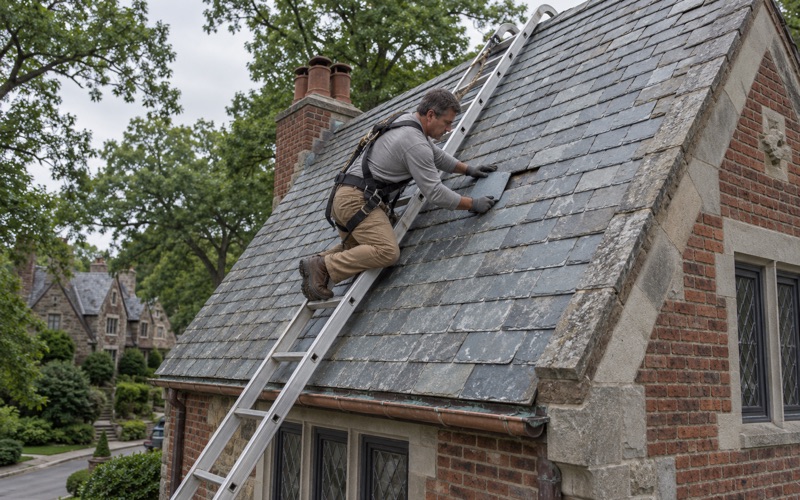
Tracing water to its real entry point is what makes an honest repair possible. We tell owners directly whether a roof can be repaired before replacement ever comes up. A sound roof with one failed flashing detail does not need to be torn off.
Flashing, gutters and the end of each day
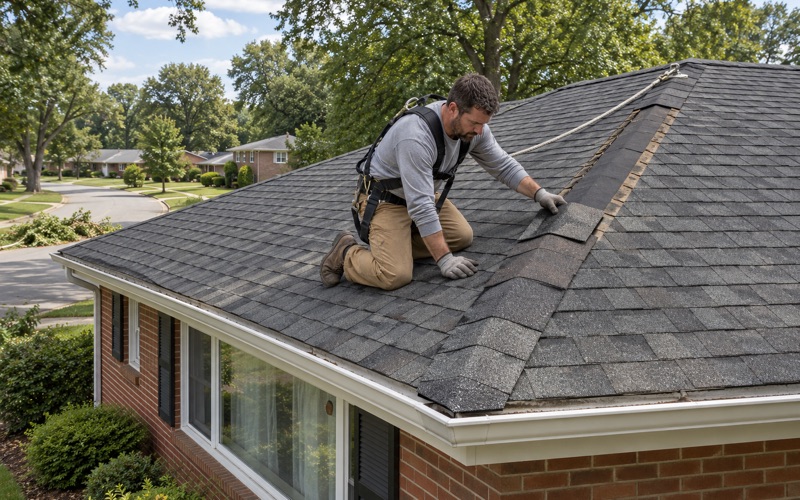
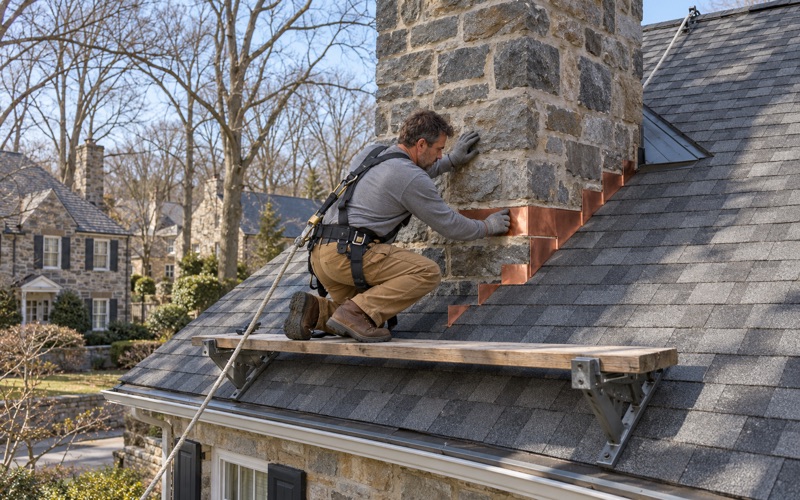
When we do replace a roof, step flashing, counter flashing and chimney flashing are replaced with it rather than reused under new material. Gutters and downspouts are sized and pitched as part of the roof plan, not handed off as an afterthought. On a house near the creeks, moving roof water away from the foundation is part of doing the job properly.
Every work day ends with the driveway, yard and gutters cleaned and a magnet sweep for stray nails. Storm damage, when it happens, is photographed and written up for the owner’s own insurance claim. If asked, we will meet the adjuster on site, though we never negotiate the claim itself.
- 20+ Years Roofing
- Itemized Written Scopes
- Slate Repair Specialists