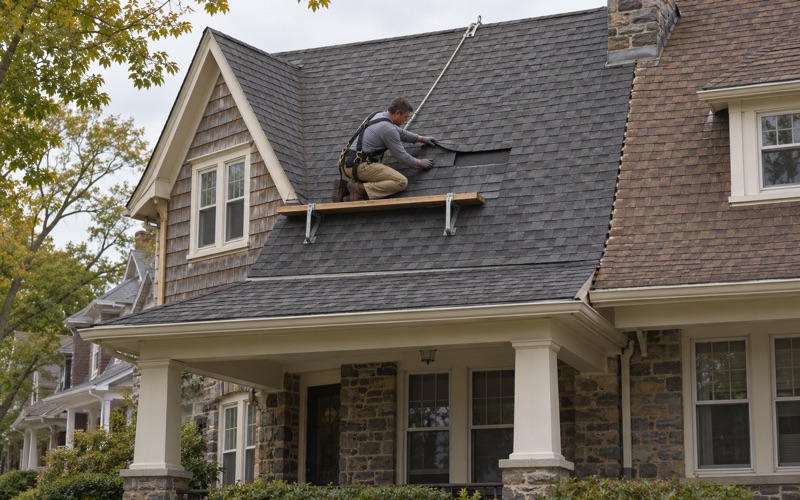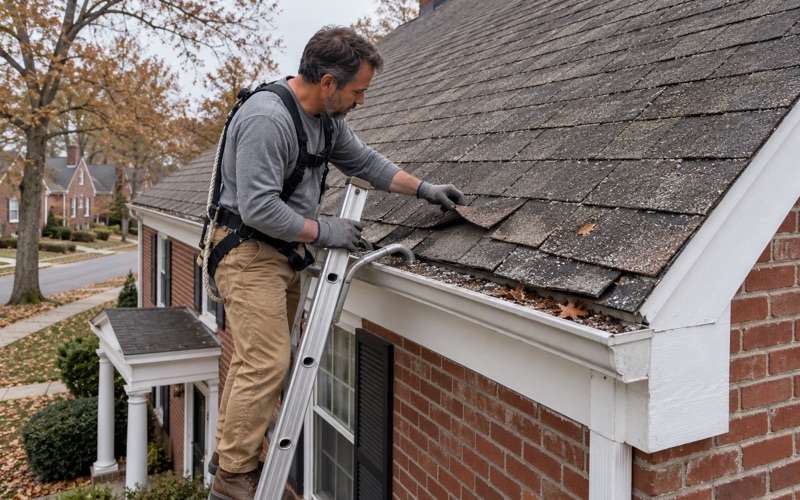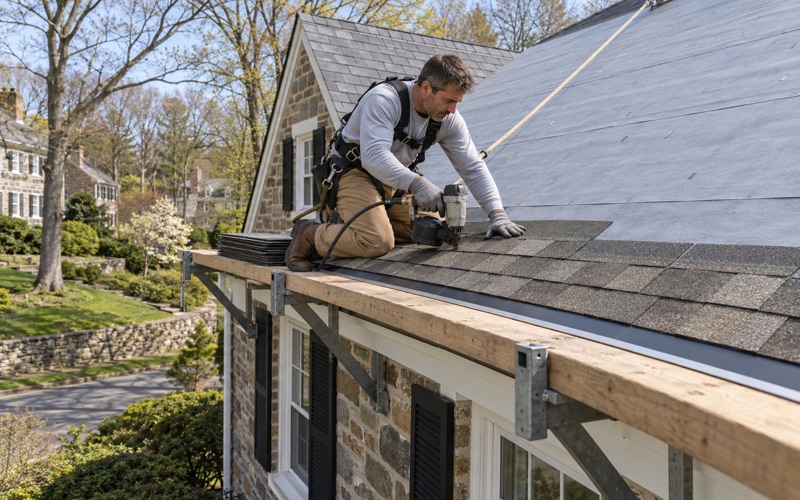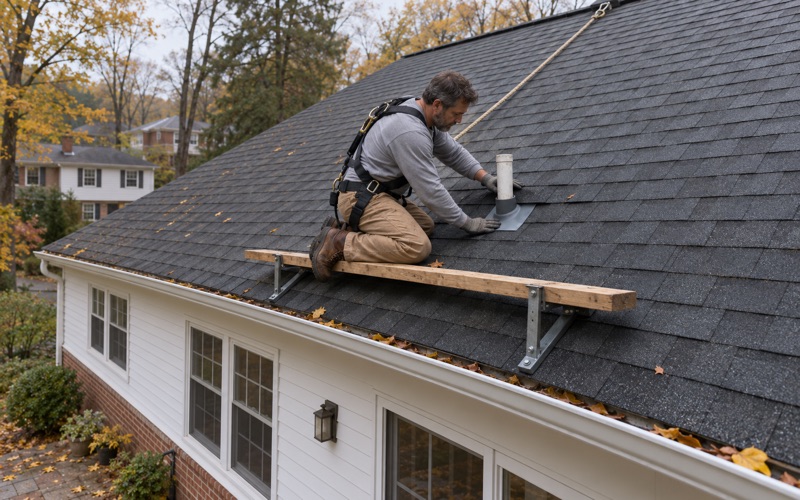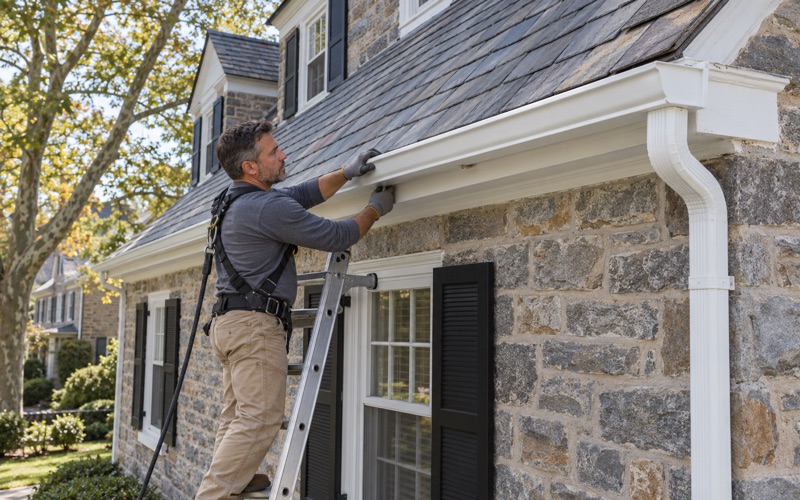
Lower Merion Elite Roofing handles roofing in Richland Township with more than 20 years in the trade behind every inspection, repair and replacement we take on. A good share of the homes here are not built the way most people picture a house roof, so we plan each job around the home that is actually standing on the lot. That planning starts with a careful look before any price is written down.
When a homeowner calls about a leak, we check the underside as well as the roof surface, so the water is followed back to the spot where it really gets in. Stains on a ceiling rarely sit directly below the opening that caused them. Once we know the source, we tell you plainly whether the roof can be repaired, and replacement only comes up if a repair would not hold.
Every estimate we hand over breaks the work into separate lines: removal of old material, sheathing, underlayment, flashing, ventilation and gutters. That layout lets you set our number beside another roofer’s and compare them item by item. It also makes clear what is included before anyone climbs a ladder.
Manufactured Homes Across Richland Township
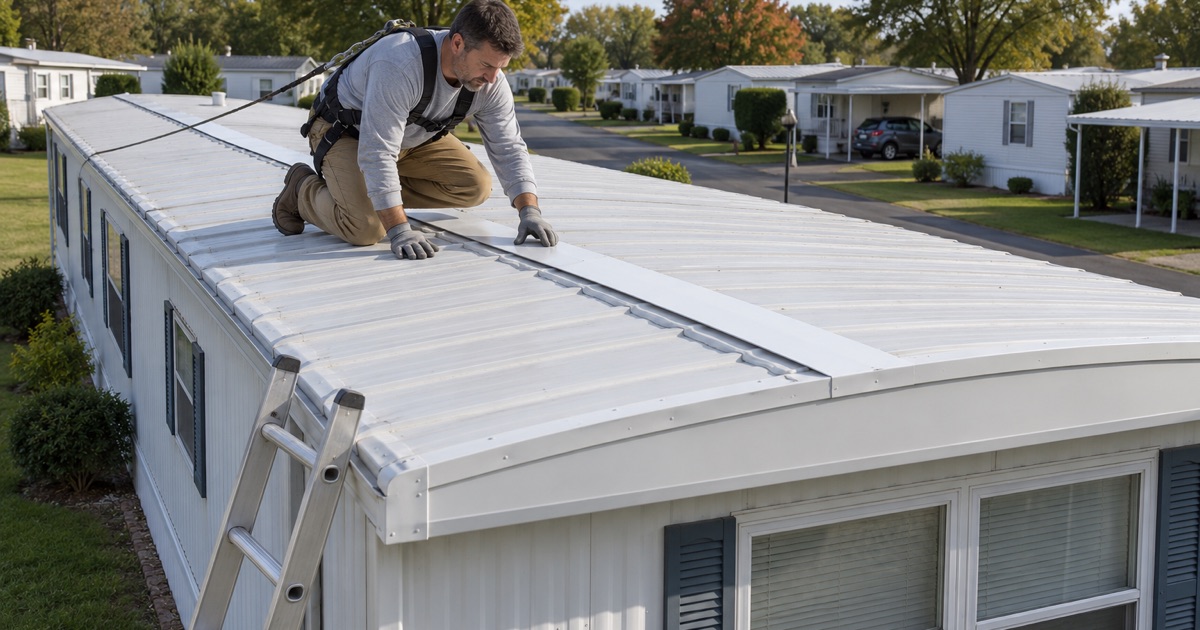
Census figures count 695 mobile homes in Richland Township, which is 11.7% of the township’s 5,944 housing units. Owners live in 464 of them, about 9.0% of all owner-occupied homes here, and the census counts no renter-occupied mobile homes at all. For a roofer working this township, the manufactured home roof is a regular call rather than an unusual one.
Richland Meadows on Yankee Road
The largest community is Richland Meadows Mobile Home Park at 232 Yankee Road, listed with 400 sites and a 1967 build date. It is an all-ages community, and the Census Geocoder places that address inside Richland Township even though the mailing address reads Quakertown. A park of that size holds homes of many different ages and conditions.
Because the park opened decades ago, some homes on those sites may go back toward its early years while others arrived much later. We never assume a roof’s age from the age of the community around it. A community may also have its own expectations about outside work, so we ask the homeowner to confirm what applies on their lot before we set a date.
A Different Job From a Shingled House
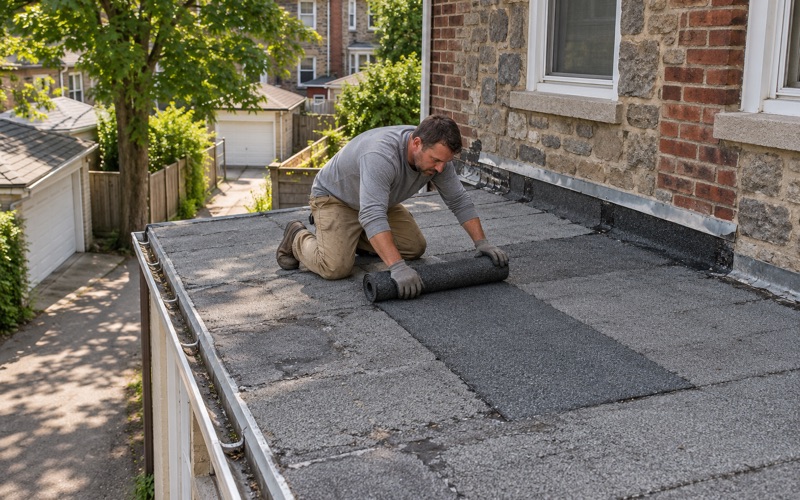
A single-section home from the late 1960s or 1970s often carries a low, gently curved or nearly flat roof, frequently metal, with long seams running the length of the home. It rests on a light factory-built frame rather than on site-framed rafters. Those details change what can go on top, how it is fastened, and where water tends to work its way in.
So we treat these roofs as their own kind of work. The first questions are what the roof is made of, how many coverings are already on it, and whether anything has been changed since the home left the factory. The answers decide which repair or replacement options are even on the table.
Owners Making Their Own Decisions
Because most mobile homes in the township are lived in by their owners, the person calling us is usually the person paying for the work. That is why our estimates spell out each choice and its tradeoff in writing. An owner deciding between a repair now and a fuller roof-over later deserves to see both laid out side by side.
Looking for roofing closer to West Norriton? See Roofing Services in West Norriton.
When Pennsylvania’s Building Code Reaches a Manufactured Home
Pennsylvania’s Uniform Construction Code does not apply to a new manufactured home assembled and shipped from the factory with the federal label, or to its installation per the approved design. That starting point changes once the home is in use. Under Title 34 of the Pennsylvania Code, section 403.25, the code applies to alteration or repair done outside the federal standards and installation instructions after shipment, to additions after delivery, and to work after resale or relocation.
Factory Work Versus Later Work
The practical line falls between what the factory built and what has been done since. Work on a home that has been resold or moved comes under the state code too, which is why we ask the owner what they know about the home’s history. That history shapes how a roof job should be scoped and reviewed.
No text we have read settles whether a straightforward re-cover counts as an alteration outside the federal standards. We do not guess at that question on an owner’s behalf. Instead, we confirm the answer for the specific home and scope with the township before the job is priced.
Checking With Richland Township First
Richland Township Building and Zoning, at 1328 California Road, Suite A, handles permits for the township. Its Permits page lists structural alterations or repairs and new structures with or without foundations as permit work, and it carries no separate roofing line. When an application is needed, the township has 15 days to review a submitted permit, and we build that into the schedule.
Addresses can mislead here as well. The township surrounds the boroughs of Quakertown and Richlandtown, which are separate municipalities. We confirm which municipality a home actually sits in, then follow that municipality’s own rule, the same check we run for every town in our service area.
Contracts That Follow State Law
Our contracts follow Pennsylvania’s Home Improvement Consumer Protection Act. Each one includes the three-business-day cancellation notice, and the deposit we ask for stays within the legal limit. Owners get the terms in writing before work begins, not after. If a deposit or a cancellation question comes up, the answer is already on the page you signed.
Wind Zone I and the 20 psf Roof Load
The federal manufactured-home standard at 24 CFR 3280.305 does not list Pennsylvania in Wind Zone II or III, which places the state in Wind Zone I. It also leaves Pennsylvania out of the North and Middle roof-load zones, so homes built for this state fall in the South zone with a 20 psf roof live load. For a home built to that standard, those two settings describe the conditions its roof was designed around.
What the Data Plate Tells Us
A home built to the federal standard carries a data plate that records the zones it was built for. We read that plate when it is still in place, because it confirms the design assumptions instead of leaving them to guesswork. On a 1960s or early 1970s home there may be no such plate at all, and on later homes it can be faded or missing. Either way, we work from what the structure itself shows us.
Keeping Added Weight in Check
A light roof frame designed to a 20 psf load has to carry whatever new material goes on top, plus winter snow. Stacking a heavy new covering over an old one is the easy shortcut and often the wrong one on these homes. We favor lighter roof-over materials and remove failed layers where that keeps the load sensible.
Fastening matters just as much as weight. A roof-over that is not tied properly into the home’s framing can lift at the edges in a strong gust, even in Wind Zone I. Our crews fasten into solid structure and seal every penetration, so the new roof stays put.
Weather and Scheduling in Upper Bucks
Richland sits in the National Weather Service’s Upper Bucks forecast zone, PAZ105, covered by the Mount Holly office. We watch that zone’s forecast before opening any low roof. Seam work and coatings need dry conditions to bond, so we schedule them for a dry stretch rather than squeezing them in ahead of rain.
Roof-Overs, Seams and Fasteners on Low-Slope Home Roofs
Most manufactured-home leaks start at the same handful of spots. Long seams open as the metal expands and contracts, screws back out of their holes, and sealant around vents and stacks dries and cracks. Low slope means water lingers on the surface, so a small gap that a steeper roof would shed becomes a steady drip.
Finding the Leak Before Fixing It
Many of these homes have little or no walk-in attic, so we check the ceiling side for stains, soft spots and damp insulation as well as the roof itself. Tracing the water this way keeps us from sealing the wrong seam. The repair then goes where the problem actually is.
Repair, Coating or Roof-Over
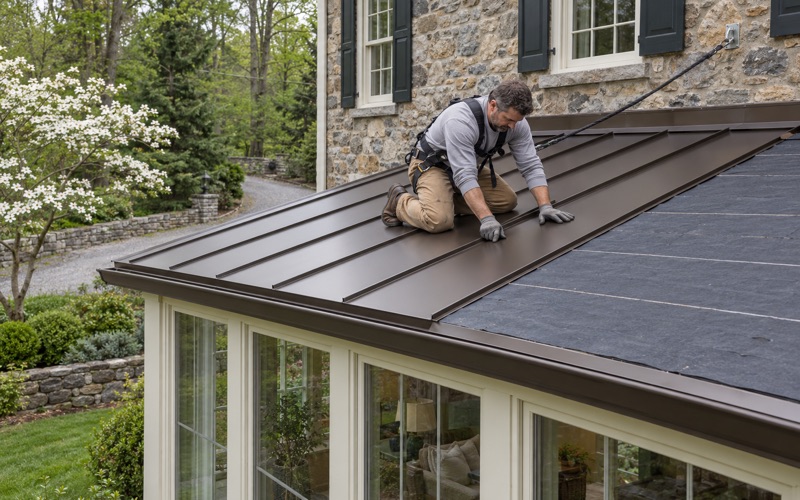
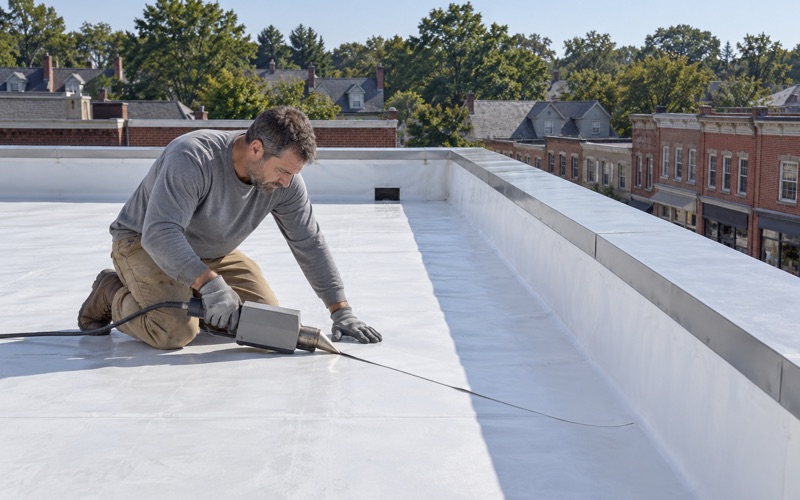
Some roofs only need seams resealed and loose fasteners replaced, and we say so when that is the honest answer. Others have reached the point where patching buys little time. For those, a roof-over with a lightweight metal panel or a single-ply membrane such as EPDM or TPO can give the home a fresh surface without a full rebuild.
If the old covering comes up and we find rotted sheathing or framing, we photograph it and show the owner before anything is replaced. The price for that repair is set in the contract ahead of time, so a hidden problem never turns into an open-ended bill.
Roof-Overs on Older Single-Section Homes
A roof-over on an older single-section home is usually built as a new surface over the original metal rather than a tear-off down to the frame. Done well, it can improve drainage on a roof where water has been sitting and keep the old seams from working against the new covering. Done badly, it traps moisture against old metal and adds weight the frame has to carry for years.
Before we recommend one, we check the condition of the existing roof surface and the edges where it meets the walls. Ventilation gets planned at the same time, because a sealed-in space under a new covering is where condensation collects. The owner sees the full plan, including what happens at the eaves and around every vent, before the first panel goes up.
Flashing, Gutters and Storm Damage
Flashing around vents, stacks and wall joints is replaced with the new roof rather than reused. Gutters and downspouts are sized and pitched together with the roof, which matters on a home where water runs off a long, low edge. Getting that runoff away from the home’s base is part of the same job.
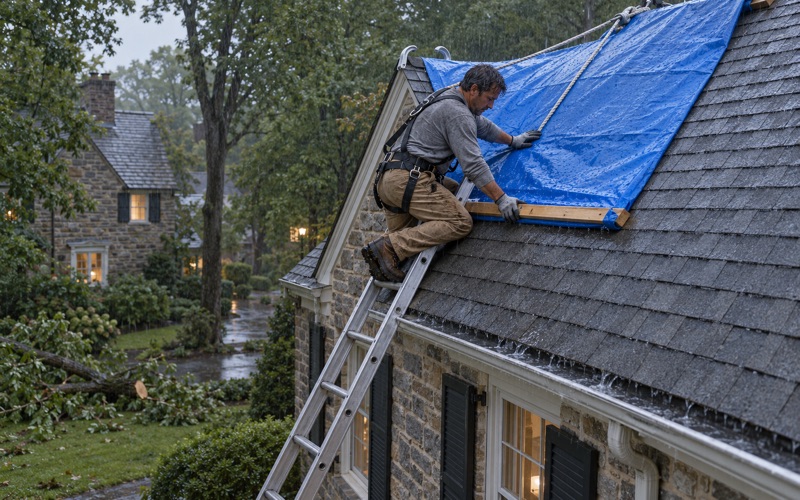
After a storm, we photograph the damage and write it up for the owner’s own insurance claim. If asked, we will meet the adjuster on site, though we do not negotiate the claim. At the end of each work day, the crew clears the lot and gutters and runs a magnet sweep for nails, which matters when neighbors’ homes sit only a short walk away.
- 20+ Years Roofing
- Itemized Written Scopes
- Slate Repair Specialists