Lower Merion Elite Roofing has provided roof leak repair in Lower Merion, PA for more than 20 years, serving surrounding cities including Plymouth Township, Milford Township, Yeadon, Richland Township and West Norriton. We trace and repair leaks in shingle, slate, metal and flat roofs, and in the chimneys, skylights and gutters attached to them.
A leak repair is only as good as the diagnosis behind it. Water often travels several feet along rafters or decking before it drips onto a ceiling, so the stain is rarely directly below the hole. That is why every leak call we take includes a look in the attic before we price anything on the roof.
Once we have found the entry point, you get an honest answer about whether a targeted repair will solve it, or whether the roof has reached the point where leaks will keep appearing. We fix the cause, not the symptom, and we will not sell you a new roof to cure a cracked pipe boot.
How We Trace a Roof Leak
Starting in the Attic
In the attic we follow water stains, darkened rafters, rusty nail tips and wet insulation back uphill to where the water first appears. Daylight showing around a vent pipe, chimney or skylight is a strong clue. We note the location against something we can find from outside, such as a vent stack or a chimney, so the repair goes exactly where the water enters.
Reading the Roof From Above
On the roof we inspect every flashing, boot, valley and seam uphill of the attic stain, looking for cracked rubber, lifted metal, missing sealant, nail pops and broken shingles or slates. Most leaks come from one of a handful of places, and knowing where water was found in the attic narrows the list quickly.
Water Testing a Hard-to-Find Leak
When the cause still is not clear, we water-test the roof with a hose, starting low and working uphill one section at a time while someone watches in the attic. It is slow, careful work, but it pins down leaks that only show up in wind-driven rain and avoids paying for repairs in the wrong place.
Ruling Out Plumbing and Condensation
Some stains that look like roof leaks are not. A leaking bathroom supply line, an air handler’s condensate drain in the attic, or frost melting off the underside of the decking on a cold morning can all wet a ceiling. We check for these before anyone starts work on the roof, so you are not paying a roofer for a plumbing problem.
The Most Common Sources of Roof Leaks
Chimney Flashing
Chimneys are the most common leak source on older houses. Step flashing woven into the shingles and counter flashing set into a reglet in the mortar keep water out, but tar patches, failed sealant and loose counter flashing let it in. We rebuild the flashing properly and add a cricket behind a wide chimney, so water no longer pools against the brick.
Pipe Boots and Roof Vents
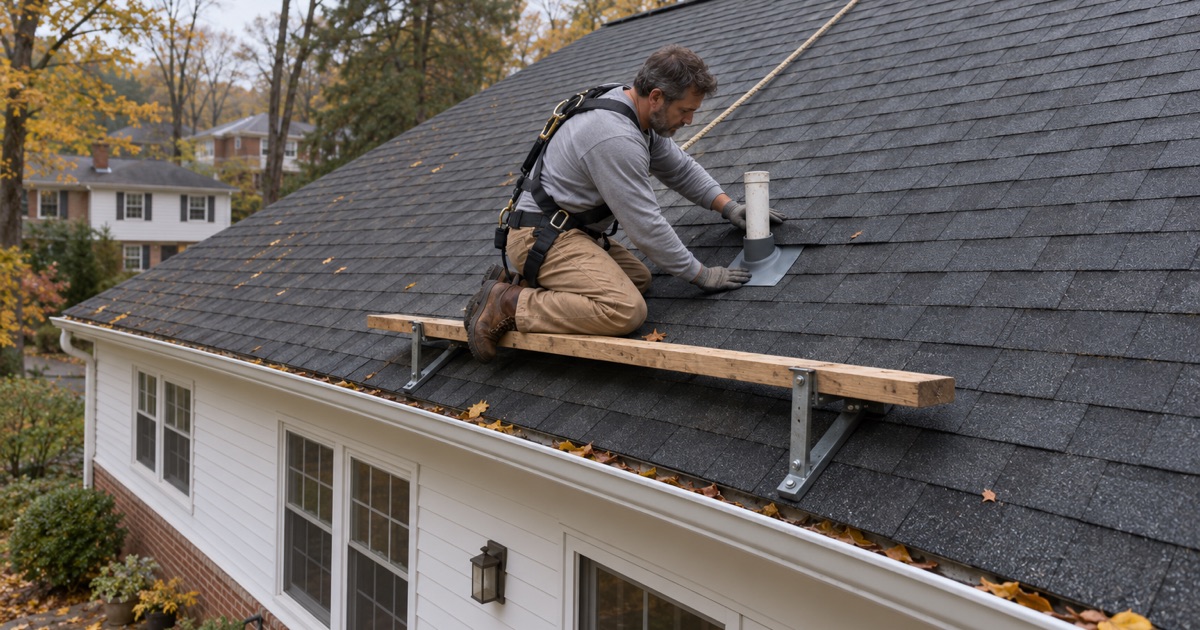
Rubber pipe boots crack as they age in the sun, and the leak shows as a small, round stain below the plumbing stack. We replace failed boots with new ones or with lead flashing boots, and we reseal exhaust fans and box vents with their own flashing instead of a bead of caulk.
Valleys, Walls and Skylights
Valleys carry concentrated water and wear first, especially where debris collects. Where a roof meets a wall, missing step flashing or a missing kick-out at the bottom of the wall sends water into the siding. Skylights leak at their own flashing kits or at failed seals. We repair each with the correct flashing detail, not surface sealant.
Ice Dams at the Eaves
In winter, heat escaping from the house melts snow on the upper roof, and the meltwater refreezes at the cold eaves. The ice dam then forces water back up under the shingles. We repair the damage, install ice and water barrier at the eaves as IRC R905.1.2 calls for, and correct the insulation and ventilation that let the attic warm the roof in the first place.
Leaks in Slate, Metal and Flat Roofs
Slate Roof Leaks
A leak in a slate roof usually comes from a broken or slipped slate, a failed copper valley or worn flashing, not from the slate wearing out. We replace individual slates with copper nails or slate hooks and repair copper flashing and valleys with copper. A sound slate roof with a leak almost never needs to come off.
Metal Roof Leaks
Standing seam and other metal roofs leak at seams, fasteners, ridge closures and penetrations. We tighten or replace backed-out fasteners, reseal seams, and reflash pipes and curbs so the panels can still move with temperature changes.
Flat Roof and Addition Leaks
The flat roof over a rear addition, porch or garage often leaks where it meets the main wall of the house, at split seams or around drains. We repair modified bitumen, EPDM and TPO membranes with matching materials, reflash the wall, and clear drains so water stops ponding against the seams.
Permits, Insurance and Attached Houses
Do Leak Repairs Need a Permit?
Most leak repairs, such as replacing a boot, rebuilding a small flashing or swapping a few slates, are ordinary repairs that Pennsylvania’s Uniform Construction Code exempts from a building permit. When the fix grows into re-roofing a whole slope, the municipality’s re-roof rules take over, and in Lower Merion that includes the roofing addendum and its two-layer limit. We tell you which side of that line your repair falls on before we start, and we file the permit if one is needed.
Writing Up a Leak for an Insurance Claim
When a leak follows a storm, the timing and cause matter to your insurer. We photograph the damage on the roof and the water trail in the attic, note the date we found it, and describe in writing what caused the leak and what is ordinary wear. You file and handle the claim yourself; if you ask, we will meet the adjuster on site to show what we found.
Leaks on Twins and Rowhouses
On an attached house, water can enter on one side of the party wall and show up on the other. Flashing at the wall between two roofs, a shared chimney or a gutter that runs across both halves is a frequent cause. We look at both sides before deciding where the leak starts, and if the source is on your neighbor’s roof, we give you photos and a written description so the right roof gets repaired.
Stopping the Damage Inside the House
Emergency Tarping and Temporary Repairs
If water is coming in during a storm, we can install a tarp or temporary patch to stop it until the weather clears and a permanent repair can be made. A temporary repair done properly keeps the decking and ceilings dry and buys time to get the right materials.
Checking Decking and Insulation
A long-running leak can rot the decking and soak the insulation below it. After a repair, we check whether the decking is still sound and point out insulation that should be replaced, because wet insulation loses its value and can support mold.
When Leaks Mean the Roof Is Done
If we find leaks in several unrelated spots, widespread granule loss, curling shingles and soft decking, repairs will only chase the next leak. In that case we tell you plainly, give you the price of the repair you asked about anyway, and explain what a replacement would involve under the township’s permit rules.
- 20+ Years Roofing
- Itemized Written Scopes
- Slate Repair Specialists