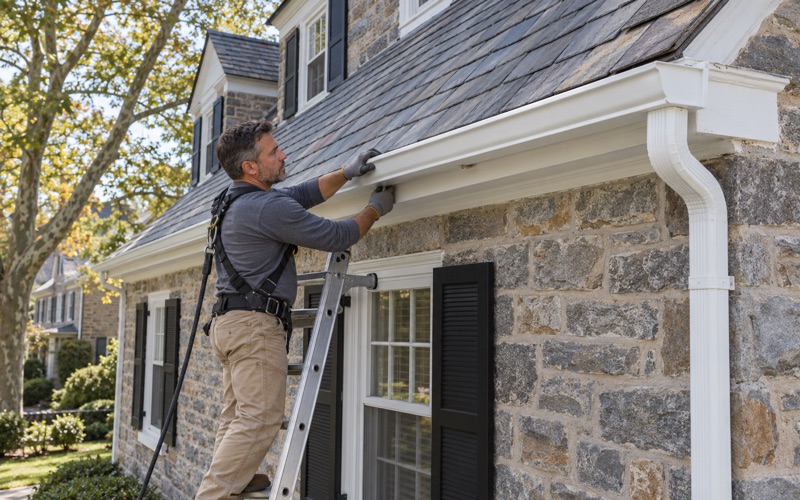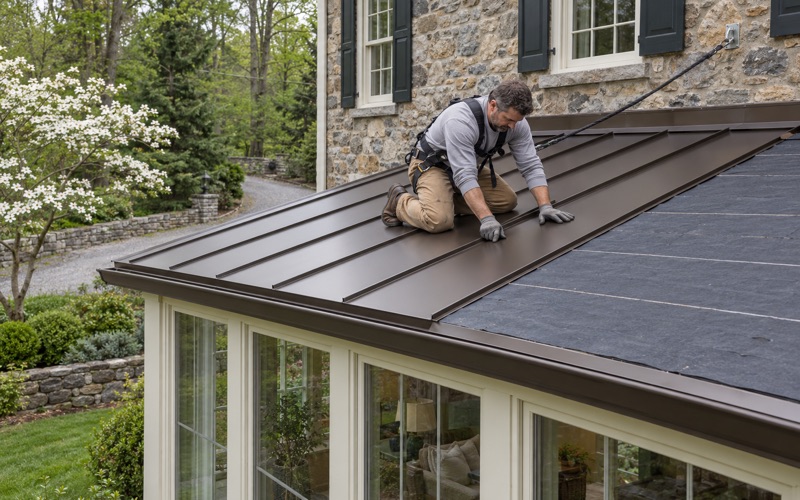
Lower Merion Elite Roofing brings more than 20 years of roofing in Rosemont to houses, twins and apartment buildings that rarely share one kind of roof. Some carry slate that has outlasted several owners, others carry asphalt laid over decades of patching, and plenty of the larger buildings sit under low-slope sections. Our first job on any of them is working out which problem we are actually looking at.
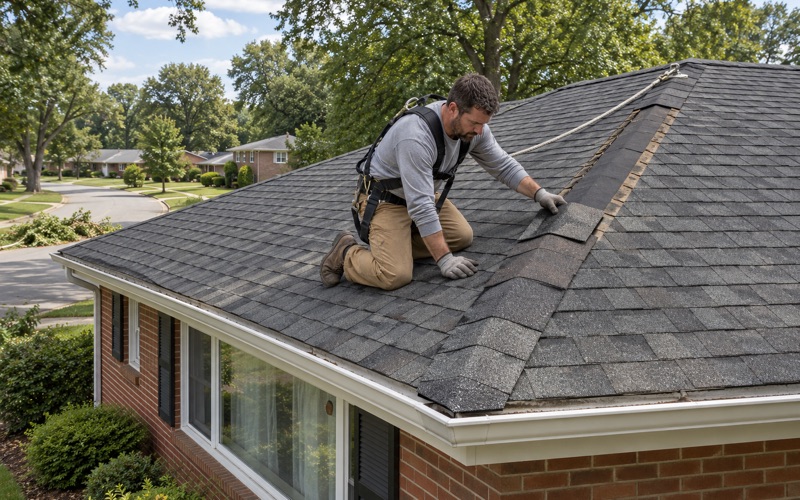
When water shows up on a ceiling, we go into the attic as well as onto the roof, because a stain rarely sits directly under the opening that caused it. Once the entry point is found, you get a plain answer about whether a repair will hold before anyone mentions replacement. Many older roofs need one flashing joint or a handful of pieces rather than a new roof.
Every estimate we write breaks the job into separate lines for tear-off, decking, underlayment, flashing, ventilation and gutters. That lets you set our number beside another contractor’s and see exactly where the two differ. If the old roof comes off and the decking underneath is soft, we photograph it and show you before replacing any, at the per-sheet price already written into the contract.
A College Village With a Landmark Slate Roof
Rosemont is a neighborhood and census-designated place rather than a town of its own, and it is best known as the home of Rosemont College. The college was founded by the Society of the Holy Child Jesus, and its campus sits on the Lower Merion side of the community, along Montgomery Avenue at Curwen Road. Its main building happens to be the most instructive roof in the neighborhood.
Rathalla and Its Steep Hipped Roof
Rathalla, the stone mansion Hazlehurst & Huckel completed for distiller Joseph Sinnott, was finished in 1891 and has served as the college’s main building since the 1920s. The National Register nomination describes a high, steep-sided, slate-covered hipped roof with six decorated chimneys and numerous dormers and turrets. The building has been listed on the National Register of Historic Places since 1980.
Rathalla is not a job of ours. The college’s own record of its 1999-2000 restoration names new wiring, heating and air conditioning, plumbing and an elevator, and says nothing about the roof. We point to the building because it shows, at full scale, the form that many older steep roofs repeat on a smaller one.
Many Small Roofs Inside One
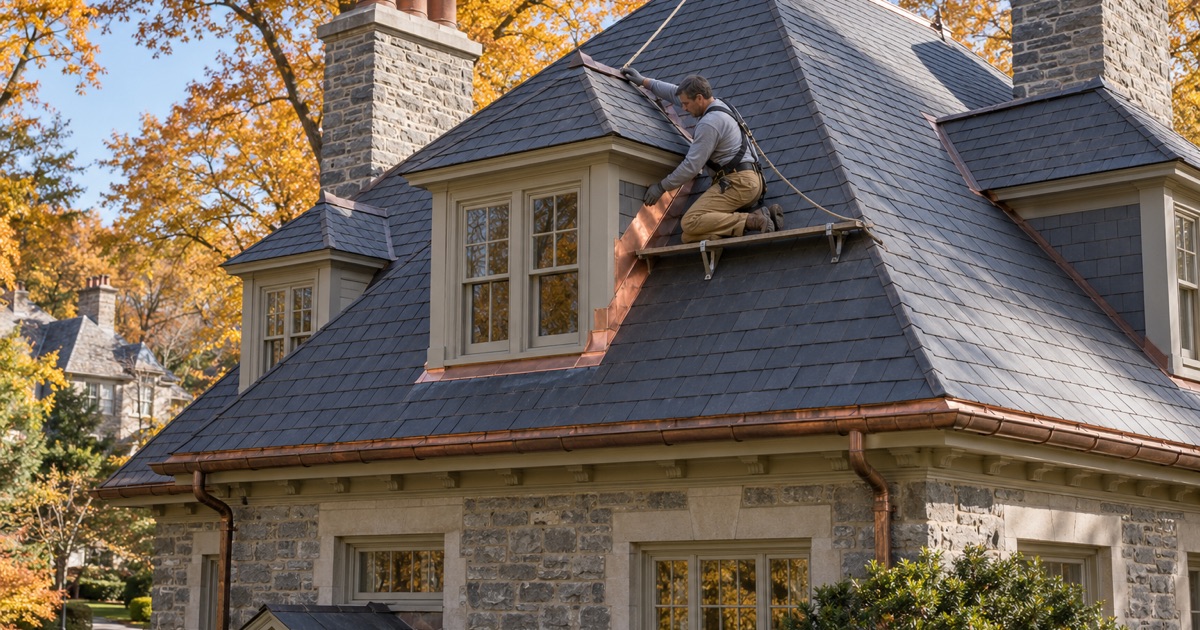
A steep hipped slate roof broken by dormers, chimneys and turrets is not one plane of material. It is a collection of small roofs that meet at dozens of seams, and each dormer, turret and chimney is a flashing joint. Field slate on a steep pitch sheds water quickly, so the weak points are rarely the slates themselves.
The trouble starts at the valleys, the hips, the base of each chimney, and the cheeks and sills of every dormer, where two surfaces meet and metal does the work. That is why we inspect an older slate roof joint by joint rather than judging it from the driveway. A roof can look complete from the street while one dormer sill has been feeding water into a wall for several seasons.
A Campus Changing Hands
The college itself is entering a transition. Rosemont College is set to merge into Villanova University, with the change planned for 2027-2028 and the grounds to be known as Villanova University, Rosemont Campus. For homeowners nearby, the merger changes nothing about how their own roofs are permitted or repaired; that still depends on which township the house sits in.
Looking for roofing closer to Roxborough? See Roofing in Roxborough.
Chimneys, Dormers and Turrets: The Joints That Leak
Most leak calls we answer on older steep roofs trace back to metal rather than to the roofing material itself. A roof with several chimneys and dormers simply has more places where flashing has to turn a corner, lap a wall or tuck into masonry. Each of those places ages on its own schedule, which is why one roof can be sound in the field and failing at three joints.
Chimney Flashing and Crickets
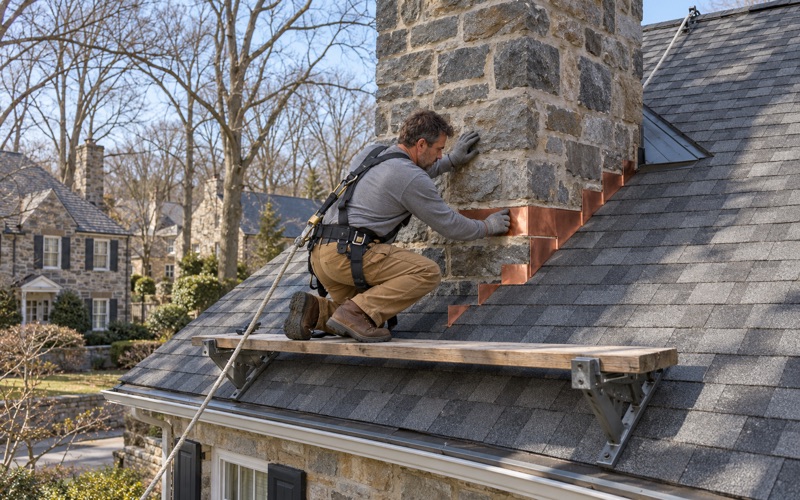
A chimney flashing system has two layers: step flashing woven into the courses of slate or shingle, and counter flashing set into the masonry above it, often in a cut reglet. When either layer fails, water runs down the brick and behind the roofing. On a wide chimney that sits across the slope, a cricket, also called a saddle, splits the water before it can pond against the uphill side.
The mortar joints that hold counter flashing loosen over time, and caulk smeared over a failing joint only buys a season or two. We replace step, counter and chimney flashing with the roof instead of reusing old metal under new material. Reusing it saves an hour on the day and usually costs the owner a second visit later.
Dormer Cheeks, Sills and Valleys
Every dormer adds two side walls, called cheeks, a front sill and two short valleys where its roof meets the main slope. Water reaching a cheek wall is guided down by step flashing, and a kick-out at the bottom keeps it from running into the siding or trim below. Where that kick-out was never installed, rotted sheathing under the dormer is a common finding.
Painted dormer trim on an older house may carry lead paint, which changes how that trim can be disturbed when flashing is replaced. We plan the lead-safe work before the job starts rather than after the first piece of trim comes off. The schedule and the scope both account for it, so it never appears as a surprise charge.
Turrets and Curved Sections
Where an older house has a turret or a curved roof section, slate work slows down considerably. Each course has to be cut and set to a changing radius, and the flashing at the base has to follow a curve rather than a straight wall. We price these sections as their own line on the scope, so the owner can see what that geometry costs instead of finding it buried in a total.
Slate That Stays: Repair First, and the Tear-Off Rule
A sound slate roof is worth keeping, and we treat replacement as the last answer rather than the first. Where a slate roof does have to go, the township a house sits in decides what may be installed over the deck. Rosemont straddles two townships, so that question gets answered address by address.
Repairing Slate One Piece at a Time
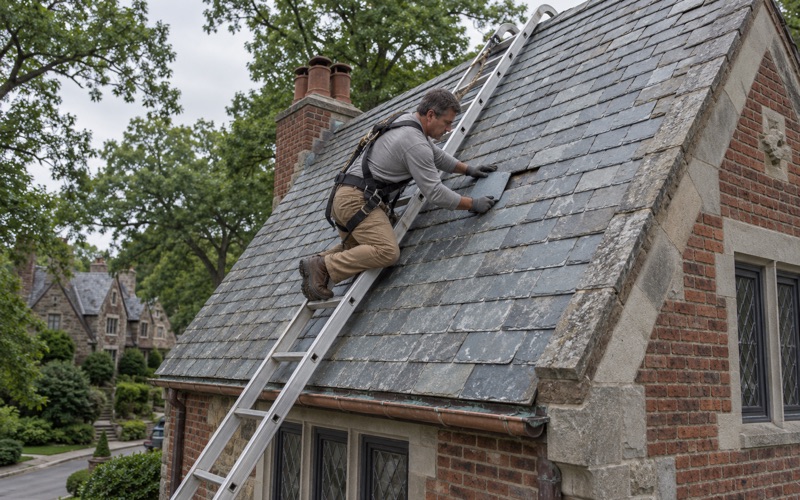
Most slate roofs that leak have a handful of cracked or slipped pieces, not a failed field. We repair them slate by slate, setting replacements with copper nails or slate hooks and matching thickness and color as closely as the available stock allows. That work leaves the original material in place and costs far less than a new roof.
Before we recommend tearing off a slate roof, we want to see a real pattern: widespread delamination, slates flaking apart, or fasteners failing across whole sections. Without that pattern our recommendation is repair, and the estimate says so in writing. Half-round copper gutters are often part of the same conversation, since they suit slate and outlast the cheaper alternatives.
The Lower Merion Rule Against Roofing Over Slate
On the Lower Merion side of Rosemont, the township’s roof permit addendum must be filled out for all roofing permit applications. It allows a maximum of two layers of shingles and bars a new roof over slate, wood shake, clay, cement or asbestos-cement tile. In practice an aging slate roof on that side cannot be hidden under asphalt; it is repaired or it comes off.
We fold that addendum into the estimate itself, so the scope states up front whether a tear-off is required and the price already reflects it. The addendum also calls for the permit to be posted where it is visible from the street before work starts, and we take care of that on the first morning.
Checking the Radnor Side Separately
Part of Rosemont lies in Radnor Township, in Delaware County, and code and permits there are set by Radnor rather than by Lower Merion. Because each township writes its own re-roof rules, we confirm the requirement for the house’s own township before the job is priced. We never assume the two sides of the community match.
Houses and Apartment Buildings on Both Township Sides
Rosemont’s housing is split almost evenly between owners and renters. According to the latest five-year Census estimates, 702 of the community’s 1,381 occupied homes are rented, and 726 of its 1,461 housing units sit in buildings of 50 or more units. That mix means a roofer here works on steep residential slate and flat commercial membranes in the same week.
Older Detached Houses and Twins
Detached and attached houses are where most residential roof work falls. Most of Rosemont’s housing units were built before 1970, and 266 of them date to 1939 or earlier, so original slate, stacked asphalt layers and tired flashing all turn up regularly. On a house that old, the attic inspection often tells us more than the roof surface does.
Twins and attached houses share a wall and often a roof line with the neighbor. We plan those jobs with the adjoining roof in mind, tying new flashing and underlayment cleanly at the shared wall. The goal is that a repair on one side never opens a leak path on the other.
Large Apartment Buildings and Low-Slope Sections
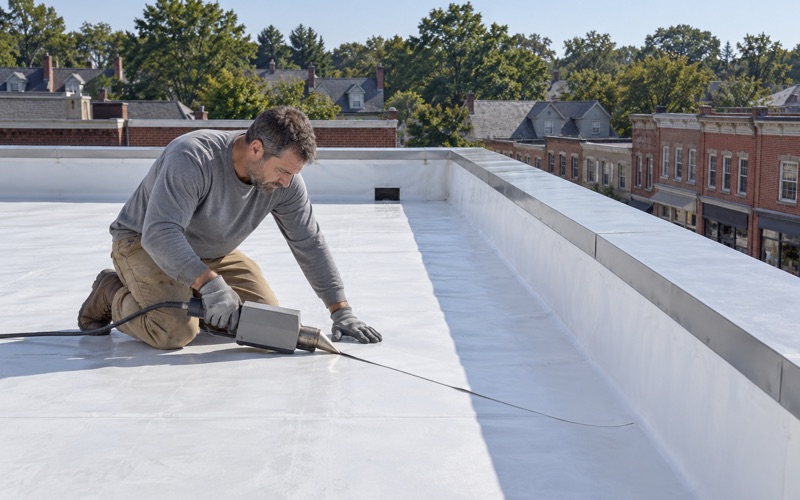
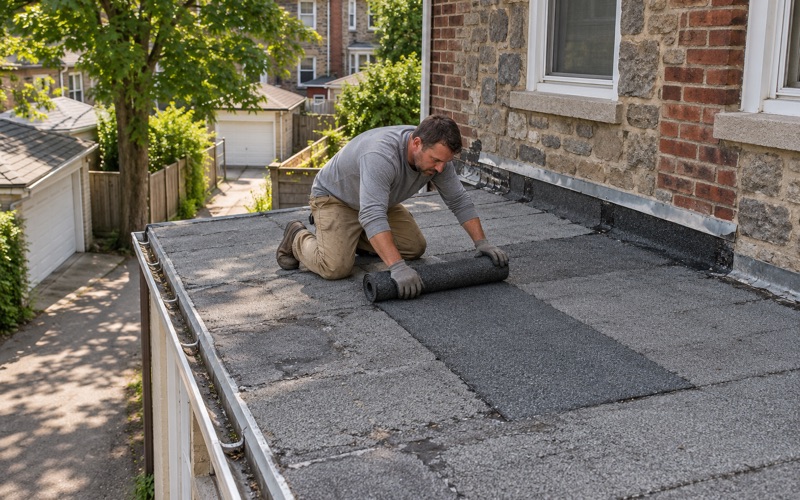
Larger apartment buildings commonly carry low-slope or flat sections rather than steep slate. Those roofs are typically covered with membranes such as EPDM rubber, TPO, PVC or torch-down modified bitumen. Their problems center on seams, drains and the flashing where the membrane turns up a parapet or around a rooftop unit.
For an owner or property manager, the same written scope applies, with each part of the job on its own line and any damaged deck photographed before it is replaced. We clean the site at the end of every work day, including a magnet sweep for nails along the walks and parking areas residents use.
Gutters, Storm Claims and Contracts
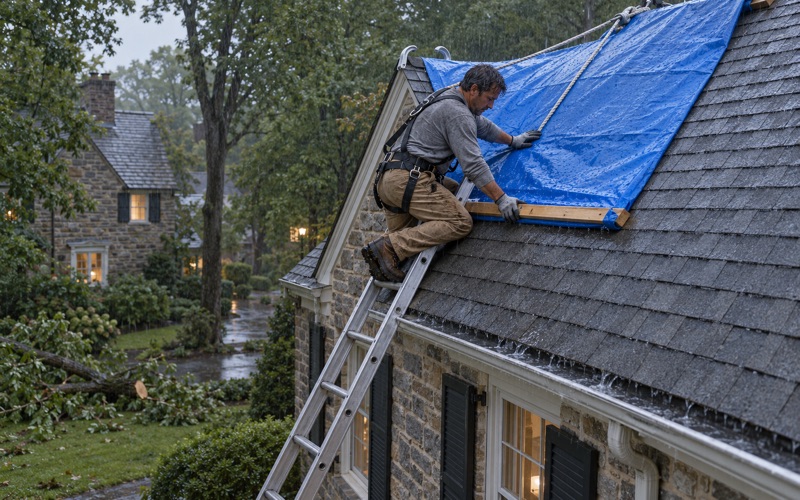
On any Rosemont roof, gutters and downspouts are sized and pitched as part of the roof job rather than left for later. When a storm does damage, we photograph it and write it up for the owner’s own claim, and we will meet the insurance adjuster on site if asked, without negotiating the claim.
Our contracts follow Pennsylvania’s home improvement law, including the three-business-day cancellation notice and a deposit held within the legal limit. Roofs carrying solar panels get the removal and reinstall built into the schedule from the start. Nothing about the job should be discovered on the day the crew arrives.
- 20+ Years Roofing
- Itemized Written Scopes
- Slate Repair Specialists