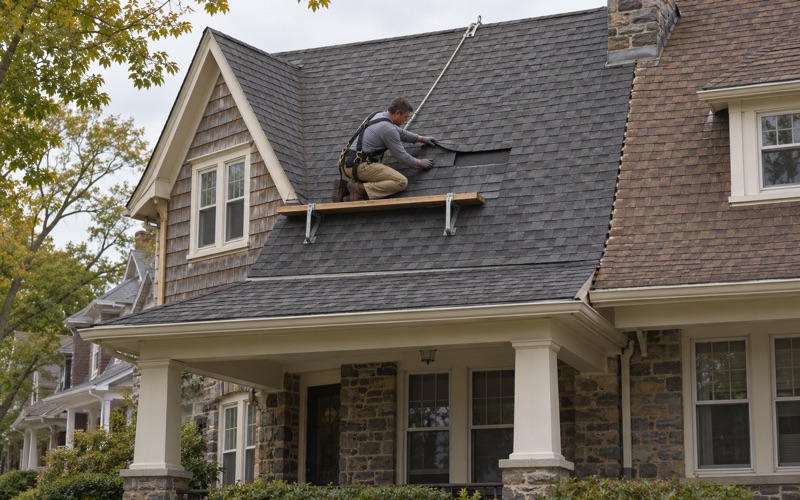
Lower Merion Elite Roofing brings more than 20 years in the trade to roofing in Roxborough, and on a city address the first question we answer is whose rules govern the job. A re-roof here goes through Philadelphia’s Department of Licenses and Inspections, so we check its permit route before a price is written. Your estimate states which permit applies and whether the work qualifies for the simpler path.
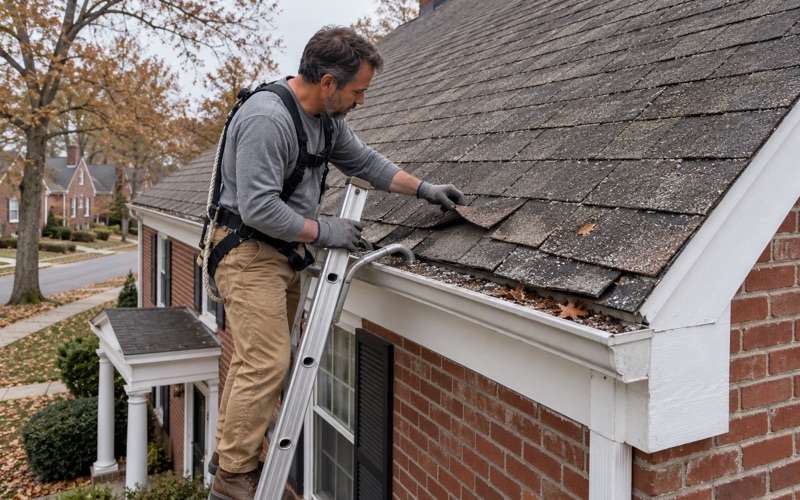
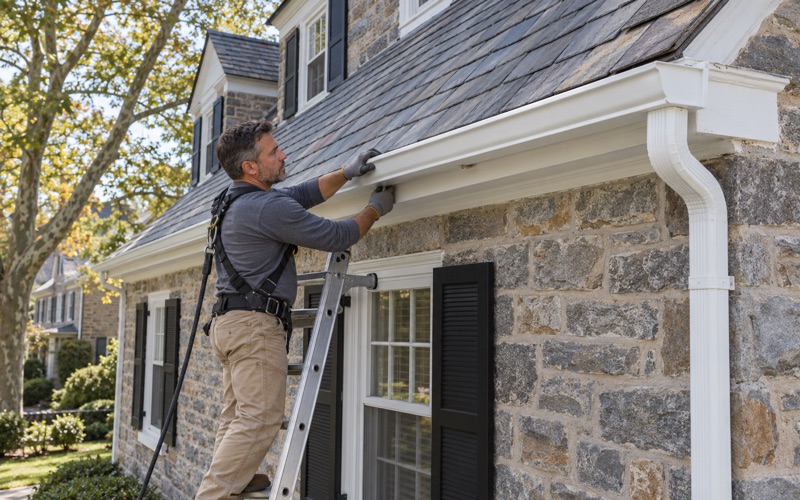
Most of our Roxborough calls start with a leak, and every one of those visits includes a look in the attic as well as on the roof. Water rarely shows on the ceiling directly under the spot where it gets in, so we follow it back to the source before we price a fix. You get a straight answer on whether the roof can be repaired before replacement is ever on the table.
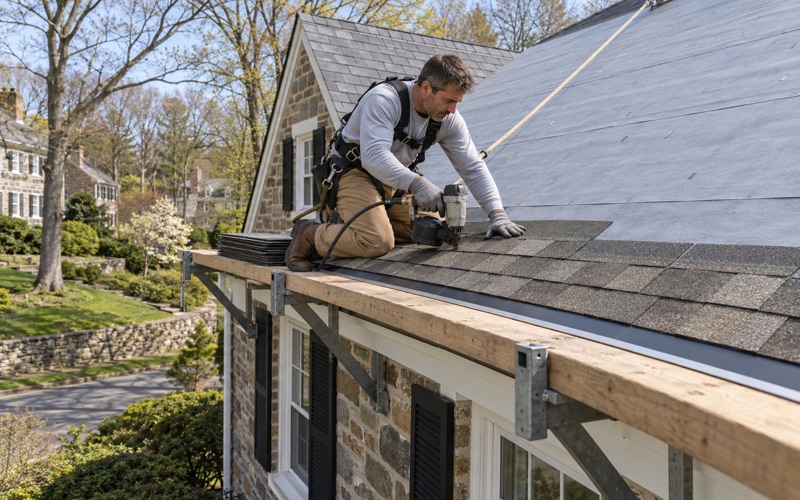
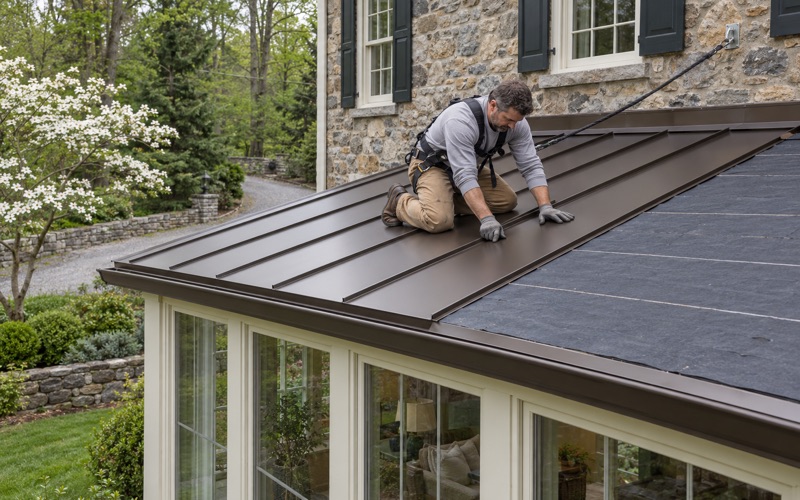
When a full replacement is the right call, the written scope breaks the job into separate lines for tear-off, decking, underlayment, flashing, ventilation and gutters. That lets you set our estimate beside another one and compare it item by item. Contracts follow Pennsylvania’s home improvement law, including the three-business-day cancellation notice and a deposit kept within the legal limit.
How Licenses and Inspections Permits a Roxborough Roof
Roxborough has no local government of its own. It is a neighborhood of Northwest Philadelphia, and Philadelphia is a city of the first class that shares its borders with Philadelphia County. Code, permits, contractor licensing and historic review all belong to the city, which is why a roof here follows a different path from one a short drive northwest in Montgomery County.
A city permit under the city’s own code
Licenses and Inspections issues building permits under the Philadelphia Building Construction and Occupancy Code, which is Title 4 of the Philadelphia Code. The city’s building permit page asks for a permit before major repairs that aren’t part of regular maintenance. It also says properties not on the Philadelphia Historic Registry often don’t need one for repairs related to regular maintenance.
That leaves a gray zone between patching a few shingles and replacing a roof, and we do not guess at it. For a full re-roof on a Roxborough house, we plan the job around the permit L&I built specifically for new roof coverings. For a smaller repair, we explain where it sits against the city’s own maintenance wording.
What the EZ re-roofing permit allows without plans
L&I publishes an EZ Permit Standard for re-roofing, written to the 2021 IRC and the 2021 IBC. It lets an applicant obtain a permit for new roof coverings on an existing roof without submitting plans, as long as the job meets the standard’s conditions. Complete manufacturer’s installation instructions go in with the application.
The standard is strict about staying inside its lines, and any deviation from it results in permit revocation. That is why we read the house against those conditions during the estimate, not after the crew has started. A job that fits gets the simpler permit, and one that does not is flagged before you sign.
Where the EZ route stops
The EZ re-roofing permit does not apply when planned sheathing replacement exceeds 10% of the roof area. It also does not cover alterations that raise the design gravity load more than 5%, such as changing supports under skylights, relocating rooftop mechanical equipment or adding a ballasted roof system. New penetrations, like a skylight installation, fall outside it as well.
A building listed as historic by the Philadelphia Historical Commission needs prior approval before the EZ route applies. A thematic historic district does run along Ridge Avenue, but most Roxborough houses are not in it, so we confirm the listing early rather than assume either way.
Looking for roofing closer to Aston? See Roofing Services in Aston.
When the Old Roof Has to Come Off First
Laying a new roof over an old one can look like a savings on paper. Under the EZ standard, though, several conditions take that option away. We write the answer into the scope from the first visit, so the price you see is the price of the job the city will actually allow.
Deteriorated roofs and two or more roof coverings
The standard requires removing all existing layers when the roof is water-damaged or deteriorated. It also requires a full tear-off when the roof already carries two or more roof coverings, which happens on houses that were re-covered once before and are now due again.
In the attic we look for the signs that matter here: stained decking, soft spots and daylight at the eaves. If the existing roof is past the point of carrying another layer, the estimate says tear-off and explains why. Nobody should find that out on the morning the crew arrives.
Slate, clay, cement and asbestos-cement tile
A full tear-off is also required when the existing roof is wood shake, slate, clay, cement or asbestos-cement tile. New covering cannot go over those materials under this permit. At the same time, the standard allows sound slate, clay or cement tile to be reinstalled, so a slate roof is not automatically a lost cause.
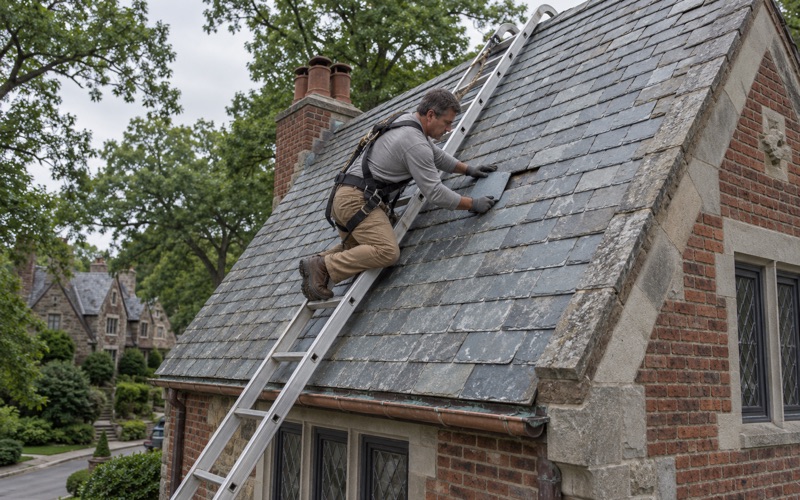
Before anyone talks about replacing a slate roof that is still sound, we repair it slate by slate with copper nails and slate hooks. Where a section really does have to come off, we sort the good slate from the failed pieces and show you what can go back up.
Decking found under the tear-off
Old sheathing is where many re-roofs change shape. If damaged sheathing turns up during tear-off, the EZ standard says the inspector must be notified, which matters because the sheathing limit is part of what keeps a job on the simpler permit.
We photograph damaged decking once the old roof is off and show it to you before any sheet is replaced. The per-sheet price is set in the contract ahead of time, so the count on the day can change the total but never the rate.
What Goes Back On, and the Certification at the End
The EZ standard is as specific about the new roof as it is about the old one. Most of its construction rules line up with how we already build a roof, and the few that surprise owners are the ones we point out on the estimate.
Shingles, drip edge and insulation
Asphalt shingles are allowed only on slopes of 2:12 or more, and they must meet ASTM D3462 plus wind class D, G or H under ASTM D7158, or class A, D or F under D3161. Drip edge at eaves and gables has to extend at least 1/4 inch below the sheathing and 2 inches back on the deck, fastened at no more than 12 inches on center and lapped at least 2 inches.
The roof needs a Class B fire rating at minimum, and any alteration to roof insulation must reach R-49 or greater under the 2021 IECC. Debris has to leave the site at the end of each working day, which matches our own habit of cleaning the driveway, yard and gutters daily, magnet sweep for nails included.
Flashing against Wissahickon schist walls
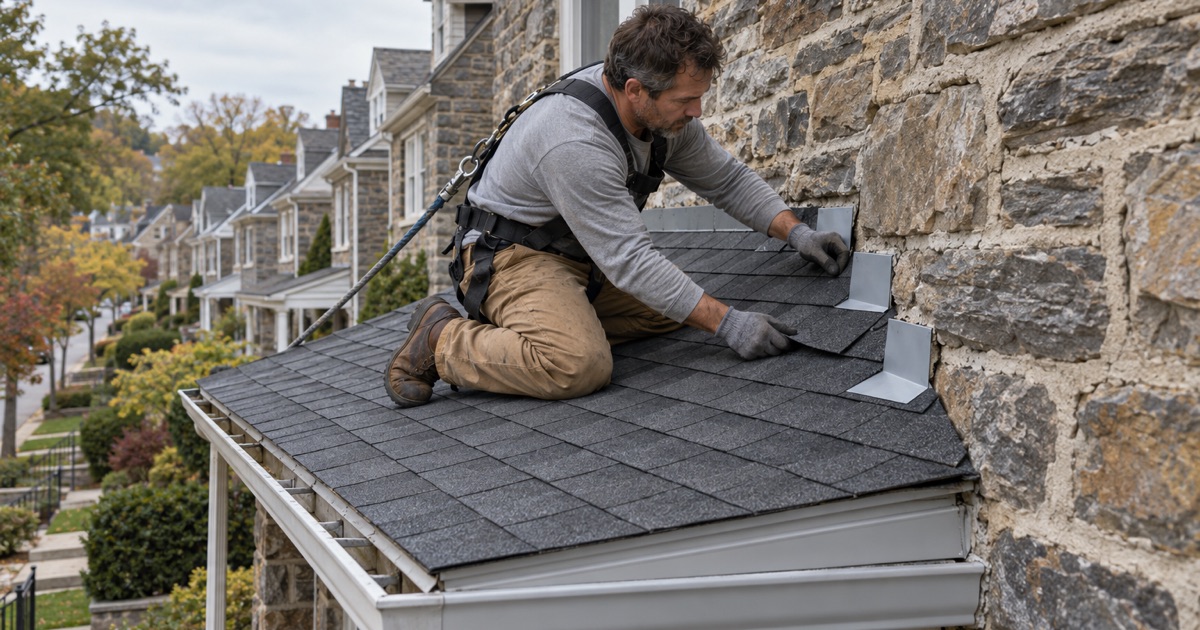
Roxborough sits on a steep ridge between the Wissahickon Creek and the Schuylkill River, and its local building tradition frequently uses Wissahickon schist. Where a stone wall meets a roof, the joint is a flashing detail, and it is a joint that water will test.
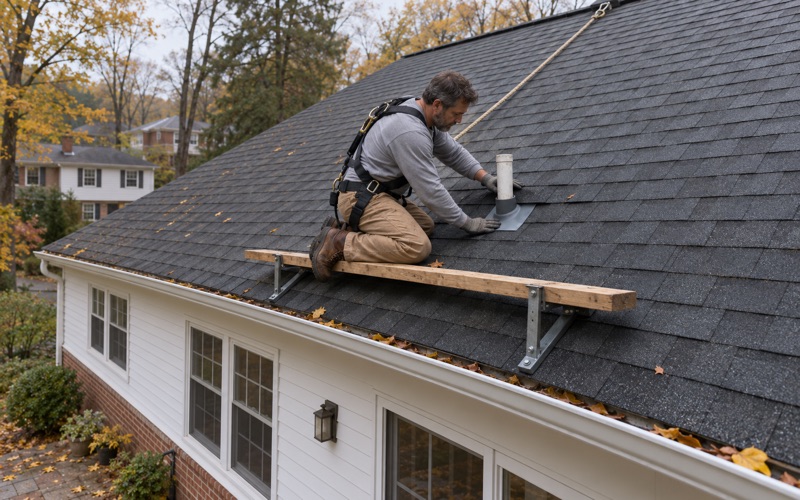
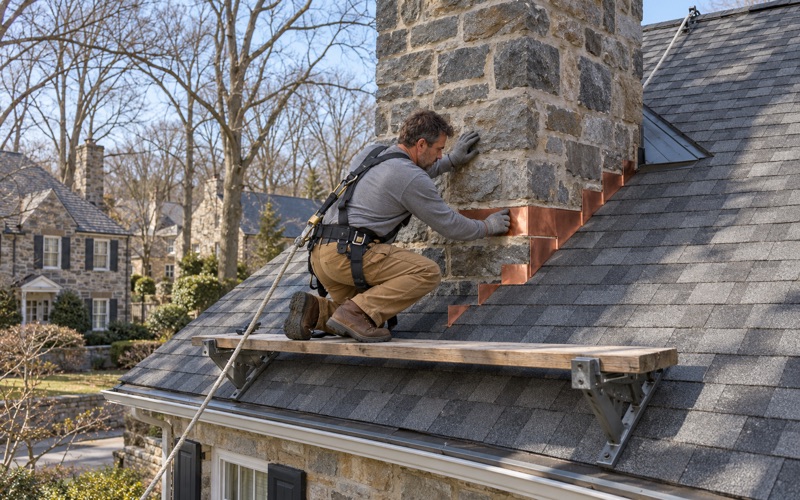
The EZ standard requires flashings to be reconstructed to the manufacturer’s instructions, and it bars reinstalling deteriorated vent flashing, metal edgings, drain outlets, drain collars and metal counter-flashing. We replace step, counter and chimney flashing with the roof as a matter of course, so nothing old is tucked back under new material against the stone.
The Roof Replacement Certification in eCLIPSE
When an EZ re-roof is finished, the contractor completes L&I’s Roof Replacement Certification Form. It certifies the work is watertight and weatherproof, installed to the manufacturer’s instructions and compliant with the EZ standard and the Philadelphia Building Construction and Occupancy Code. It also states whether less than 10% of the sheathing was replaced.
The contractor gives the form to the owner and uploads it to the building permit in eCLIPSE, the city’s online permit system. Keep your copy with the house records, because it is the document that shows a later buyer the roof closed out under the permit it was issued.
Contractor Licenses and State Registration in Philadelphia
Philadelphia licenses contractors itself, and which credential applies depends on the type of building and the type of work. The certification form reflects that split, because it asks for either a city license number or an L&I registration number.
The city’s own Contractor License
The city’s Contractor License costs $126 and renews at $126 each year, with a $20 non-refundable application fee applied. It carries minimum insurance of $500,000 general liability per occurrence, $300,000 automobile and workers’ compensation coverage. A business doing construction, demolition or repair that does not call for a specialized company license needs it.
One- and two-family houses and state registration
A business that works only on existing one- and two-family dwellings, and does no work requiring a special trade license, does not need the city license. It submits as a Home Improvement Contractor after registering with the state instead. On those houses, when no electrical or plumbing permit is needed, the work may be done by an owner who lives in the building or by a registered Pennsylvania Home Improvement Contractor holding a Philadelphia Commercial Activity License.
The certification form handles this directly. Contractors operating under a Pennsylvania Home Improvement Registration list their L&I registration number where the license number would otherwise go.
What to ask before you sign
Ask any roofer which credential they work under and which number will appear on your certification form. Ask whether the job fits the EZ permit, and if not, why not. A clear answer to both, written into the estimate, is a fair test of whether the permit side of the job has been thought through.
On twins and attached houses, we plan the roof with the neighbor’s roof and the shared wall in mind. Where solar panels sit on the roof, their removal and reinstall go into the schedule from the start. Gutters and downspouts are sized and pitched with the new roof rather than left for later.
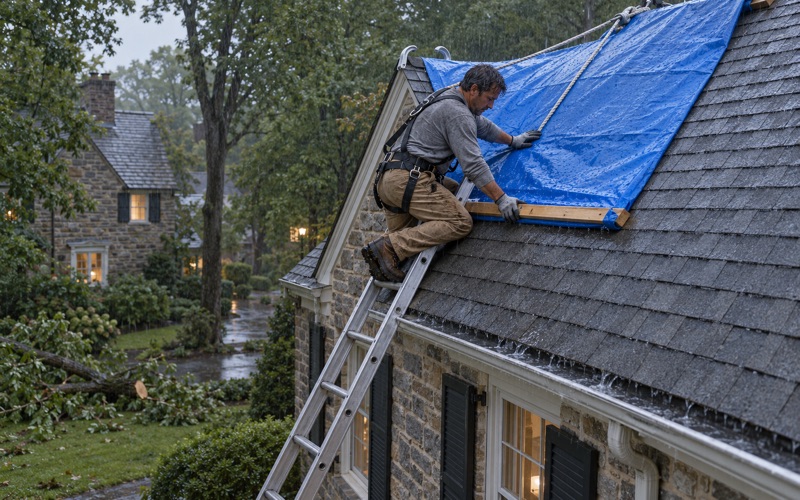
After a storm, we photograph the damage and write it up for your own insurance claim. If you ask, the crew will meet the adjuster on site, though the claim itself stays yours to negotiate.
- 20+ Years Roofing
- Itemized Written Scopes
- Slate Repair Specialists