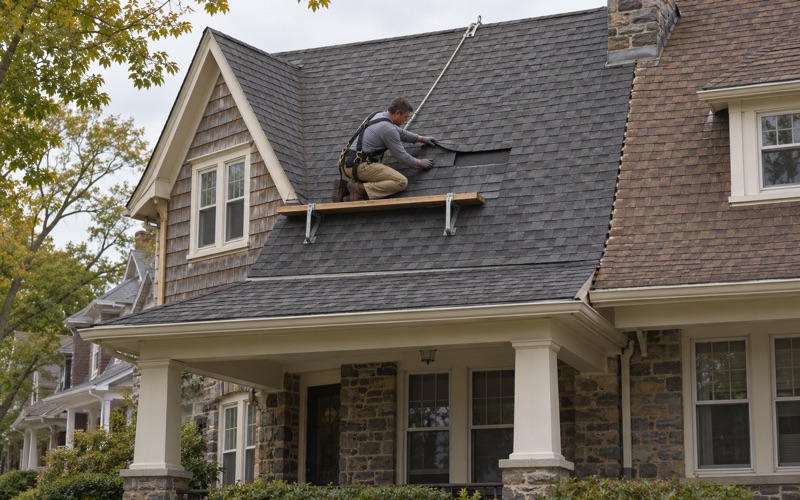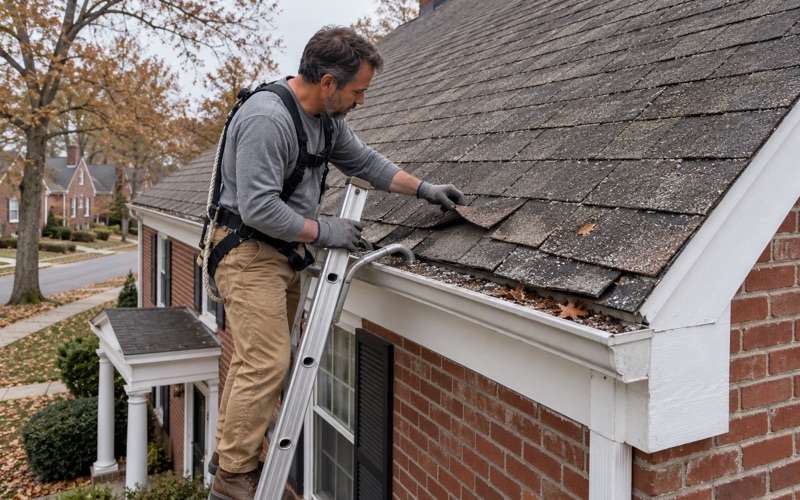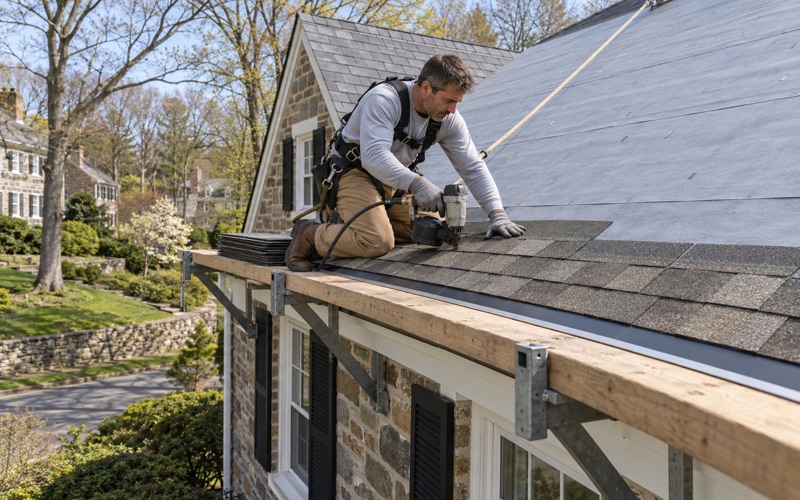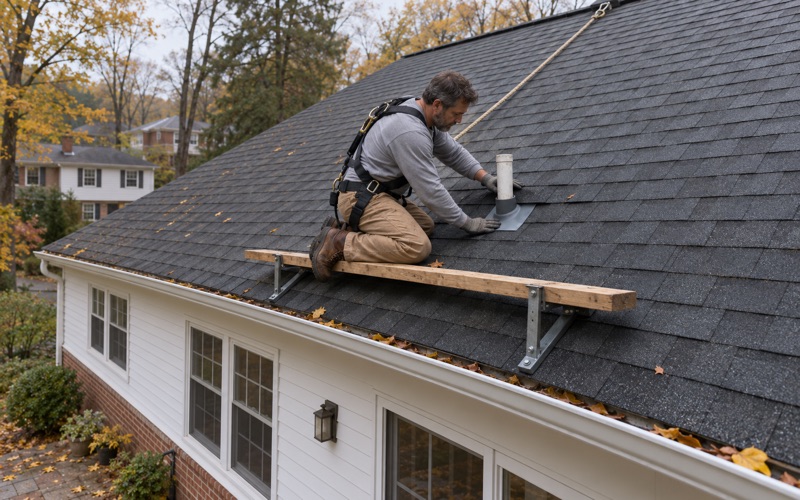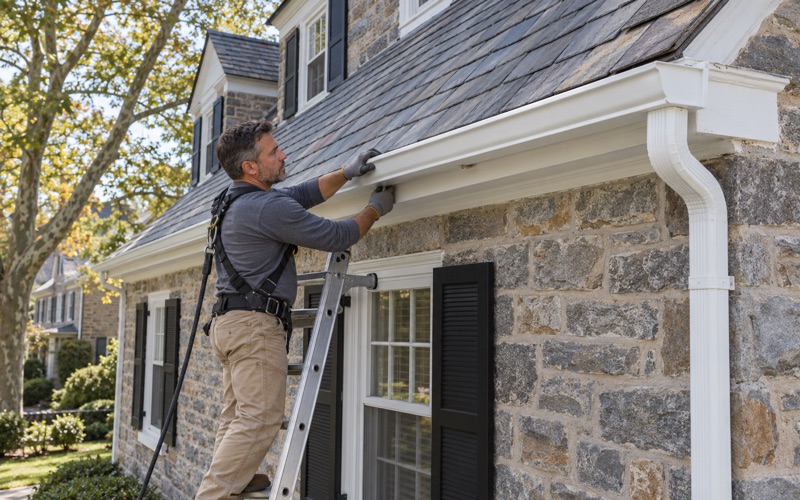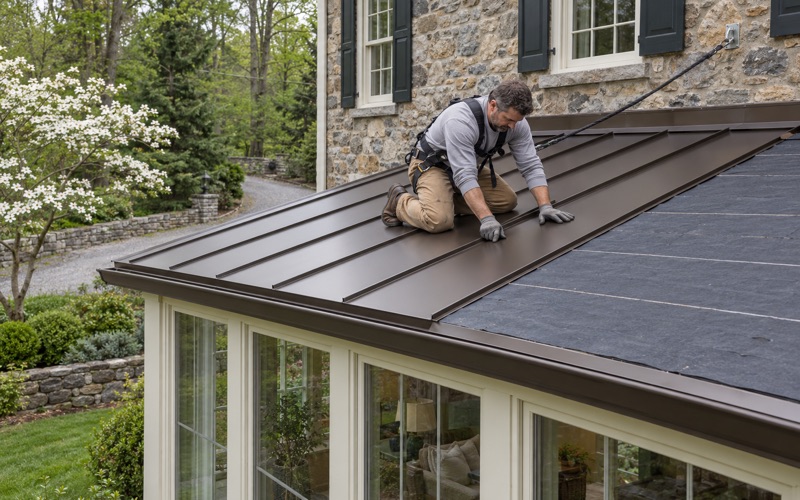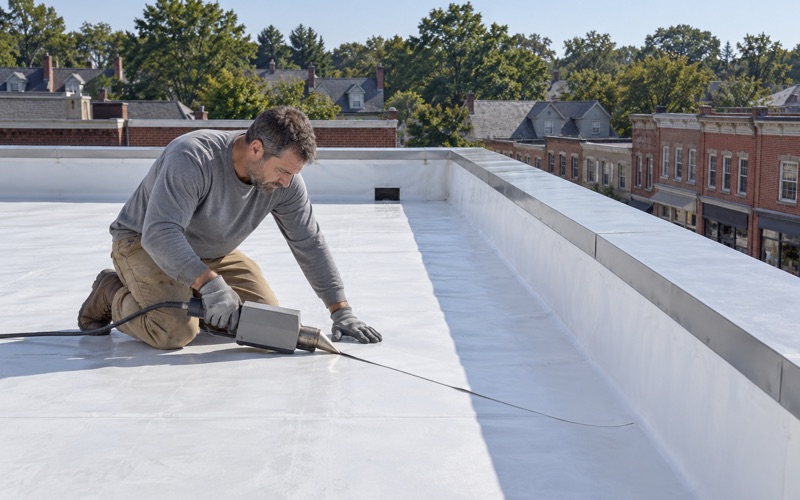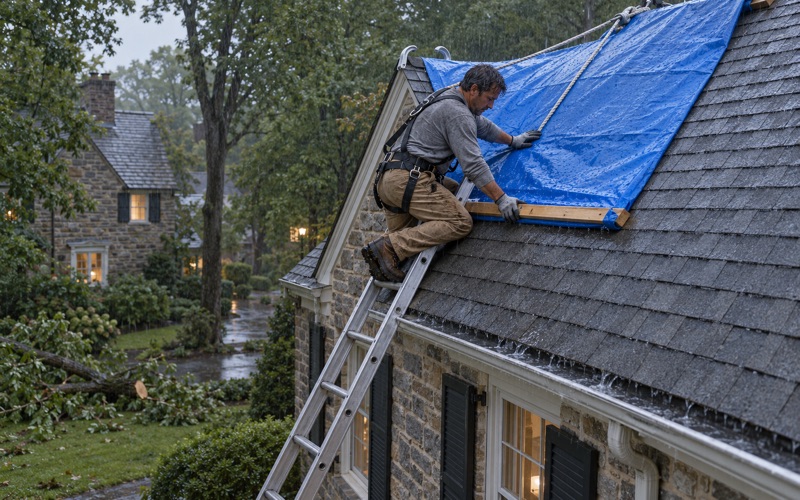
Lower Merion Elite Roofing brings more than 20 years of roofing work to Upper Southampton, and a good share of the roofing questions we hear here start in a condominium rather than a detached house. When the roof belongs to everyone in the building, the first decision is not which shingle to buy. It is who gets to make the call, who pays, and who has to let a crew through the door.
That is why our approach on a condo roof begins with paperwork and a ladder in the same visit. We look in the attic or ceiling space as well as on the roof, so the water is followed to where it actually enters before anyone prices a fix. We also tell the board plainly whether the roof can be repaired before a replacement is ever put on the table.
Single-family owners get the same treatment, of course. But this page is written for the people who share a roof with neighbors above or below them, and for the association boards who answer to all of them at once.
Upper Southampton’s 1980s Condominiums and What the Law Says About Their Roofs
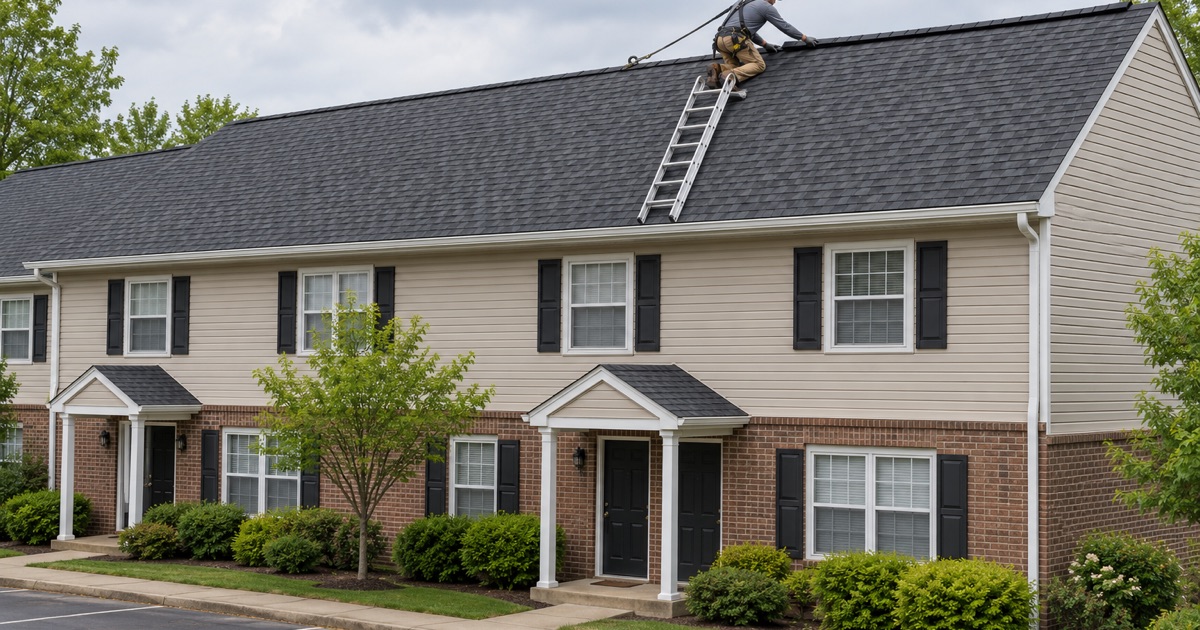
The township’s condominium stock is younger than most of its houses, and it sits under a specific state statute. Knowing both pieces saves an owner from calling the wrong party when a ceiling stain appears.
Belmont Station and Steamboat Station
Belmont Station, listed under a Southampton mailing address in Upper Southampton, went up in 1984-85 as attached homes. Listings describe first-floor units, one with a full basement, and second-floor units, including an end unit with vaulted ceilings. The community has its own association with posted pet rules and a fee listed at up to about $190 a month.
Steamboat Station is a few years younger. Units sold during 2024 carry 1988 build dates, and one listing places a two-bedroom-plus-loft condo with a terrace in Upper Southampton. Across the township, the Census counts 793 of 6,359 housing units in buildings of five or more units, 231 of them owner-occupied.
Finished surfaces versus common elements
Pennsylvania’s Uniform Condominium Act draws a line most owners never think about until water comes through. Where walls, floors or ceilings are a unit’s boundaries, section 3202 makes the lath, wallboard, plaster, paint, finished flooring and other finished-surface materials part of the unit. Everything else in those walls, floors and ceilings is part of the common elements.
In practice, an owner holds the drywall and the paint, while the framing, the attic and the roof above sit on the shared side of the line. A roof is not a finished surface of anyone’s unit. Unless the building’s governing documents say otherwise, it is shared property.
The association’s job under the Act
Section 3307 of the Act states that the association is responsible for maintenance, repair and replacement of the common elements, except as the declaration or the insurance section provides. Each owner, in turn, is responsible for the unit. So by default, the roof over a condominium unit is an association decision and an association expense.
That default matters for these two communities. We infer the Act reaches condominiums of this age because it applies to condominiums created after its effective date, though we have not read the date itself. The board, not an individual owner, is normally the client on a roof.
Looking for roofing closer to East Greenwich? See Roofing Services in East Greenwich.
When the Declaration Says Something Different
The Act sets the default, and the declaration can move it. Before we scope any condo roof, we ask which document governs and what it actually says.
Reading the declaration first
Every condominium is created by a recorded declaration, and the Act lets that document assign maintenance differently than the default does. Some declarations shift particular items to owners; others leave the statute alone. We have not read the declaration for Belmont Station or Steamboat Station, so we make no assumption about either one.
What we do instead is ask the board or its manager for the relevant sections before we price anything. If the declaration puts a portion of the roof on owners, the scope is written that way. If it is silent, the statute’s default stands and the estimate goes to the association.
Limited common elements and the exterior
The Act also recognizes limited common elements: parts of the shared property designed to serve one unit alone. Section 3202 names doors, windows and similar exterior fixtures in that category. A terrace or a skylight over one unit can raise the same question, and the answer again comes from the declaration.
This is where flashing gets interesting. A window or terrace door that leaks at its edge may be a limited common element, while the wall and roof flashing around it is shared. We note on the scope which item is which, so the board can decide who pays without guessing from a photo.
What we can and cannot tell you
We are a roofing company, not a law firm, and we do not interpret a declaration for a board. We read what we are given so our scope matches it. Where the document is unclear, we say so in writing and leave the call to the association and its own counsel.
What we can always give is the physical answer: where the water enters, what material failed, and whether a repair will hold. That part of the decision does not change with the paperwork. Our written finding is the same whether an owner or the board ends up paying for the work.
Reporting a Leak in an Upstairs Unit
When a second-floor ceiling stains, the instinct is to call a roofer directly. In a condominium, the better first call is usually to the association, because the roof is very likely not the owner’s to repair.
Call the association before a roofer
An owner who hires a roofer for a common-element roof can end up paying for work the association was responsible for, or for work the board later redoes. The faster path is to report the leak in writing to the board or manager, with the date, the room and photos of the stain. Most associations have a procedure for exactly this.
If the association brings us in, we schedule with the board and the affected owner together. Upstairs and downstairs owners both get a straight account of what we found. Nobody has to relay the details secondhand, and the board has the photos it needs to decide.
Tracing the water in the attic and on the roof
A stain over a second-floor bedroom does not always sit under the hole. Water can run along a rafter or the top of a wall before it drops, so we look in the attic space as well as on the roof surface. On a building with vaulted ceilings, where there is little attic to walk, we work from the roof and the interior finish together.
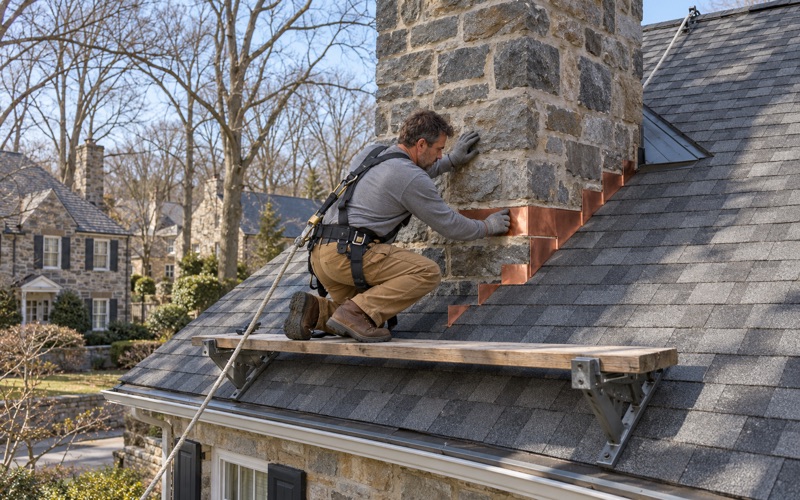
The common culprits on a roof of this age are pipe boots, step flashing at walls, and valleys. We report which one failed, show photos, and say whether a repair will hold or whether the roof is near the end of its life. The board decides the next step from that report.
Damage that spreads to another unit
The Act also says a person who causes damage to the common elements or to another unit is liable for prompt repair. That clause rarely bites on a slow roof leak, but it shapes how carefully a crew must work over occupied units. A dropped tool through a skylight is our problem, not the owner’s.
A ceiling in the first-floor unit below can also take water from a second-floor leak. When that happens, we photograph both ceilings so the board and the owners have a single record. Interior finish repair belongs to whoever the declaration and the Act say it does, which may differ from who pays for the roof.
Re-Roofing a Building With Owners on Two Floors
Replacing a roof over occupied condos is a different job from re-roofing a single house. Two floors of owners live under the work, and every decision runs through a board.
Access through a unit
The Act requires owners to give the association reasonable access through their units when it is needed for common-element work. On a roof job, that can mean entering a second-floor unit to check decking from inside, or a first-floor unit to inspect water damage. We give owners advance notice through the board and keep each visit short.
Scheduling with owners on two floors means agreeing in advance on which days the noise will be loudest, where materials will be staged, and when parking spaces will be blocked. We build that calendar with the manager before the first bundle goes up. Owners should not learn about a tear-off by hearing it overhead.
Scope lines the board can compare
Associations usually collect more than one bid, and boards answer to every owner for the choice. Our written scopes list tear-off, decking, underlayment, flashing, ventilation and gutters as separate lines. That lets a board line two estimates up item by item instead of comparing totals that cover different work.
If decking turns out to be damaged once the old roof is off, we photograph it and show the board before replacing it, at a per-sheet price set in the contract. Step, counter and chimney flashing is replaced with the roof rather than reused. Gutters and downspouts are sized and pitched as part of the same plan.
Cleanup around shared walkways
A condo roof job happens over walkways, parking and doorsteps that every owner uses. At the end of each work day, we clean the driveway, the grounds and the gutters, and we run a magnet sweep for roofing nails. That is especially important where children, pets and visitors cross the same paths the crew does.
Our contracts follow Pennsylvania’s home improvement law, with the three-business-day cancellation notice and deposits kept within the legal limit. Before pricing, we check the township’s own re-roof requirements with its Department of Licenses and Inspections on Street Road. That way, the board’s budget reflects what Upper Southampton Township actually asks for on this building.
- 20+ Years Roofing
- Itemized Written Scopes
- Slate Repair Specialists