Lower Merion Elite Roofing has handled roofing in Worcester and across Montgomery County for more than 20 years, and the first question we answer on a Worcester job is whether the work changes how much of the lot sits under a roof. A straight tear-off and replacement on the same outline is one kind of project. A new porch roof, an addition or a cover over the deck is another, and the township treats that second kind differently.
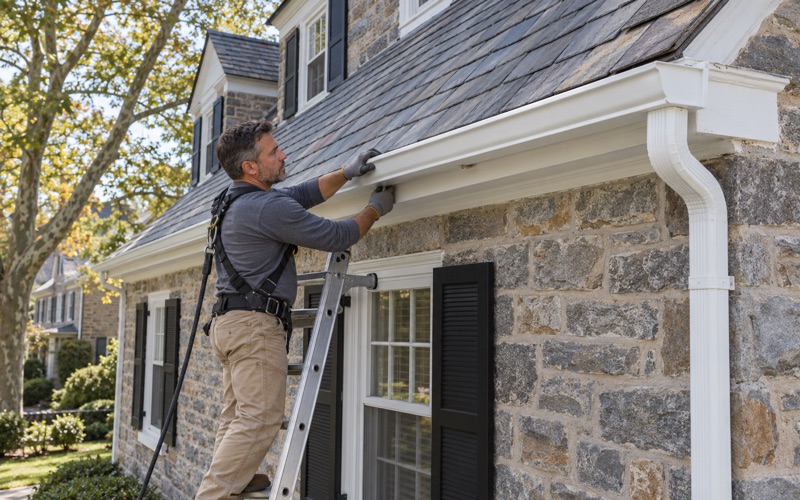
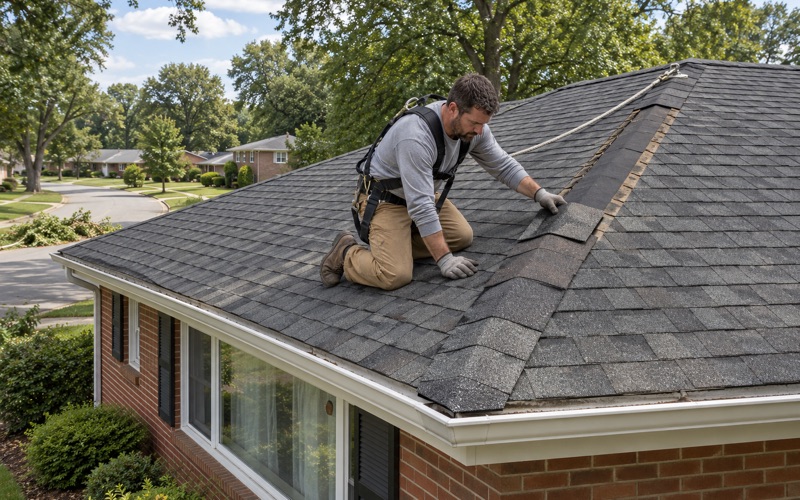
Before any price is written, we look at the roof and up into the attic on every leak call, so the estimate is aimed at the place water really gets in. We also tell you plainly whether a repair will hold before replacement comes up at all. When replacement is the right answer, the scope lists tear-off, decking, underlayment, flashing, ventilation and gutters on separate lines, so two bids can be compared item by item.
That itemized scope matters more here than in many places, because the gutters and leaders are part of how a Worcester roof is judged. The sections below walk through how the township counts roofed area, where a re-roof fits in that count, and what happens to the water once it leaves the gutter.
How Worcester Township’s 2018 Stormwater Rules Count a Roof
Ordinance 2018-278 and building coverage
In August 2018 Worcester Township adopted stormwater management regulations that, in the township’s own words, affect every property in the community. The township says the rules are required by the US EPA and the Pennsylvania Department of Environmental Protection. Ordinance 2018-278 is the piece homeowners run into most, because it ties permits and plans to how much new coverage a project adds.
The township’s stormwater guide defines building coverage in one plain line: building coverage is anything with a roof over it. That definition is why a roofer working here has to think about footprint, not just shingles. A roof in Worcester is not only a weather surface; it is a measured area that sheds water onto the lot.
Where that water goes
Worcester Township covers 16.2 square miles of Montgomery County and takes in villages such as Center Point, Fairview Village and Providence Square. The township drains through Skippack Creek and Stony Creek, both part of the Schuylkill watershed. Every new roof adds a surface that sends rain toward those creeks faster than lawn or field would.
Why a deck alone does not count
The same guide says a deck does not add to building or impervious coverage unless there is a patio of brick pavers below it or a roof above it. Open decking lets rain fall through the boards to the ground. Put a roof over that deck and the water now lands on one surface and leaves through one gutter, which is exactly the change the ordinance tracks.
Worcester’s 2026 fee schedule shows the same distinction. Its residential table, prepared by Barry Isett and Associates, carries a deck line reading “Including a roof over a deck” at $250.00. We point that out to owners planning a covered deck, since the roof is the piece that changes the project in the township’s eyes.
Looking for roofing closer to Wynnewood? See Roofing in Wynnewood.
The 500 and 1,200 Square Foot Lines Since January 1, 2019
The grading permit threshold
Worcester requires a grading permit for any work that exceeds 500 square feet or adds 500 square feet of new coverage to the property. A modest porch roof may stay well under that line. A two-story addition or a large covered outdoor room can pass it, and the permit question is worth settling before framing lumber arrives.
The cumulative 1,200 square foot plan
Once new coverage exceeds 1,200 square feet, Ordinance 2018-278 requires a stormwater management site plan. The count is cumulative from the date the ordinance took effect, January 1, 2019, so it does not reset with each project. Below 7,500 square feet the plan is a simplified one; above that, the township calls for a full plan and a stormwater permit.
The township’s own example shows how quickly the total builds: a 600 square foot patio, a 200 square foot shed and a 500 square foot addition together cross the line. No single item there looks large. For a roofing customer, the lesson is that a new porch roof today is measured alongside whatever else has been built on the lot since 2019.
Exemptions and who to call
The guide lists exemptions for gardening, agricultural activities and forest management, none of which describe a new roof over a living space. When a project sits close to either threshold, the right source is the Worcester Township Codes Department at (610) 584-1410, open Monday through Friday from 7:00 AM to 4:30 PM. We would rather a homeowner hear the township’s own reading than rely on ours.
Re-Roofing Versus Adding Roofed Area
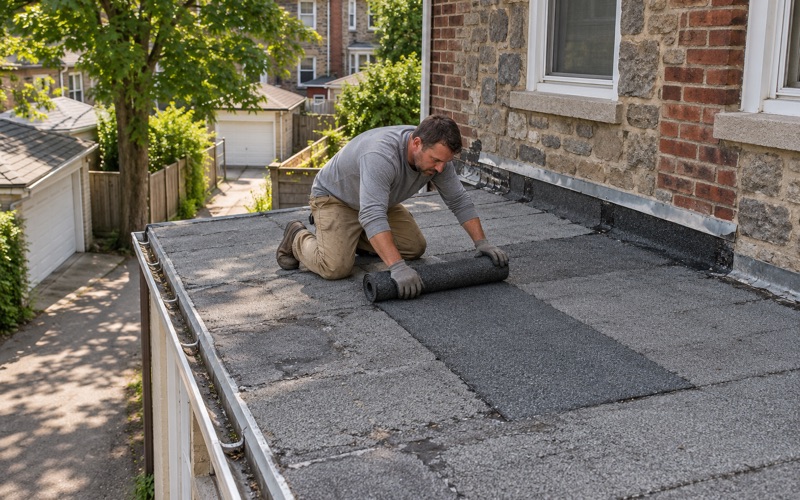
A same-footprint re-roof
Replacing an existing roof on the same footprint puts no roof over new ground, so by the guide’s own definition it should add no building coverage. That is our reading of the guide, not a line the township wrote, because the stormwater guide does not address re-roofing at all. We say so plainly in the estimate rather than presenting an inference as a rule.
Whether a replacement needs a building permit is a separate question from stormwater. The township’s permits page and its 2026 fee schedule list no re-roofing item and no exemption for one, and building projects not covered elsewhere are priced as miscellaneous building construction at 2% of total cost with a $200 minimum. Since the penalty for skipping a required permit is twice the permit fee, we confirm the answer with the Codes Department for each address before the job is priced.
Porch roofs and additions
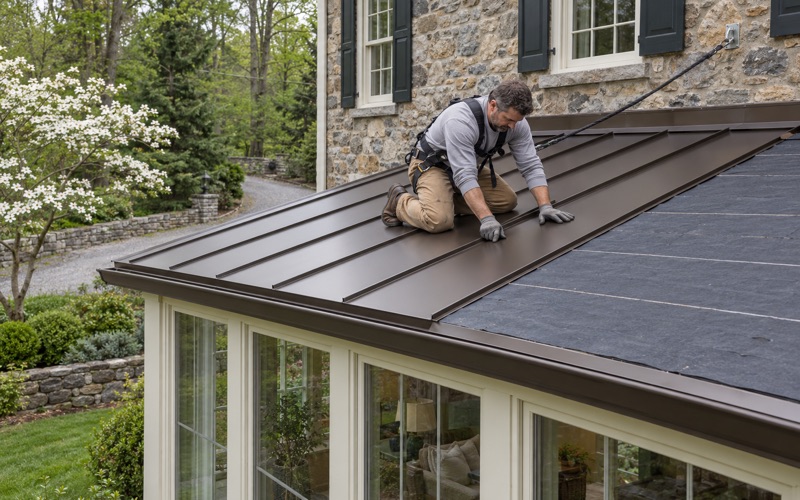
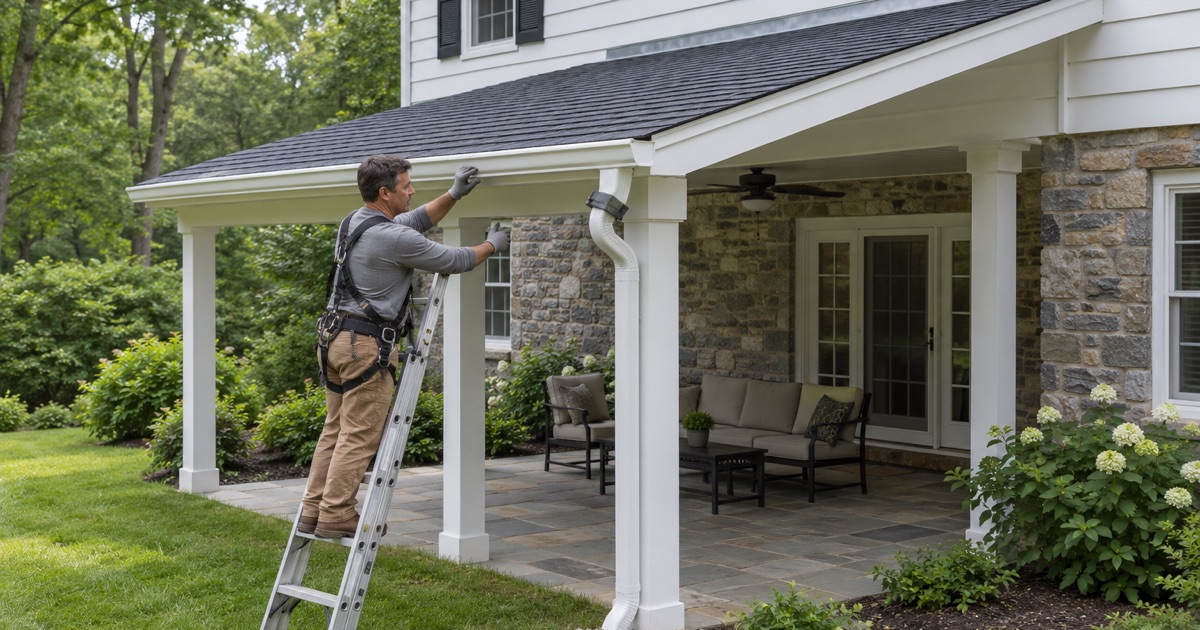
A roofed front porch, a sunroom, a garage addition or a new wing all count, because each puts a roof over ground that had none. On a Worcester lot those are the projects where we slow down and ask what has already been added since the ordinance took effect. The answer shapes whether the owner is heading toward a grading permit, a simplified plan, or neither.
Our contracts follow Pennsylvania’s home improvement law, with the three-business-day cancellation notice and a deposit held within the legal limit. If damaged decking turns up once the old roof is off, we photograph it and show it to the owner before replacing it at the per-sheet price written into the contract.
Roofs over decks
Covering an existing deck is a project owners can easily underestimate. The deck itself never counted, but the new roof over it does, square foot for square foot. We build the scope so the roof area, the gutter run and the downspout destination are all on paper before anyone applies under the deck-roof line on the fee schedule.
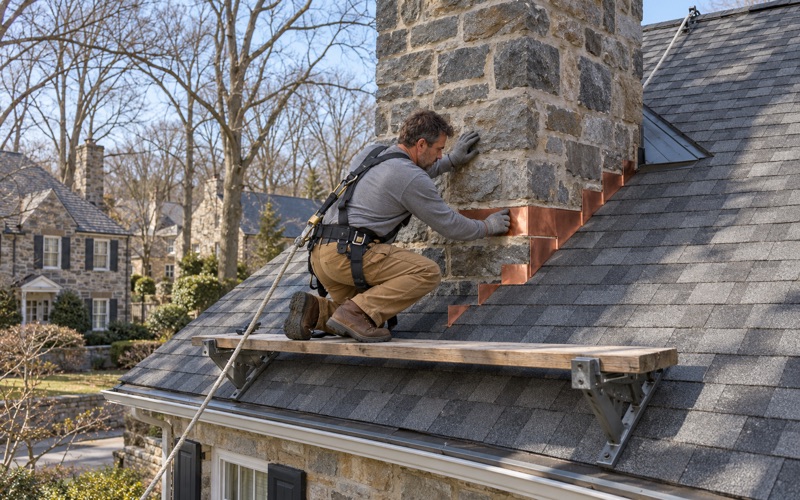
This is also where pitch and drainage get decided together. A shed-style cover tied into an existing wall needs sound step and counter flashing where it meets the house, and we install that flashing new rather than reusing anything salvaged. Gutters on these covers are sized and pitched with the roof itself, since they now collect water that used to drain through the boards.
Where the Downspouts Go: Dry Wells, Rain Gardens and Splash Blocks
The dry well in the township’s guide
Worcester’s stormwater guide draws one practice that sits right at the end of a roofer’s work: a dry well, or seepage pit, fed by a roof leader, with an overflow pipe and a splash block. The guide recommends placing it 10 to 20 feet from structures and no deeper than 3.5 feet. It also says a dry well should never be combined with a septic seepage pit.
The guide presents these practices as options and does not mandate any one of them, so we never tell an owner that a particular device is required. What we do is route the downspout so it can feed whatever the owner and the township settle on. The leader is sized and pitched as part of the roof job rather than added afterward.
Rain gardens and infiltration trenches
The same guide describes a rain garden that should drain within 72 hours, sit 10 to 20 feet from any structure and pond no more than six inches of water. It also illustrates an infiltration trench no more than six feet deep, laid level or at a slope of no more than 1%. Either one can take water from a leader extended away from the foundation.
Gutters sized for the water they carry
A larger roofed area sends more water to each outlet, so gutters on a Worcester project are planned along with the shingles. Most of the township’s housing units are single detached houses, 2,651 of 4,060, and 1,379 were built in the 1990s. A gutter sized for a roof as first built may not suit a porch roof that was added later.
In the AGR Agricultural District, lots are large: the district sets an 80,000 square foot minimum lot area and a 250 foot minimum lot width. That space usually leaves room to place a leader outlet well clear of the house. A heavy snowfall, like the 8.0 inches a trained spotter measured in Worcester Township on January 25, 2026, shows how much meltwater one roof can send toward its downspouts over a few days.
Cleanup at the end of each day
Leader extensions and dry well tie-ins mean digging near the house, so the yard gets the same daily attention as the roof. At the end of each work day we clear the driveway, yard and gutters and run a magnet sweep for roofing nails. Old shingles and stray nails do not belong in the gravel of a new seepage pit.
- 20+ Years Roofing
- Itemized Written Scopes
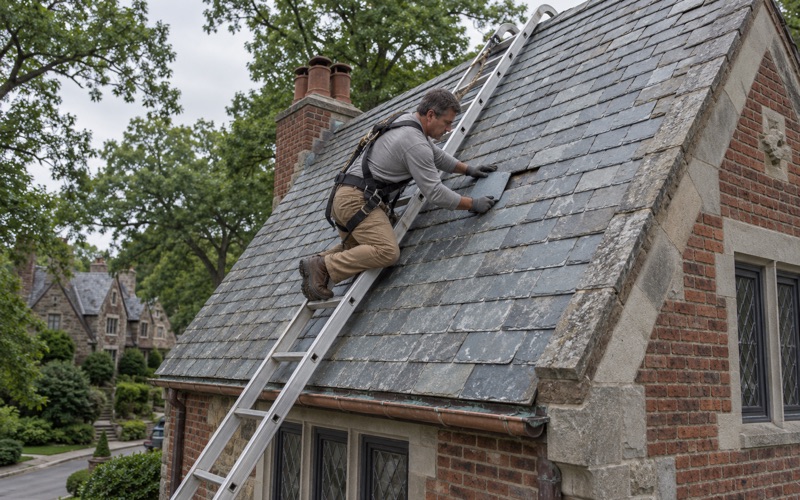
- Slate Repair Specialists