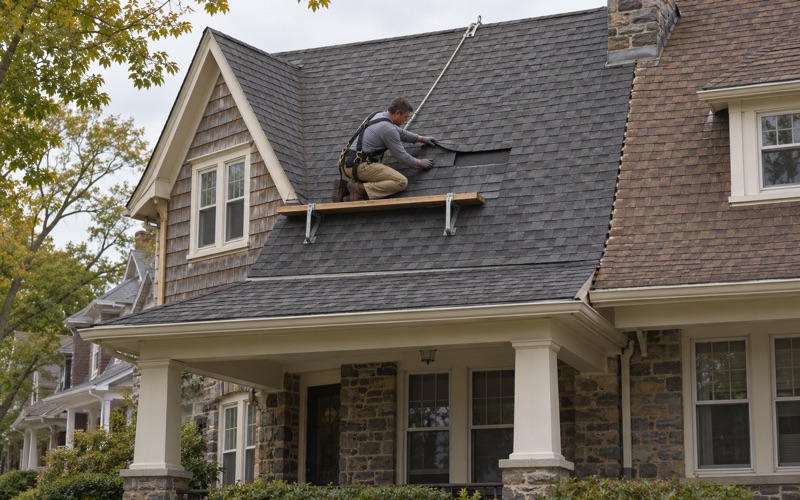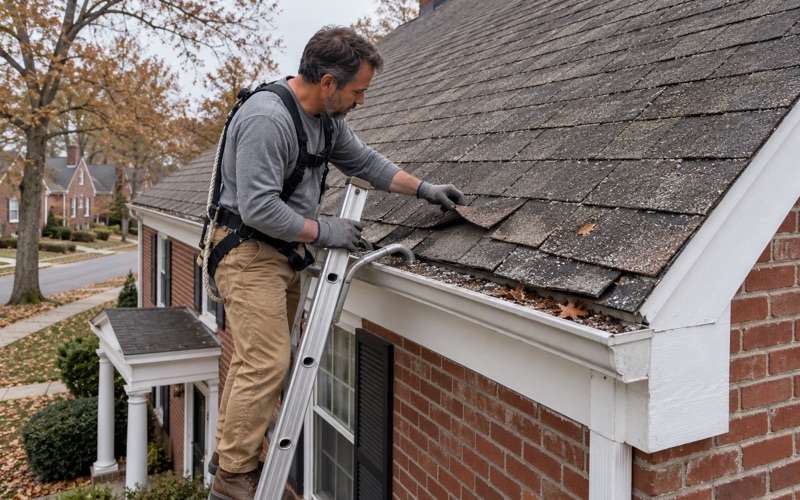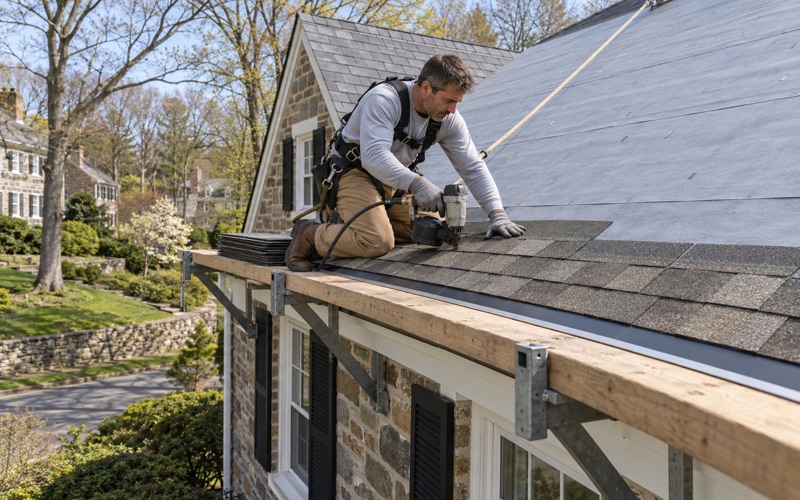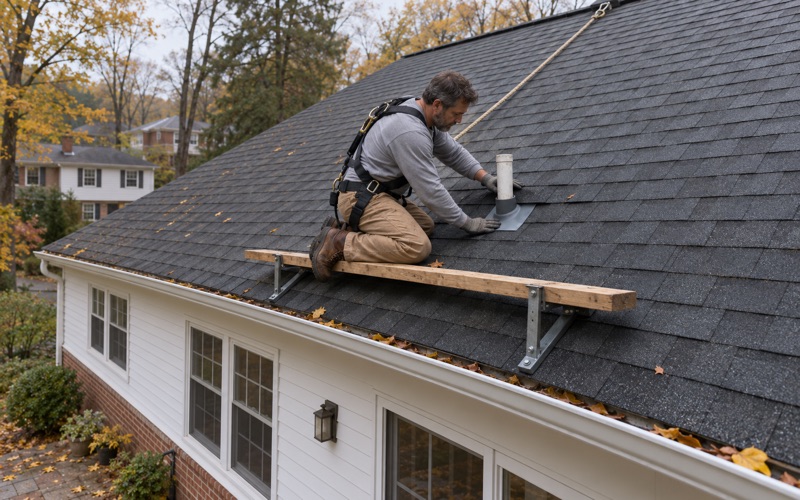
Lower Merion Elite Roofing has spent more than 20 years on roofing in Wynnewood and across the Main Line, and much of that work follows a storm: a limb on the roof, a gutter pulled loose, a stain on a bedroom ceiling that was not there the day before. We start every one of those calls in the attic as well as on the roof, because water rarely shows up inside directly below the spot where it got in.
Our first job is a plain answer on whether the roof can be repaired. Many limb strikes damage a few courses of shingles and a stretch of flashing and leave the rest of the roof sound, and when that is the case we say so before anyone mentions replacement. When the damage runs deeper, we explain what we found and what it means for the scope.
Every estimate we write breaks the job into separate lines for tear-off, decking, underlayment, flashing, ventilation and gutters. That lets a homeowner set our number beside another contractor’s and compare each item, which matters most after a storm, when several estimates tend to land in the same week.
The July 11, 2026 Microburst in Wynnewood
On the afternoon of July 11, 2026, the Storm Prediction Center’s preliminary wind reports logged a Wynnewood entry at 2:45 Eastern time. The remark attached to it is short: video via social media showing a large tree falling during a microburst. No wind speed was recorded for Wynnewood, and we have not seen a National Weather Service survey of the event, so the entry stands as what it is, a preliminary report built on a video.
What the preliminary report does and does not say
A preliminary report is a starting point, not a damage assessment. It places a falling tree in Wynnewood at a specific minute, and it tells a homeowner that the storm passing over that afternoon was strong enough to bring down a large tree. It does not say which houses were hit, and no report we have read names roof damage in the community.
That gap is exactly why an inspection after an event like this is worth doing. A tree that fell across a yard can still have dropped heavy limbs on the way down, and a limb that bounced off a roof often leaves nothing visible from the ground.
Tree damage across Lower Merion Township that afternoon
The same file carries a second report at the same minute, placed just west-southwest of Bala Cynwyd: widespread tree damage in Lower Merion Township, with roads blocked and power outages. Ten minutes later, another entry recorded a large tree and limbs across the Norristown High Speed Line south of the Township Line Road station.
For a homeowner, the practical point is that the damage was spread across the township rather than confined to one street. When trees are down in many places at once, a roof that took a glancing blow tends to wait behind more obvious damage, or gets tarped in a hurry and then forgotten.
Big trees over detached houses
Wynnewood is a place of big trees standing over detached houses on their own lots. That combination is what turns a short, violent burst of wind into a roofing question, because the weight that comes down is a limb rather than a shingle lifted by wind, and it lands on whatever is beneath it.
Looking for roofing closer to Merion Station? See Roofing Services in Merion Station.
What a Falling Limb Does to Shingles, Decking and Gutters
A limb strike is impact damage, and it behaves differently from wind damage. Wind tends to lift and crease shingles along an edge or ridge. A limb concentrates its weight at a point or along a line, and the damage underneath is often worse than the surface suggests.
Shingles that look fine from the yard
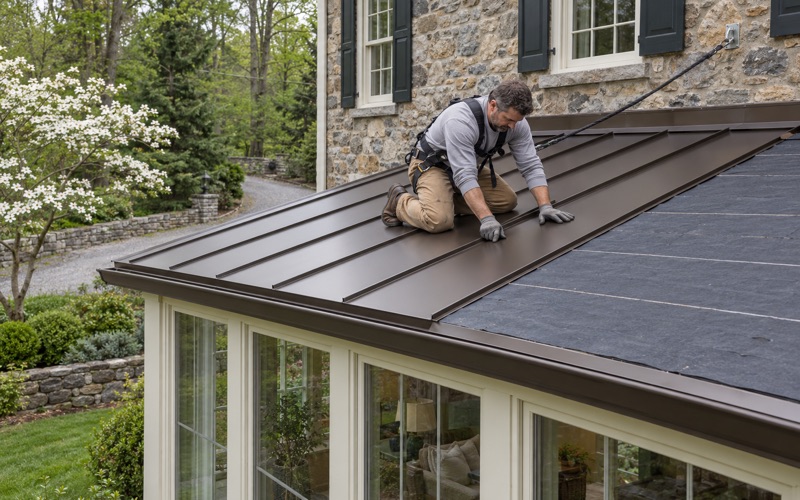
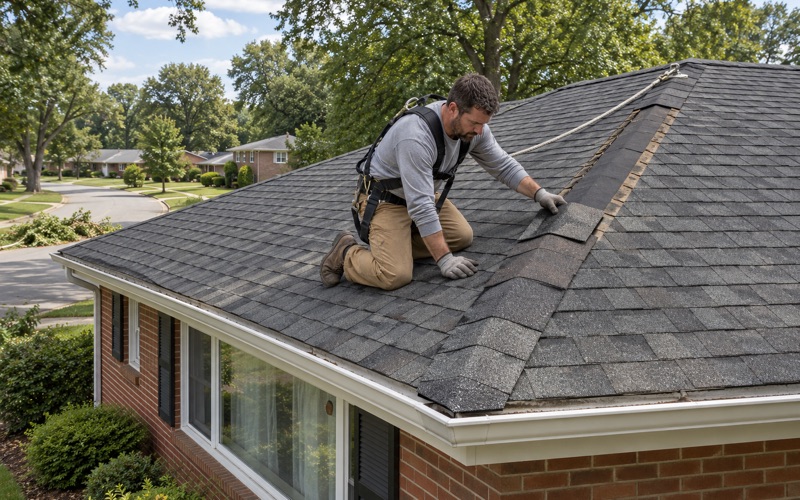
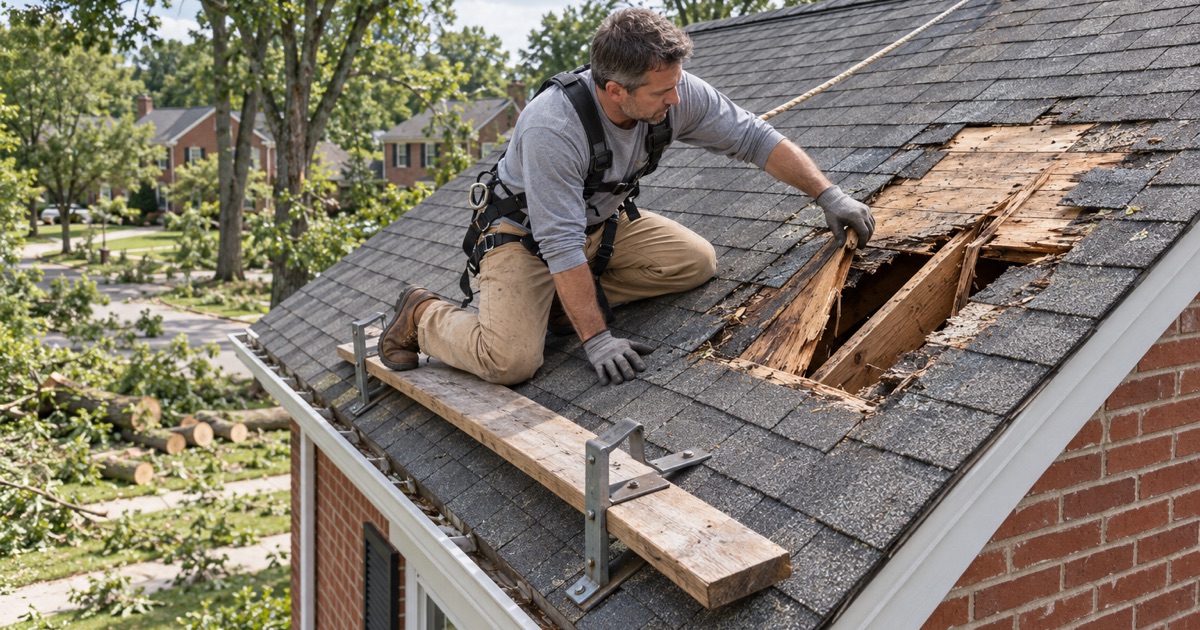
An asphalt shingle hit by a heavy branch can lose granules in a patch, crack across its body or break the seal strip that holds it to the course below. From the street, a roof with these marks often looks intact. Up close, the bruised areas show as dark patches or soft spots, and a broken seal strip lifts with a light touch.
We walk the roof where the limb landed and along the path it took as it slid or rolled off. A branch that struck near the ridge frequently drags across several courses before it drops into the gutter, and every course it crossed gets checked.
Cracked decking under the impact point
The decking is the layer that matters most after a heavy strike. Plywood or plank sheathing can crack or split under a limb even when the shingles over it hold together, and a cracked sheet flexes underfoot until its fasteners loosen. From the attic, a cracked board sometimes shows as a thin line of daylight or a fresh split in the wood.
When decking has to come out, we photograph it and show the owner before any sheet is replaced. The contract sets a per-sheet price for damaged decking found once the old roof is off, so there is no open-ended charge waiting under the shingles.
Gutters, flashing and the water that follows
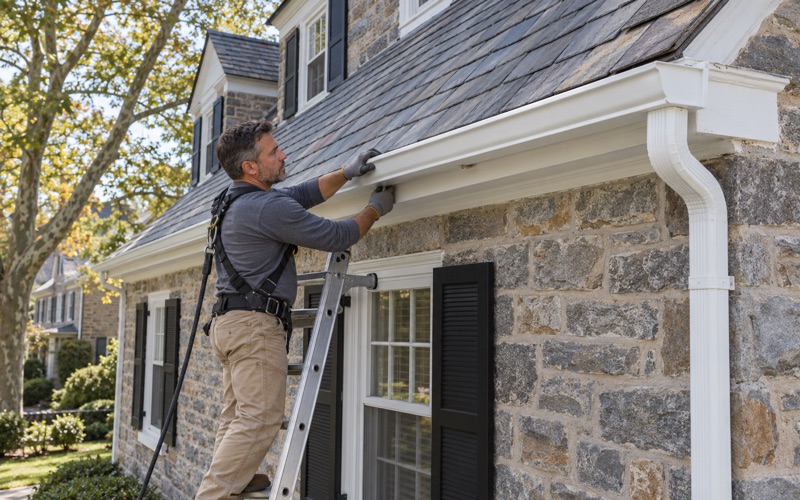
Limbs that come off a roof usually pass through the gutter on the way down. A dented or bent gutter loses its pitch, holds water in the wrong place and can pull away from the fascia, sending runoff behind it. We treat gutters and downspouts as part of the roof, sizing and pitching any replacement with the roofline rather than hanging it as an afterthought.
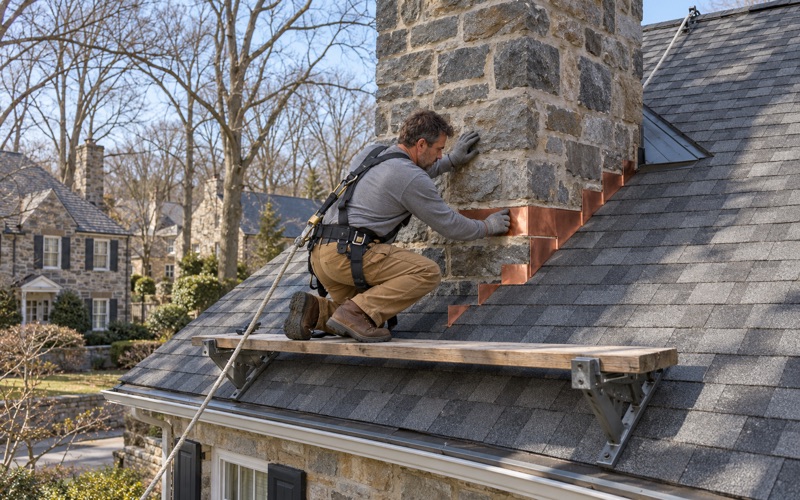
Torn flashing is the quieter problem. A branch that catches the step flashing along a wall or the flashing around a chimney can open a seam that leaks only in wind-driven rain. When flashing is damaged we replace it rather than bending the old metal back, and on a re-roof the step, counter and chimney flashing are always new.
Documenting Storm Damage Before the Tarp Goes On
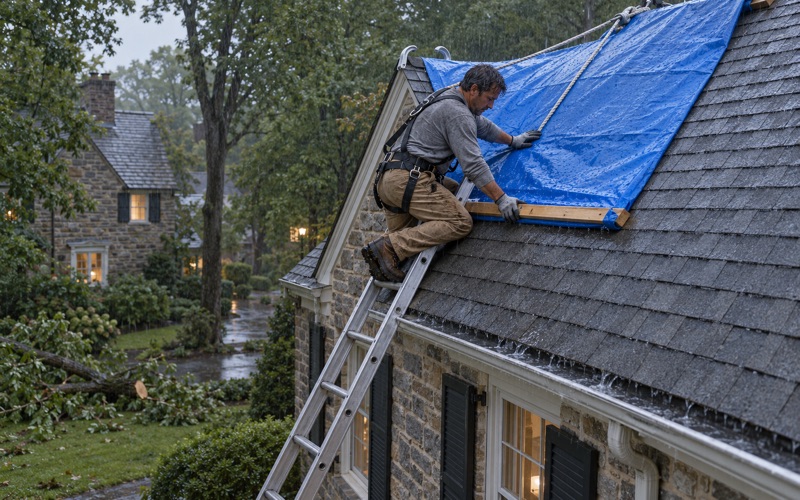
The hours after a storm are when the most useful evidence exists and when it is easiest to lose. Once a tree service has cut the limb away and a tarp is stretched over the hole, the shape of the impact is hard to read. A few minutes with a camera first can make a real difference to how clearly the damage is shown later.
Photographs in a sensible order
Start from the ground with wide shots that show the tree, the limb and the house together, then move closer. Photograph the gutter where it bent, any shingles or pieces of flashing in the yard, and the ceiling or wall inside where water appeared. Keep the dates on the files, and keep the pieces of roofing until they have been photographed.
Only take pictures from places that are safe to stand. A roof with a limb on it, wet shingles or downed lines nearby is not somewhere to climb, and ground shots are often enough to show what happened.
The write-up we provide
When we inspect storm damage, we photograph what we find on the roof and in the attic and write it up for the homeowner’s own claim. If the owner asks, a member of our crew will meet the insurance adjuster on site to walk the roof and point out the damage we recorded.
The write-up follows the same separate lines as our estimates, so the adjuster can see which items are storm damage and which are ordinary wear. Keeping those apart is the most useful thing a roofer can do for a claim.
Your claim stays in your hands
We do not negotiate a claim on anyone’s behalf. Pennsylvania licenses public adjusters under its Public Adjuster Licensing Law, and a homeowner who wants someone to represent them on the claim itself can hire one. Our role is the roof: an honest description of the damage, a written scope for the repair and the work itself.
Wynnewood’s 1950s Detached Houses and the Permit Behind a Repair
The Wynnewood census-designated place covers 0.594 square miles of land, and most of its homes are detached houses lived in by their owners. Of 1,057 housing units counted by the 2024 American Community Survey, 680 are detached, and 647 of those are owner-occupied. The single largest build decade is the 1950s, with 311 homes.
What a mid-century house brings to a storm repair
A house built during the 1950s has often been re-roofed at least once by now, and that history decides how a storm repair is handled. We check how many layers are on the roof, what lies under them and what condition the original sheathing is in before pricing anything beyond a patch.
Homes of this age often have painted trim and fascia that predate 1978, so any work that disturbs it follows the EPA lead-safe rule. That shapes how a damaged fascia board behind a bent gutter is removed and replaced.
Lower Merion’s roof permit addendum
On the Lower Merion Township side, the township’s roof permit addendum must be filled out for every roofing permit application. It caps a roof at two layers of shingles and bars a new roof over wood shake, slate, clay, cement or asbestos-cement tile, and the permit has to be posted where it can be seen from the street before work starts.
We build those rules into the estimate rather than discovering them later. If a storm-damaged roof already carries two layers, the scope says plainly that a tear-off is required, and the price reflects it from the first conversation. We also check whether a house sits in one of the township’s local historic districts, since a replacement there goes to the Historical Architectural Review Board.
Which township governs your house
The wider Wynnewood community straddles Lower Merion Township in Montgomery County and Haverford Township in Delaware County. Code and permits follow the township a property actually sits in, and Haverford Township publishes its own roof permit addendum, so we confirm the municipality for each address before a repair is priced.
Wherever the house is, the work day ends the same way. The driveway, yard and gutters are cleaned, and a magnet is run over the ground for roofing nails, which matters on lots where a tree service has already been through.
- 20+ Years Roofing
- Itemized Written Scopes
- Slate Repair Specialists